How to prune Pistacia weinmannifolia for the best results? A full breakdown of methods and techniques
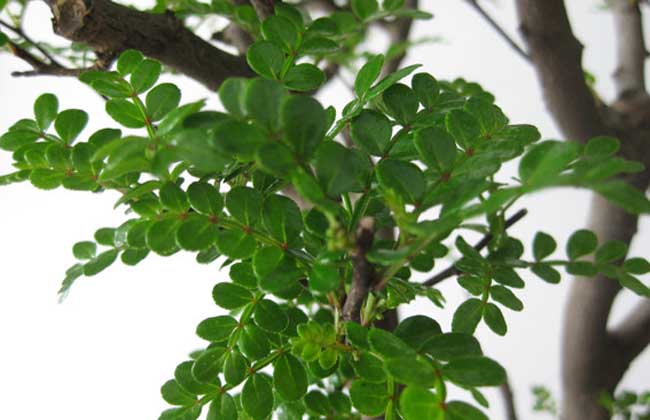
Pistacia weinmannifolia is an evergreen shrub or small tree in the genus Pistacia, family Anacardiaceae, also known as Qingxiang tree, fine-leaf pistacia, fragrant leaf, and so on. Its leaves are fine and deep green, the young leaves are red, and the branches are slender and rather lovely. Add to that its fresh fragrance, and in recent years it has become increasingly popular as a small foliage potted plant. Now let us take a look at how to prune Pistacia weinmannifolia for the best results!
How to prune Pistacia weinmannifolia?
Pistacia weinmannifolia has fairly strong sprouting ability and tolerates pruning well. Because the plant grows rather slowly, it is easy to shape. Through professional pruning techniques, with appropriate pruning and care according to the growth trend of the branches, you can create a highly ornamental potted plant with an antique air. Pruning Pistacia weinmannifolia generally has no special seasonal requirement; apart from rainy days, it can be pruned at any other time of the year. Flexibly applying shaping techniques such as coiling, tying, twisting and pressing, and shaping according to the plant's form, after several years of care you can cultivate an ideal potted plant.
How to water Pistacia weinmannifolia?
Pistacia weinmannifolia has dense branches and leaves, and water evaporates quickly, so it needs frequent watering. But before watering, the soil surface should be dry, and you should water when loosening the soil becomes somewhat difficult. At the same time, do not water Pistacia weinmannifolia too often; once every 3-5 days is suitable. Each watering must be a thorough soaking, that is, the water must wet the bottom. If you water too much, the roots will rot. If the plant already shows signs of wilting from lack of water, then you can ignore the soil condition and water immediately.
How to care for Pistacia weinmannifolia?
1. Soil: Pistacia weinmannifolia tolerates drought and poor soil, and prefers soil that does not easily hold water, so the soil must be one with good permeability.
2. Sunlight: Pistacia weinmannifolia likes light and can be sunned every day, but do not expose it to prolonged blazing sun. Generally, placing it on a balcony or in a sunny spot indoors is fine. It is also slightly shade-tolerant, and it is fine to go a few days without sun.
3. Temperature: Pistacia weinmannifolia seedlings are not very cold-resistant and need protection in North China. The plant can withstand low temperatures of -10°C, so as long as it is kept indoors, winter is no problem.
4. Fertilizing: Pistacia weinmannifolia is fairly sensitive to fertilizer. For seedlings, apply as little fertilizer as possible or even none, to avoid excessive fertility causing fertilizer burn or leggy growth.
5. Pests: If there are scale insects on the branches and leaves or red spider mites damaging the leaves of Pistacia weinmannifolia, you can spray targeted pesticides for control, such as methidathion and chlorpyrifos to control scale insects, and spray dicofol, hexythiazox and so on to control red spider mites, etc.