How to propagate sago palm from seed? Detailed explanation of sago palm propagation techniques
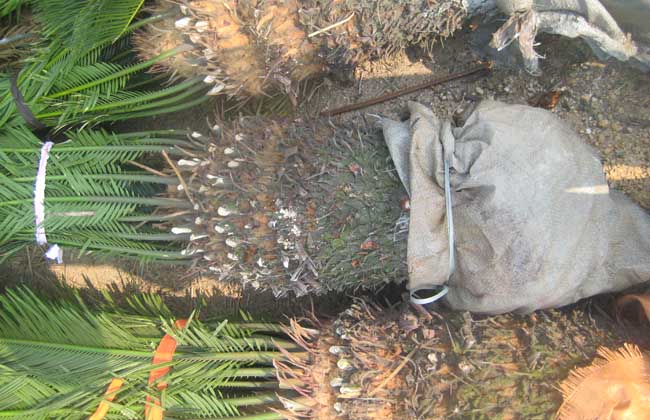
The sago palm (Cycas revoluta) is an evergreen palm-like woody plant of the genus Cycas in the family Cycadaceae. It likes light and tolerates slight shade, prefers warmth and is not very cold-hardy, and likes fertile, moist, slightly acidic soil, but it can also tolerate drought. It grows slowly, plants over 10 years old can bloom, and its lifespan can reach over 200 years. It has extremely high ornamental value. Let's take a look at the propagation techniques for sago palm below!
Sowing and propagation of sago palm
The seeds of the sago palm are large with thick coats. Sowing is best done as soon as the seeds are collected, or the seeds can be stored in moist sand after collection and sown in the following spring. For sowing, use spot sowing in pots, covering with 2 cm of soil. At a high temperature of 30-33 degrees C, they can germinate in two weeks, and the seedlings need to be grown for 2-4 years before transplanting. Before sowing, soak the seeds in warm water of about 50 degrees C in a thermos for 12 hours, pour them out and spread them for 1 hour, then change to water of the same temperature with 0.1% ferrous sulfate and potassium dihydrogen phosphate added, put them back into the thermos and soak for another 12 hours, after which they can be used for sowing.
Division propagation of sago palm
The formation of sago palm offsets generally takes 2-3 years. Division propagation is best carried out in early spring from March to April when repotting. Separate the suckers from the stem of the mother plant, cutting while damaging the stem skin as little as possible, then insert them into open ground or a pot, burying half of the soil. The survival rate of division propagation can reach 80-90%. Suckers grow slowly, so it is best to take suckers separated after 3 years; suckers with small wounds are easier to keep alive. You can also cut the stem into long sections of 15-20 cm, bury them in sandy soil so that new buds form around the stem sections, and then divide and cultivate them.
Stem burial propagation of sago palm
Stem burial propagation of sago palm uses the stems of old cycad stumps dug from mountain forests, sawing them into stem sections about 10 cm long, dividing them into 4, 6 or 8 pieces depending on the diameter, scraping off the pith completely and then disinfecting with a 1500-fold carbendazim solution, drying in the shade and then soaking in a 1500-fold indolebutyric acid solution for 2 hours, taking them out and drying in the shade, then burying them in clean sandy soil to a depth of about 3 cm, with the side that has skin or the side that originally faced upward facing up, keeping the soil temperature at about 25 degrees C, covering with glass or film to maintain humidity. After about 2-3 months, the dormant buds on the stem sections sprout and grow into suckers. When the suckers grow to 2-3 cm, remove them, pot them in plain sandy soil, and encourage them to root.