What are the signs before a sago palm blooms? Learn to spot them in advance
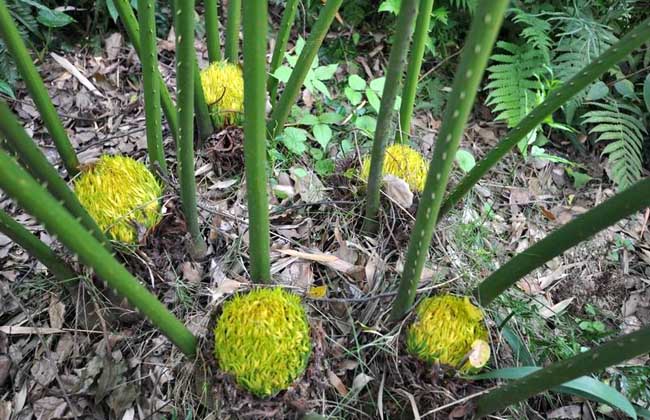
The sago palm (Cycas revoluta) is one of the oldest tree species in the world, with an antique-looking form, a trunk as hard as iron, and a graceful shape. Its large pinnate leaves grow at the top, are smooth and glossy, oily green and lovely, and stay evergreen all year round. Made into bonsai and placed in courtyards and indoors, it is a precious foliage plant. The old trunk is covered with traces of fallen leaves, mottled like fish scales, with a distinctive charm. Now let us take a look at what signs indicate that a sago palm is going to bloom!
Will a sago palm bloom?
A sago palm will bloom. Sago palms bloom relatively rarely; generally an old tree of 15 to 20 years of age can bloom, and if cultivated properly it may also bloom once every few years. In the south, when the growing environment is good, blooming can be seen every year, and the flowering period can last as long as 1 month. Generally, the male flowers bloom from June to August, and the female flowers from October to November. In fact, as long as conditions such as temperature are suitable, a sago palm can bloom every year.
The signs of a sago palm blooming
A sago palm blooming is a sign of beauty and happiness. A sago palm blooms only after a very long time, and being able to bloom in a given place fully shows that the environment where it grows is pleasant, rich in noble spirit, and filled everywhere with humanity and love. A sago palm blooming is a symbol of happiness, good fortune and wealth, foretelling a happy life, smooth luck, great wealth and high status, much like a timely snow promising a bumper year.
Where is the sago palm native to?
The sago palm is native to southern China, India, Japan and other places. It is one of the rare and oldest ornamental evergreen trees in the modern world. In tropical regions it blooms all year round, but when cultivated in the Yangtze River basin it rarely blooms, so people usually use "the sago palm blooms" as a metaphor for something very rare and extremely uncommon. It likes warmth and humidity, and cannot tolerate severe cold (it is prone to cold damage when the temperature is below 0 degrees). It likes sunlight, tolerates partial shade, grows slowly, and can live for more than 200 years. It is suitable for growing in well-drained, loose and fertile sandy loam soil.