What are the external features of pine trees? A comprehensive analysis of their morphological characteristics
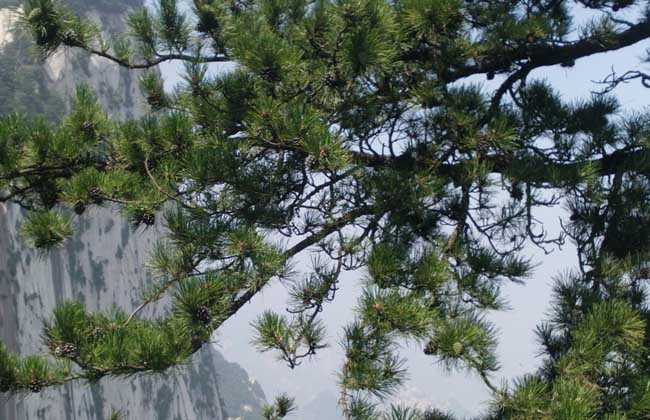
Pine is the collective name for plants of the genus Pinus in the family Pinaceae. There are nearly 80 or more species in the world. It is extremely adaptable to terrestrial environments and can tolerate low temperatures of -60°C or high temperatures of 50°C. It can grow in bare mineral soils, sandy soils, volcanic ash, calcareous soils, limestone soils, and various soil types from podzolic soil to red earth. It is a well-known pioneer tree species. Let us take a look at the external features of pine trees below!
Trunk
After maturity, a pine tree can reach 45 m in height with a diameter at breast height of 1.5 m. The bark is reddish brown, grayish brown on the lower part, and splits into irregular scaly blocks. The branches spread horizontally or obliquely, and the crown is broadly tower-shaped or umbrella-shaped. The branches grow one whorl each year, but in southern Guangdong they usually grow two whorls. The branches are pale yellowish brown, without white powder, rarely with white powder, and hairless. The winter buds are egg-shaped cylindrical or cylindrical, brown, pointed at the tip, with filamentous margins on the bud scales, the apex acute or forming a long acuminate tip, slightly recurved.
Leaves
The scale leaves of pine are solitary, linear when young, green, and then gradually degenerate into brown, membranous bract-like structures, with needle leaves (secondary leaves) emerging from their axils. The needle leaves are 2 per bundle, rarely 3 per bundle, 12-20 cm long, slender and soft, slightly twisted, with stomatal lines on both sides and fine serrations on the margins. They grow on undeveloped short shoots, and the base of each bundle of needle leaves is surrounded by a membranous leaf sheath. The leaf sheath is initially brown, later gradually turning grayish black, and persistent.
Flowers
Pine trees are monoecious, with unisexual cones. The male cones are solitary in the axils of bracts on the lower part of new branches, mostly clustered. The stamens are numerous, with 2 anthers, and the anther sacs split longitudinally. The pollen has two well-developed air sacs, with a relatively small contact area between the air sacs and the body and a clear boundary, generally all with a prominent marginal crest. The female cones number 1-4 and are borne near the apex of new branches, with numerous ovuliferous scales and bract scales. On the ventral base of each ovuliferous scale, two inverted ovules are borne. Pollination occurs in the same year, and in the second year they rapidly enlarge into cones.
Fruit
Some species of pine bear fruit relatively early, with a small amount of seed production at 5-6 years, increasing significantly at 15-20 years. Some species bear fruit very late; for example, Korean pine under natural forest conditions does not begin to bear fruit until 80-140 years. The cones mature in 2 years, and when mature the seed scales open, rarely remaining closed. They are egg-shaped, oblong-ovate, nearly round, or cylindrical, upright or pendulous. The seed scales are woody and persistent. The exposed upper part is usually thickened into an apophysis, with or without a distinct transverse ridge. The apex or center of the apophysis mostly has a raised or slightly concave umbo, with or without a prickle. The developed seed scales bear 2 seeds. The upper part of the seed has a wing, and the cotyledons number 3-18 and emerge above ground during germination.