Detailed Guide to Making a Masson Pine Bonsai
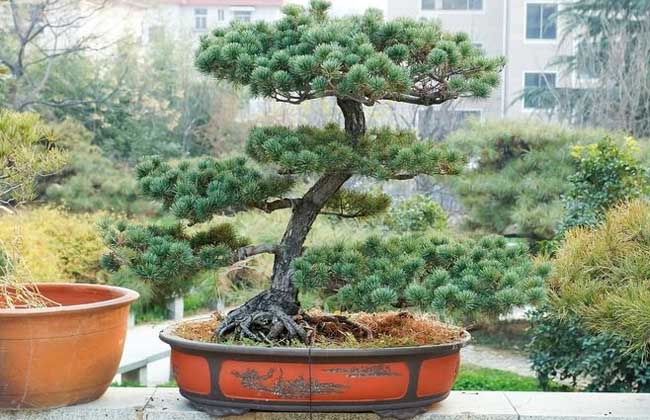
Masson pine is a type of pine tree, also known as green pine, mountain pine, fir pine, etc. It is suitable for planting in mountain streams, valleys, among rocks, beside ponds, along roadsides, and for mountain afforestation. It is also suitable for solitary planting in front of courtyards, beside pavilions, and among rockeries. At present, it is mostly used for bonsai cultivation at home. Its production method is largely similar to that of other bonsai. Let us take a look below at how to make a Masson pine bonsai.
Selecting the Raw Material for a Masson Pine Bonsai
Although Masson pine bonsai material can be grown from a young age, without ten or twenty years the trunk will not develop rough bark, and making it into a fine bonsai takes a very long time. When conditions permit, the main approach is to dig up old stumps from the wild. Focus on choosing those that are dwarfed, aged, and can be developed into a natural-looking, richly varied main trunk. It is best to have ready-made branches, or a stump with reasonably positioned branches, relatively compact buds, room for selection, and prospects for cultivation. Then choose a stump with a relatively balanced root spread, more lateral roots, relatively flat extension, and easier survival.
Digging Up Masson Pine
Although the digging time for Masson pine varies somewhat depending on the region, the difference is not great. Generally, it is suitable from October to November of the Gregorian calendar, when it begins its dormant period, and from the end of February to March, when its leaf buds begin to sprout. Be sure to avoid the plum rain season, because Masson pine likes dryness and fears moisture. Digging on rainy days, first, makes it hard to form a soil ball, and second, the soil is too wet, so the roots cannot breathe well, which is unfavorable for root development and survival.
Growing Out the Raw Material for a Masson Pine Bonsai
After the Masson pine stump is brought back, if conditions permit, it should be planted in the ground for more than a year. If there is no condition for ground planting, it can be grown out in a wooden box or a large ceramic pot. The soil used can be a mixture of river sand, coal ash, and yellow loam, which is loose, drains water, and retains moisture. Other loose, plain soil can also be used; sticky and alkaline soil should be avoided. A Masson pine stump should be grown out for at least one year. During this period, unless buds truly need to be forced, do not casually prune branches and leaves or remove buds, and even more so do not dig into the soil to check root growth or rashly apply fertilizer.
Shaping a Masson Pine Bonsai
In principle, the shaping of a Masson pine bonsai takes the presentation of masculine vigor and strength as its theme. However, because its branches are supple and highly plastic, while stumps obtained from the wild are mostly short, stout, and twisted, with few having clean, neat roots, and most lacking branch pads, one should not stick to one pattern but apply techniques according to the material. Relying on the author's artistic sensibility and understanding of natural beauty, following aesthetic principles, capture the most prominent characteristics and the most beautiful aspects of the stump, express them fully, and turn the obtained material into a living work of art.
Sealing Cuts on a Masson Pine Bonsai
Many people use erythromycin ointment to seal cuts, but in practice this does not work. Erythromycin ointment is actually a kind of soft paste. When gelatinous resin flows out from the cut, the soft ointment simply cannot stop the resin from overflowing. It can prevent wound infection, but most of the ointment is lost as the resin overflows, and only a very small amount remains attached to the wound, so its effect is limited. Sealing cuts with mud, however, works quite well. When cutting branches of mountain pine on the mountain, smear plain soil from the mountain onto the wound a few times. Observe the next day: the wound no longer flows resin. The original gelatinous resin and the solid mud adhere to each other and coagulate together, effectively blocking the outflow of resin.
Care of a Masson Pine Bonsai
1. Light: Requires ample sunlight; it must not be shaded.
2. Temperature: When potted, avoid freezing; any temperature between 0 and 35°C is acceptable.
3. Watering: Because pine bonsai have relatively little soil in the pot, watering should be done in small amounts each time but frequently, with each watering soaking through, alternating between dry and wet. When the ambient temperature is low in winter, it is better to keep it dry than wet.
4. Ventilation: Requires good ventilation; it must not be stuffy and closed in.
5. Fertilizing: It is not strict about fertilizer requirements; generally, fertilizing several times from spring to autumn is enough. When fertilizing in autumn, use less nitrogen and more potassium.
6. Pruning: Gradually design the shape according to the stump's framework, or maintain the original shape through pruning. In short, the goal is to ensure good ornamental value.
7. Diseases and pests: Scale insects are commonly seen, while diseases are rare, so in daily care just pay more attention to early prevention.