Planting Techniques and Cultivation Management Key Points for Chinese Pine
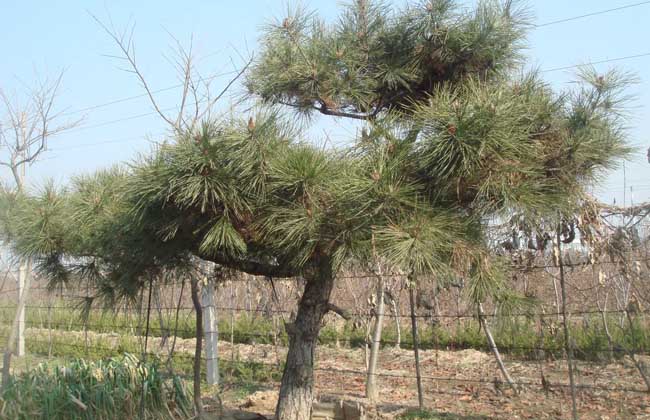
Chinese pine is a type of pine, a needle-leaved evergreen tree in the Pinaceae family, genus Pinus, endemic to China, produced in the northeastern, central, northwestern and southwestern provinces and regions; its wood is rich in resin and rot-resistant, suitable for construction, furniture, railway sleepers, mine props, utility poles, man-made fibers and other timber uses, and it has extremely high cultivation value. Let us now take a look at Chinese pine planting techniques!
Growth Habits of Chinese Pine
Chinese pine is a light-demanding, deep-rooted tree species that prefers a dry and cold climate, and can grow well in deep, well-drained acidic, neutral or calcareous loess soils. In China it is produced in southern Jilin, Liaoning, Hebei, Henan, Shandong, Shanxi, Inner Mongolia, Shaanxi, Gansu, Ningxia, Qinghai and Sichuan provinces and regions, growing at elevations of 100-2600 m, mostly forming pure stands; its vertical distribution gradually increases from east to west and from north to south. Artificial forests exist in Liaoning, Shandong, Hebei, Shanxi, Shaanxi and other provinces.
Sowing Techniques for Chinese Pine
1. Seed collection: Select Chinese pines aged 30 to 50 years with beautiful tree form, good trunk quality, strong resistance and no pests or diseases as mother trees for seed collection. After the cones mature in early October is the best time for seed collection. Place the collected cones in a ventilated place to dry in the sun; after the seeds come out and are cleaned, disinfect them by spraying with a 800-fold dilution of 75% chlorothalonil wettable granules, then dry them and store them in a low-temperature, dry place using the dry storage method for later use.
2. Container seedling raising: Choose a wind-sheltered, sunny place convenient for operations as the seedling-raising site. The seedling-raising site should be ploughed and made into low beds or flat beds. Use nutrition pots 10 cm high and 7 cm in diameter as seedling-raising containers, and make a substrate from sandy loam and decomposed and fermented cattle and horse manure, and disinfect it.
3. Germination promotion and sowing: Before sowing Chinese pine, the seeds should undergo germination promotion treatment. They can be soaked in 45°C warm water for 24 hours; after absorbing enough water, take them out and cover with a wet cloth, spray water every day, and after one week when the seed coat cracks they can be used for sowing. Before sowing, arrange the nutrition pots neatly on the seedbed, then sow, sowing 5 to 7 seeds per nutrition pot; after sowing cover with plain sandy soil, with the soil thickness exceeding the pot height by 2 cm, then spray water and frequently keep the pot soil moist.
Nursery Disinfection for Chinese Pine
1. Quintozene: For each square meter of nursery land, use 4 g of 75% quintozene and 5 g of zineb; after mixing the two chemicals, mix them evenly with 12 kg of fine soil. When sowing, place it underneath and cover on top. This method has a special effect on preventing and controlling soil-borne anthracnose, damping-off, seedling blight, sclerotinia and other diseases.
2. Formalin: For each square meter of nursery land, use 50 mL of formalin added to 10 kg of water and spray evenly on the ground surface, then cover with straw bags or plastic film, keep it closed for about 10 days, then remove the cover to let the gas dissipate; after 2 more days, sowing and cuttings can be done. It has a good effect on preventing and controlling damping-off, brown spot, angular leaf spot, anthracnose and other diseases.
3. Bordeaux mixture: For each square meter of nursery land, use 2.5 kg of equal-strength Bordeaux mixture, add 10 g of ceresan and spray the soil; when the soil is slightly dry, sowing and cuttings can be done. It has a relatively obvious effect on preventing and controlling black spot, leaf spot, gray mold, rust, brown spot, anthracnose and other diseases.
4. Carbendazim: Carbendazim can prevent and control many fungal diseases, and has a very obvious effect on diseases caused by ascomycetes and deuteromycetes. For soil disinfection, use 50% wettable powder at 1.5 g per square meter, which can prevent and control root rot, stem rot, leaf blight, gray leaf spot and other diseases. It can also be mixed into toxic soil at a 1:20 ratio and spread on the seedbed, effectively preventing and controlling seedling-stage diseases.
5. Ferrous sulfate: Treat the soil with a 3% solution at 0.5 kg of liquid per square meter, which can prevent and control seedling blight of coniferous flowering plants and leaf curl disease of peach and plum, and can also simultaneously control chlorosis in iron-deficient flowers.
6. Amobam: Amobam is an organic sulfur fungicide with strong sterilizing power; it can penetrate into plant bodies, and after decomposition within the plant it also has a certain fertilizing effect. Use a 350-fold dilution of 50% water-soluble amobam, pouring 3 kg of the diluted liquid per square meter of nursery soil, to prevent and control black spot, downy mildew, powdery mildew and damping-off of flowers, and it can also effectively prevent and control various diseases of bulb-type bulbs.
7. Junwujun: Mix Junwujun, Zhendejin and furnace slag evenly and spread them into the tree holes, which can effectively prevent root diseases and underground pests. Soil disinfection should be carried out before sowing.
Seedling-Raising Techniques for Chinese Pine
1. Land preparation and bed making: Before land preparation, first apply 50 jin of ferrous sulfate, then use a shovel to turn the soil 20 cm deep, then rake it level to make beds, with a bed width of 1.5 m and a length of 20 to 50 m; build ridges and make beds. For planting seedlings of about 50 cm, dig holes at fixed points at a spacing of 1.5 m × 1.5 m between plants and rows, one row per bed, planting 300 plants per mu.
2. Digging holes and planting seedlings: When planting Chinese pine, one row per bed, with fixed points in the center of the bed; the holes are 30 × 30 cm, leaving 4 to 5 cm of loose soil at the bottom. If it is a soil ball wrapped in straw rope, it can be left untied; if it is wrapped in nylon rope or plastic, it must be untied to avoid the bad result of seedlings dying after planting. After planting the seedlings, level the bed surface and then irrigate. If the seedling leaves turn yellow, it is due to iron deficiency, and ferrous sulfate needs to be applied.
3. Fertilizer and water management: After Chinese pine is planted, apply water twice within one week; afterward, loosen the soil and preserve moisture, then water once more in early May. After that, do not water if the weather is not dry. In June, apply fertilizer once, and in August apply ferrous sulfate once. Apply by digging pits beside the plants and applying at points. For loosening soil and hoeing weeds, carry out once every 20 days, requiring careful and meticulous work, generally to a depth of 4 to 5 cm, requiring even hoeing, loose soil with no clods, and weeds thoroughly hoed and picked clean.
4. Shaping of Chinese Pine: Shaping and pruning is a necessary management technique aimed at ensuring that Chinese pine has a beautiful tree form, is neat and uniform, grows well, and does not affect the construction of urban public facilities and people's lives. Which measures should be taken depends on the specific purpose such as the greening site, location, occupied space and artistic shaping. Generally, it is inseparable from removing redundant branches, diseased and pest-infested branches, and thinning out excessively vigorous branches growing in unsuitable directions.
5. Pest and disease control: For pest and disease control of greening Chinese pine, the principle of “timely discovery, active prevention and control, and treating early and thoroughly” should be followed. After pests and diseases are found during the growing season, pesticide control should be organized promptly. In winter, the trunks should be painted white or sprayed with lime-sulfur mixture to eliminate insect eggs and pupae on the trunks.
Cold Protection for Chinese Pine
1. Soil-covering cold protection method: Soil-covering cold protection means burying overwintering Chinese pine seedlings in the soil for the entire winter, so that the Chinese pine seedlings and seedbed soil maintain a certain temperature and are not affected by sharp temperature changes and other adverse external factors. At the same time, it can also reduce the transpiration of Chinese pine seedlings and the evaporation of soil moisture, maintain a certain amount of soil moisture, help maintain the water balance within the seedlings, and can effectively prevent death caused by freezing damage and physiological drought of Chinese pine seedlings.
2. Straw-covering cold protection method: Cover the seedbed with rice straw, weeds, wheat straw, etc. to prevent freezing damage. Cover in early winter when the soil freezes, with a thickness suitable so that the seedling tips are not exposed. When snow falls for the first time, shake the covering straw so that snow falls into the rows of Chinese pine seedlings and fills the gaps, so as to avoid later snowfall crushing and injuring the Chinese pine seedlings. One week before lifting seedlings in spring, remove the covering straw in 2 to 3 batches to avoid the Chinese pine seedlings suffering frost damage from removing the straw too early. If the seedbed is too dry before covering with straw, irrigation can be carried out to keep the soil moist, but absolutely do not irrigate after the soil freezes.
3. Barrier cold protection method: For evergreen conifer seedlings or broadleaf tree seedlings of some precious tree species and newly introduced tree species, when their growth is relatively weak, barrier cold protection can be adopted. In cold protection areas and temporary planting areas, a cold protection barrier should be made every 20-25 m using whole bundles of straw stalks. The cold protection barriers should be removed in 2 batches within 3-5 days before lifting seedlings in spring; it is not advisable to remove them too early. Barrier cold protection can not only reduce wind speed and reduce cold damage to Chinese pine seedlings, but also help the soil preserve moisture, increase snow accumulation, and effectively prevent spring drought.
4. Winter irrigation cold protection method: Test results from various places show that winter irrigation cold protection can be adopted for conifer seedlings such as Chinese pine, Mongolian pine and Chinese arborvitae. Use a plough to make deep furrows in the ridge ditches (or bed paths), cover the soil ploughed up onto both sides of the ridges (beds), and before the soil freezes, irrigate from the side of the ridge (bed) surface, irrigating thoroughly and sufficiently, so that the Chinese pine seedlings and soil maintain sufficient moisture to meet the small amount of water consumption of the Chinese pine seedlings during overwintering, avoiding and reducing the occurrence of physiological drought.
5. Whitewashing cold protection method: Whitewashing for cold protection has a certain effect on overwintering cold protection of Chinese pine seedlings. The specific method is: prepare a 1:1.5 Bordeaux mixture with increased lime content plus a paste emulsion at 1%, and spray it on Chinese pine seedlings. The spraying time is about before the soil freezes. Throughout the winter, the exterior of the Chinese pine seedlings appears grayish-white, which can both reflect sunlight and prevent sharp temperature changes, and also block leaf stomata, inhibit transpiration, protect the seedlings, and prevent and control diseases.
6. Film cold protection method: This cold protection method is widely promoted and applied in production. For seedbed seedlings of spruce, fir, yew, Chinese arborvitae, sabina and other bed-sown seedlings, use iron rods and bamboo strips to support an arch shape on the seedbed, cover with plastic film to make a small arch shed, and bury the surroundings tightly with soil; it is simple and easy to carry out. Before covering with film, irrigate thoroughly with bottom water; covering with film preserves heat and moisture, the temperature and humidity are suitable, and management is convenient. In cold winters, a thick straw curtain can be covered over the plastic arch shed to provide cold protection and heat preservation.
7. Chemical control method: Use antifreeze agents for antifreeze spraying before freezing, generally spraying 3-5 times.