A Detailed Guide to Masson Pine Planting Techniques and Management Methods
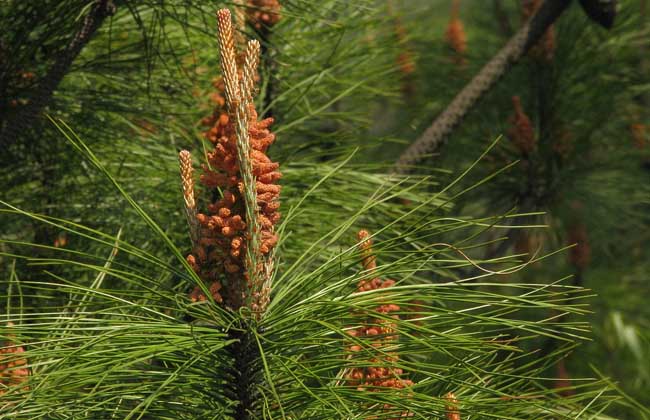
Masson pine is a type of pine tree, also known as green pine, mountain pine, fir pine, etc. It is an arbor in the Pinaceae family, genus Pinus, with high cultivation value and wide uses. Its timber is an important material for industrial and agricultural production, its resin is a raw material for medicine and chemicals, its trunk and roots can be used to cultivate Poria and mushrooms, and its bark can be used to extract tannin extract. Let us take a look at Masson pine planting techniques together below!
Masson Pine Growth Habits
Masson pine is a sun-loving tree species that cannot tolerate shade and prefers light and warmth. It is suitable for growing in areas with an average annual temperature of 13-22°C, annual precipitation of 800-1800 mm, and an absolute minimum temperature not below -10°C. Its root system is well developed, with an obvious taproot and root fungi. It has no strict requirements for soil and prefers slightly acidic soil, but it fears waterlogging and cannot tolerate saline-alkali conditions. It can grow in gravelly soil, sandy soil, clay soil, scoured thin soil on ridges and sunny slopes, and even in the crevices of steep rocky mountains.
Masson Pine Geographical Distribution
Masson pine is produced in Jiangsu (Luhe, Yizheng), Anhui (the Huai River basin, south of the Dabie Mountains), the Xiakou area of western Henan, south of the Han River basin in Shaanxi, and the provinces and regions in the middle and lower reaches of the Yangtze River, reaching south to Fujian, Quancheng Red, Quancheng Green, Guangdong, and the low mountains and western coast of northern Taiwan, China, west to the eastern slope of the Daxiangling in central Sichuan, and southwest to Guiyang and Bijie in Guizhou and Funing in Yunnan. In the lower reaches of the Yangtze River, it is distributed vertically below an altitude of 700 m; in the middle reaches of the Yangtze River, below an altitude of 1100-1200 m; and in the west, below an altitude of 1500 m. There are Masson pine plantations in northern Vietnam.
Masson Pine Seedling Raising Techniques
1. Seed collection and storage: When collecting Masson pine seeds, select robust mother trees 15-40 years old with symmetrical crowns, straight trunks, and no pests or diseases. Collection can be done from late November to early December when the cones turn from green to chestnut brown and the scales have not yet opened. Use artificial heating to thresh the seeds (seed extraction rate 3%). After collection, screen, winnow, and air-dry the seeds, then place them in bags and store them in a ventilated, dry place. The general storage period is 1 year. If the dried seeds are sealed in plastic bags and stored at a low temperature of 0-5°C, they can be stored for 1-2 years.
2. Seedbed site selection: For Masson pine seedling raising, choose fertile, well-drained, moist, and loose sandy loam or loam as the nursery site. After applying sufficient base fertilizer, prepare the land and build the beds. Fine cultivation is required, breaking up clods and leveling the bed surface.
3. Seed treatment: To promote rapid and uniform germination of Masson pine seeds, they can usually be soaked in 30°C warm water or cold water for 24 hours and then disinfected. Alternatively, they can be soaked in a 0.5% copper sulfate solution for 46 hours or disinfected with a 0.15% formalin solution.
4. Sowing: Masson pine is generally sown in spring, and early sowing at the right time is advisable. Early February to early March is suitable, and sowing should be completed by mid-March at the latest. Guangdong, Guangxi, Fujian, Hunan, and other places mostly use winter sowing. There are two sowing methods: drilling and broadcasting. The drilling width is 8-10 cm, and the sowing rate is about 5 kg/mu. At present, most Masson pine sowing in production still uses broadcasting, with a sowing rate of 7-10 kg/mu. After sowing, cover the seeds with a thin layer of soil. Charred mud ash can be used to cover the seeds, preferably so that some seeds are still visible, and then cover with grass.
5. Post-sowing management: About 20-30 days after sowing, Masson pine seedlings emerge. After most seedlings have emerged, remove the grass cover. Within 40 days after seedling emergence, special attention should be paid to keeping the seedbed moist. From May to July, chemical fertilizer can be applied 1-2 times per month, with 2-5 kg of ammonium sulfate per mu each time. When Masson pine seedlings are too dense, thinning and transplanting can be carried out, usually in 2 rounds. The first transplanting is in mid-to-late May, and the second is in early-to-mid July. On cloudy days after rain or on rainy days, retaining some native soil can not only achieve full survival but also promote good seedling growth.
Masson Pine Afforestation Techniques
1. Afforestation time: Masson pine afforestation can be carried out from mid-to-late January to mid-to-late February, mainly using 1-year-old seedlings for planting. The afforestation density is generally 240-450 trees/mu, with a spacing of 1×1.5-1.7×1.7 m. First-grade seedlings should be more than 15 cm tall and more than 0.3 cm in ground diameter.
2. Land preparation methods: Block land preparation should be no less than 50×50 cm, with a depth of no less than 20 cm. Strip land preparation should have a width of no less than 70-100 cm. The bottom diameter of planting holes should be no less than 30 cm, and the depth no less than 25 cm. Land preparation requires turning the topsoil downward, and digging holes requires backfilling soil, with the topsoil returned to the center.
3. Young forest tending: In the year of planting, tend 1-2 times or more than 2 times, only cutting grass without loosening the soil. Straighten the seedlings and earth up appropriately. In the 2nd and 3rd years, tend 1-2 times each year. In the 4th year, if the canopy has not yet closed, continue tending once. The tending area for the plants should be expanded year by year. Weeding and soil loosening must not damage the plants and root systems. The depth of soil loosening should be shallow, not exceeding 10 cm.
4. Mature forest tending
① Reasonable pruning: Masson pine begins pruning at 5-6 years old, following the principle of "light pruning and frequent pruning." Before 10 years old, the crown height should be 2/3 of the tree height; after 10-15 years, the crown should be 1/2-1/3 of the tree height. Pruning from late autumn to early spring is relatively suitable. The pruning cut should be smooth and flush with the trunk to prevent tearing the bark.
② Tending thinning: When an 8-10-year-old stand reaches a canopy density of 0.9 or above, tending thinning should begin. The first thinning intensity is 10-15% of the stand volume, carried out in combination with pruning. From 10-20 years, the thinning intensity is 20-30% of the stand volume. After 20 years, thinning can be 25-30%. After thinning, the stand canopy density should be maintained between 0.6-0.7.