How to Grow a Pine Bonsai? Daily Care Methods and Tips
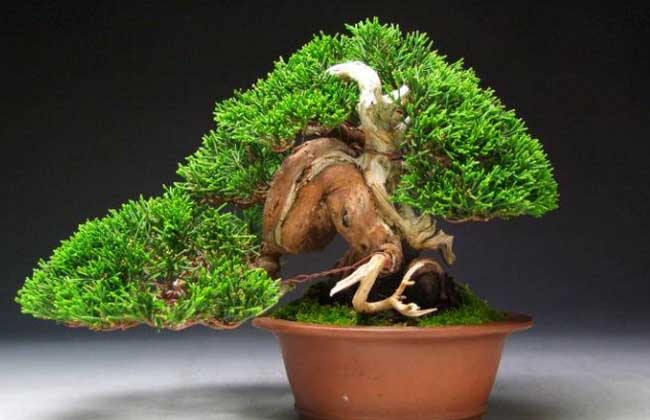
The pine bonsai is one of the most popular bonsai among modern bonsai enthusiasts. It can be placed indoors, on balconies, in courtyards, and in public spaces, where it serves as a great decorative feature. At the same time, in feng shui the pine represents longevity and vibrant life force, which is why it is so widely loved. Let's take a look below at how to grow a pine bonsai!
How Much Does a Pine Bonsai Cost?
The market price of pine bonsai varies according to size, variety, craftsmanship, and other factors. A pine seedling bonsai without a pot, 50-60 cm tall, sells for 25 yuan on the market. A pine bonsai without a pot, four years old and 80-90 cm tall, sells for 50 yuan on the market. A pine bonsai without a pot, 7 years old and about 1 m tall, sells for 65 yuan on the market. A pine bonsai without a pot, 8 years old and about 110 cm tall, sells for about 85 yuan.
The Symbolism of Pine Bonsai
1. Longevity: The pine tree has a long lifespan, so giving a pine tree as a gift in daily life is often understood as wishing you a life as long as the pine's.
2. Lofty spirit: As everyone knows, pine trees mostly grow on high mountain peaks or in crevices between rocks. On slopes with no vegetation cover, only the pine stands tall, and a sense of lofty spirit bursts forth instantly.
3. Uprightness: The pine's straight, tall, and upright body and its solemn, dignified bearing both display its noble qualities and integrity. Being upright and unyielding is the symbolic meaning long attributed to the pine.
How to Grow a Pine Bonsai?
1. Environment: Pine trees are cold-resistant and drought-resistant and can be placed year-round in courtyards on terraces and slopes, on balconies, and on flat platforms, in spots with ample light and air movement. However, small bonsai should not be exposed to strong direct sunlight in midsummer. In winter they can overwinter outdoors in the ground; it is best to bury the whole pot in a sunny, wind-sheltered spot. If overwintering indoors, the room temperature should not be too high, and they can be moved outdoors at Qingming Festival.
2. Watering: Pine trees prefer dry conditions and dislike waterlogging, so watering must not be excessive. Water only when the soil is dry, and water thoroughly when you do. Appropriately restricting water during the growing season can make the trunk and branches thick and short and the needles short and small, adding ornamental value. In high summer temperatures, you can often spray water on the leaves, which benefits growth.
3. Fertilizing: Pine trees tolerate poor soil and can grow normally even when the soil is deficient in nutrients, and this also promotes a shorter trunk, denser branches, and shorter needles. However, during the growing season, appropriately applying 1-2 times of thin, fully rotted cake fertilizer water helps them grow robustly and increases resistance to pests and diseases.
4. Pruning: To maintain the pine bonsai's graceful, ancient-looking tree form, appropriate pruning is necessary. During the growing season, pruning is mainly done by pinching buds. Every year in March to April, when new buds have elongated but have not yet sprouted needles, you can pinch off about 1/2 of each terminal bud. If the bonsai does not need to grow more branches, you can pinch off all the terminal buds. Branches that affect the tree's attractive shape can be pruned during the dormant period.
5. Repotting: Pine bonsai are generally repotted once every 3-5 years, preferably in February to March. When repotting, keep the original root ball intact and remove it from the pot, remove 1/2 of the old soil, cut off overly long roots as well as dead and rotten roots, and at the same time prune some unnecessary branches and leaves to keep the upper and lower parts of the root ball balanced. If the original pot is not large enough, you can switch to a slightly larger new pot; the planting method is the same as for initial potting.
6. Diseases: Common diseases of pine trees include leaf rust, needle cast disease, twist disease, and pine gall disease. For pine needle rust and pine gall disease, spray 65% wettable ferbam or ziram at 300 times dilution. For needle cast disease, spray 0.5 degrees Baumé lime sulfur mixture.
7. Pests: Common pests of pine trees include aphids, scale insects, red spider mites, and pine tip borers. For red spider mites and pine tip borers, you can spray 50% fenitrothion emulsifiable concentrate at 1000-1500 times dilution, or 40% dimethoate emulsifiable concentrate at 2000 times dilution.