What are the characteristics of pine trees? A detailed explanation of their morphological features and growth habits
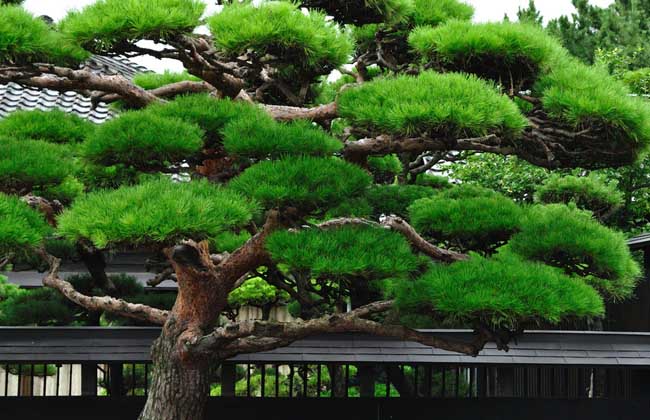
Pine trees are plants of the genus Pinus in the family Pinaceae. Not only are there many species, but they are also widely distributed. They have whorled branching and long internodes. The twigs are relatively slender and straight or slightly curved downward, and the needles are slender and borne in bundles. Their crowns look loose and not compact, and the word "pine" (song) is precisely a vivid description of the characteristics of their crowns. Now let us take a look together at what characteristics pine trees have!
Large tree form
Most species of pine are tall, upright trees. At maturity they reach 45 m in height and 1.5 m in diameter at breast height, and their wood is of good quality, with no shortage of timber suitable for major structural use. The "king of timber" of Northeast China, Korean pine; the tall tree species widely distributed in western North America, western yellow pine (up to 75 m tall); the fastest-growing pine native to the coast of California in the United States, radiata pine; slash pine native to the southeastern United States; Caribbean pine native to the Caribbean region of the Americas; and Scots pine widely distributed in western and northern Eurasia are all famous timber tree species.
Many species
There are nearly more than eighty species of pine in the world, such as Chinese pine, Mongolian Scots pine, Japanese black pine, Japanese red pine, Masson's pine, Huangshan pine, high-mountain pine, Bashan pine, Taiwan pine, North American shortleaf pine, Yunnan pine, Simao pine, slash pine, loblolly pine, egg-cone pine, Himalayan pine, Guangdong pine, Anhui five-needle pine, Dabie Mountain five-needle pine, dwarf Siberian pine, Taiwan stone pine, sugar pine, dwarf Siberian pine, ground pine, ** five-needle pine, Buddhist pine, single-leaf pine, European black pine, Scots pine, European mountain pine, Banks pine, and lodgepole pine.
Wide distribution
Pine trees are extremely widely distributed. Among the pines native to China, Mongolian Scots pine, ** five-needle pine, and dwarf Siberian pine are the most cold-tolerant and have the lowest heat requirements; Korean pine also has relatively low heat requirements; Japanese red pine, Chinese pine, lacebark pine, Huashan pine, high-mountain pine, Huangshan pine, and Bashan pine are tree species of warm temperate and subtropical high-altitude areas; Masson's pine, Yunnan pine, Himalayan pine, and Simao pine are distributed in more southern regions; and Tenasserim pine has the highest heat requirements. As for moisture requirements, five-needle pines are generally more demanding than two-needle pines, but this also varies by species. For example, among five-needle pines, Korean pine requires more humid conditions than Huashan pine, and among two-needle pines, Japanese red pine and Masson's pine have higher requirements for moisture conditions than Chinese pine and Yunnan pine.
Long lifespan
Pine trees are sturdy and have a very long lifespan. Experts have found through research that the lifespan is generally more than 1200 years. In Chinese folk culture there is the simile "longevity like the southern mountain pine," which also shows that pine trees have a relatively long lifespan. On the cliff at the cave entrance of the rear hall of Nanshan Temple in Guixian, Guangxi, there stands a more than 3,000-year-old "everlasting pine." The cone-bearing situation of pines also differs. Some varieties can bear a small amount of cones in 5 to 6 years, and this increases markedly at 15 to 20 years (Masson's pine, Chinese pine, Yunnan pine, etc.), while some species bear cones very late. For example, under natural forest conditions, Korean pine does not begin to bear cones until 80 to 140 years.
Strong adaptability
Pine trees have extremely strong adaptability to terrestrial environments. They can tolerate low temperatures of -60°C or high temperatures of 50°C, and can grow in bare mineral soil, sandy soil, volcanic ash, calcareous soil, limestone soil, and various soils from podzolic soil to red earth. They are drought-tolerant and barren-tolerant, and like sunlight. Some pines, such as Japanese black pine introduced to China from Japan, have relatively strong salt resistance.
High value
The value of pine trees is extremely high. The wood can be used for many purposes such as construction, utility poles, sleepers, mine props, bridges, farm tools, utensils, and furniture. The cellulose content of various pine woods is about 50 to 60%, and the lignin content is 25 to 30%, making them one of the important raw materials for the pulp and paper industry, and they can also be used as fuelwood and charcoal wood. Because of their majestic and vigorous tree form, tall stature, and long lifespan, they also have important ornamental value. In addition, pine trees also have extremely high medicinal value.