How many levels of national protection does the yew tree have?
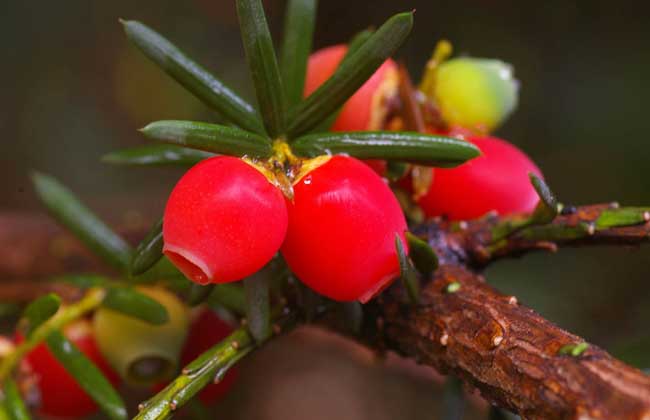
The yew tree, also known as purple yew, resurrection plant, flat cypress, red bean tree, Guanyin fir, etc., is a tree of the Taxaceae family and Taxus genus. Because under natural conditions the yew grows slowly and has poor regeneration capacity, for a long time no large-scale yew raw material forest base has been formed worldwide. Now let us take a look at what protection level the yew tree has!
What protection level does the yew tree have?
China's national first-class rare protected tree species. The yew is recognized worldwide as an endangered natural rare anti-cancer plant, an ancient tree species left over from the Quaternary Ice Age, with a history of 2.5 million years on Earth. In 1994, the yew was designated by China as a first-class rare and endangered protected plant, and it is also called a “national treasure” by 42 countries around the world that have yew trees. The United Nations has also explicitly banned its logging, making it a veritable “plant panda”.
Where is the yew tree distributed?
The yew is a tree species endemic to China, produced in southern Gansu, southern Shaanxi, Sichuan, northeastern and southeastern Yunnan, western and southeastern Guizhou, western Hubei, northeastern Hunan, northern Guangxi, and southern Anhui (Huangshan). It often grows in the upper parts of high mountains at altitudes above 1000-1200 m, and is cultivated in Lushan, Jiangxi. The southern yew is produced in southern Anhui, Zhejiang, Taiwan, China, Fujian, Jiangxi, northern Guangdong, northern and northeastern Guangxi, Hunan, western Hubei, western Henan, southern Shaanxi, southern Gansu, Sichuan, Guizhou, and northeastern Yunnan, China. Its vertical distribution is generally lower than that of the yew, and in most provinces and regions it often grows in places below 1000-1200 m in altitude.
What types of yew trees are there in China?
1. Northeast yew: The northeast yew is also known as purple yew, red cypress pine, rice tree, broad-leaved yew, Japanese yew, etc. It can reach 20 m in height and 1 m in diameter at breast height. Its bark is reddish brown, and its branches are spreading or ascending obliquely and upright, with persistent bud scales at the base of the branchlets. The leaves are arranged in irregular two rows and extend obliquely upward. The seeds are purplish red, glossy, and ovate. The flowering period is May-June, and the seeds mature in September-October. It is produced in the Laoyeling, Zhangguangcailing, and Changbai Mountain areas of Jilin at altitudes of 500-1000 m. It is cultivated in Shandong, Jiangsu, Jiangxi, and other provinces, and is also distributed in Japan, Korea, and the Soviet Union.
2. Yunnan yew: The Yunnan yew is also known as the southwest yew. It can reach 20 m in height and is dioecious. Its branches and leaves are luxuriant and its vitality is strong. Its bark is grayish brown, grayish purple, or light purplish brown, splitting into scaly thin flakes that fall off. The leaves are thin and soft in texture, strip-shaped lanceolate or lanceolate-linear, often curved sickle-shaped. The seeds grow in a fleshy cup-shaped aril, are ovate, with an elliptical hilum, and the aril is red when mature. It is produced in northwestern and western Yunnan, southwestern Sichuan, and southeastern Tibet, China, growing in high mountain areas at altitudes of 2000-3500 m, and is also distributed in Bhutan and northern Myanmar.
3. Tibetan yew: The Tibetan yew is also known as the Himalayan yew. Its one-year-old branches are green, and its leaves are linear and relatively thick in texture. It is dioecious, with cones solitary in leaf axils. The male cones are spherical, with many spirally arranged stamens and short stalks, while the female cones are almost stalkless. The seeds mature in the same year, are nut-like, columnar-oblong, and grow in a fleshy, red, cup-shaped aril. It is a tree species endemic to Tibet, China, a national Class I key protected wild plant, and is distributed in Afghanistan, Nepal, and China's Tibet, China, and other places.
4. Chinese yew: The Chinese yew is a species endemic to China, distributed in southern Gansu, southern Shaanxi, western Hubei, Sichuan, and other places. In the central China region it is mostly seen in undisturbed environments in the upper parts of mountains above 1000 m, while in the southern and southwestern regions it is mostly seen in mountainous deciduous broad-leaved forests at 1500-3000 m. It is relatively concentrated in the Hengduan Mountain area and the mountains around the Sichuan Basin, and is also distributed in northern Guangxi, eastern Guizhou, and southern Hunan. China lists it as a first-class key protected plant.
5. Southern yew: The bark of the southern yew is light gray, splitting longitudinally into long thin flakes. The tips of the bud scales are blunt or slightly pointed, falling off or partly persistent at the base of the branchlets. The seeds are obovate or columnar-long ovate, 7-8 mm long, usually wider in the upper part, and grow in a red fleshy cup-shaped aril. The seeds can be pressed for oil, the bark contains tannin, and the wood can be used as timber. It is distributed in the provinces and regions south of the Yangtze River basin as well as Henan and Shaanxi, and is cultivated in Nanjing and Shanghai. It is a national first-class key protected wild plant.