Is the yew suitable for growing in the bedroom?
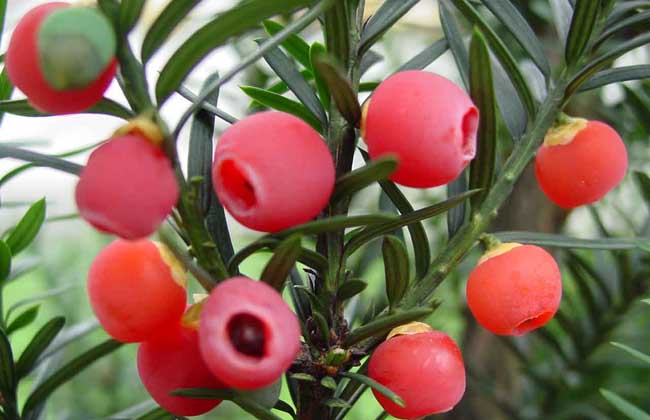
The yew is a precious plant, an ancient tree species left over from the Quaternary glaciation, long known as the "plant panda" and "plant gold." China has listed it as a national first-class rare and endangered protected plant. It can be grown in both north and south, and it is shade-loving, drought-tolerant and cold-resistant. Let's take a look below at whether a yew can be placed in the bedroom!
Can a yew be placed in the bedroom?
A yew can be placed in the bedroom. The yew absorbs carbon dioxide and releases oxygen 24 hours a day, and it can also release a kind of negative oxygen gas. It not only purifies the air and fights inflammation and bacteria, but when inhaled by the human body it can boost resistance and prevent illness, which is good for human health. At the same time, it has the ability to repel mosquitoes and insects, releasing the scent molecule citronellal outward; the higher the temperature, the more scent molecules are released, and the better the mosquito-repelling effect.
Is the yew tree poisonous?
The yew tree is poisonous. The yew has very high medicinal value; its roots, stems, leaves and bark can all be used as medicine, with effects of promoting blood circulation and clearing meridians and boosting immunity. But because the yew is poisonous, the clinical dosage each time is very small, generally 6 to 8 grams, not exceeding 10 grams at most, otherwise poisoning easily occurs, with symptoms such as dizziness, dilated pupils, nausea, vomiting and muscle weakness, and in severe cases it can even lead to death.
How to grow a yew tree
1. Soil: For growing a yew, use loose soil rich in humus that retains water and fertilizer and is well aerated. A mixed medium made from peat soil, perlite and loam can be used. Clay soil is not breathable, and sandy soil has poor fertilizer and water retention, so neither should be used.
2. Light: The yew likes a cool growing environment, so during cultivation it should be properly shaded and not placed in direct sunlight, as that will make the yew lose water quickly, causing the branches and leaves to dehydrate and the leaves to dry up. In midsummer, during the day the yew can be placed in the living room, on the balcony, in a corner and similar places, and then in the evening moved to a windowsill for ventilation. At the same time, no light at all will also affect the growth of the yew, so in weather with weak sunlight it should be given appropriate sun exposure.
3. Fertilizing: When growing a yew, the soil should be fertilized in good time, preferably applying 0.2 jin of organic fertilizer and 0.02 jin of compound fertilizer per plant at a time, and farmyard manure and cake fertilizer (such as cottonseed cake, peanut cake, sesame cake) can also be added. When fertilizing, apply it as much as possible along the pot wall and not close to the yew's roots. Generally, a newly bought yew bonsai already contains its own nutrient soil, so no fertilizing is needed for the first 3 months, and it can be done after 2 to 3 months.
4. Watering: When the yew's leaves look wilted, it should be watered; if the leaves droop, that indicates severe water shortage. In addition, you can judge whether watering is needed by tapping the pot and listening to the sound; if the sound is very hollow when you tap the pot, it means the soil is dry and it is time to water. Inserting a finger 2 to 3 cm into the soil and feeling that the soil is dry also means it is time to water. Generally, an outdoor yew is watered once every 15 to 20 days, and an indoor one once every 20 to 25 days; it is best to keep the soil moisture content at around 40%.
5. Pruning: When the lower branches of a yew bonsai grow too densely and dry, yellow leaves begin to fall off, part of the overly dense lower branches can be pruned away, and it can be shaped into an umbrella shape, pagoda shape, round shape and so on. When repotting a yew, if the root system temporarily cannot keep up with supplying nutrients to the roots, branches and leaves, causing leaves to curl and dry up, pruning can reduce the consumption of nutrients by branches and leaves and quickly restore root growth.
6. Repotting: After about a year of growing a yew, the sapling will gradually grow larger and its root system will develop accordingly, so it needs to be transplanted into a new pot. When repotting, the old pot can be broken apart, but do not damage the original root ball; after moving it into the new pot, water it promptly to settle the roots so that the yew's root system and soil are firmly combined.
7. Pests and diseases: Under normal conditions, a yew grown at home has very few pests. If the yew is found to turn yellow or to have pests and diseases, it can be watered or sprayed with thiophanate-methyl and potassium dihydrogen phosphate. Relatively speaking, yews develop root rot, stem rot and rotten roots during the rainy season, especially young trees; at this time, dexon can be sprayed for care. In high-temperature and dry seasons, yews are prone to leaf blight and red blight, which can be prevented and controlled by spraying Bordeaux mixture.
8. Notes: The yew does not have great demands on its growing environment; the main things are that it must not be in direct sunlight, must not be blown at by an air conditioner in summer, must not be close to heating in winter, and even more must not have cigarette butts, tea leaves and other debris casually thrown into the growing pot, as these will have a bad effect on the yew's growth. The flower pot for growing a yew should be slightly larger, and several more holes can be made in the lower part of the pot to enhance its drainage and breathability.