Analysis of the Causes of Aquatic Plant Yellowing and Solutions
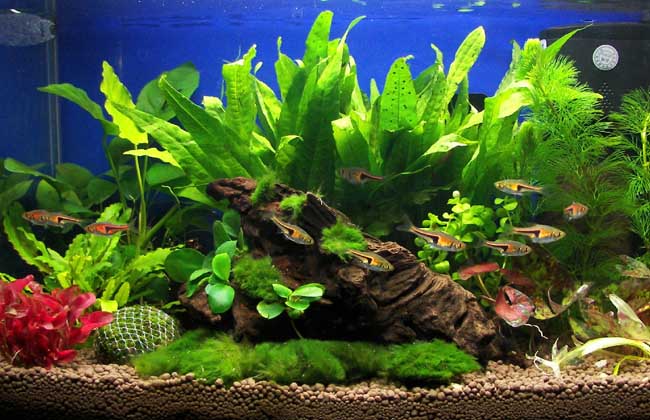
The role of aquatic plants in an aquarium can be said to be pivotal, and in an aquarium, aquatic plants also carry out photosynthesis. In fact, raising aquatic plants is not difficult, but many fish keepers find after keeping them for a period of time that the aquatic plants they are growing start to turn yellow, and they do not know how to save them. Below let us take a look at what to do when aquatic plants turn yellow!
Insufficient Nutrients
[Symptoms] When nutrients are insufficient, aquatic plants will lack the nutrition for growth, and if they cannot absorb nutrients, the aquatic plants will turn yellow.
[Solution] When nutrients are insufficient, the aquatic plants must be fertilized. The fertilizers that can be chosen include base fertilizer, liquid fertilizer, and root fertilizer, as well as other trace elements. Among these, root fertilizer and base fertilizer are both mixed into the middle layer of sand when the sand is laid. Fertilizing is a step before planting aquatic plants and cannot be added after planting them, because when the sand is laid, mixing in base fertilizer and root fertilizer is relatively even, which is beneficial for the even absorption by the aquatic plants.
Insufficient Light
[Symptoms] The main reason aquatic plants turn yellow is that the light duration is insufficient or the light intensity is insufficient, causing the aquatic plants to be unable to carry out photosynthesis, and the aquatic plants will slowly change or die.
[Solution] The light for aquatic plants should be provided regularly and in fixed amounts every day. The light duration needed for normal growth is about 6-8 hours, and light should be provided at a fixed time every day.
Physiological Dehydration
[Symptoms] In mild cases, the leaf shape will become smaller and appear dark green, especially the young leaves, which cannot unfold and appear curled. In severe cases, rotting begins from the tips and margins of the young leaves, gradually spreading to the old leaves, and finally the entire aquatic plant withers and dies. The main cause of physiological dehydration in aquatic plants is artificial over-fertilization, which makes the total ion concentration in the water too high.
[Solution] Regular water changes and control of the monthly fertilizer application amount are both necessary steps to avoid physiological dehydration in aquatic plants.
Direct Sun Exposure
[Symptoms] Different varieties of aquatic plants have different requirements for light intensity. Beyond the temperature limit, many kinds of aquatic plants will grow poorly or wither and die.
[Solution] They cannot be placed in direct sunlight, and a cover should be used to shade them.
Temperature Too High
[Symptoms] Gas accumulation in the diffusion barrel will lead to reduced dissolution efficiency. When carbon dioxide is insufficient, aquatic plant leaves are easily burned by strong light. After being burned, they easily turn yellow. When the temperature is too high, aquatic plants also easily develop yellow leaves, manifesting as shrinkage and distortion of stems or leaves, abnormal stretching upward of aquatic plants, and other changes in growth morphology, yellowing of leaves, or leaf drop. Stems and leaves dissolve and rot.
[Solution] A fan can be used to lower the temperature.
Temperature Too Low
[Symptoms] Metabolic function decreases, causing growth to stagnate or shrivel. Abnormal physiological changes in tissues occur, leaf sheath tissues disintegrate, forming dead leaves or leaf drop. Aquatic plant tissues partially or completely necrose, leading to rotting symptoms in the roots, stems, or leaves.
[Solution] Generally, a water temperature of 20-24°C is more suitable. For tropical aquatic plants, the water temperature during winter should not be lower than about 15°C. Therefore, in northern winters, an aquarium should have a heating rod or thermostat to maintain the water temperature. However, the insulation device must not be too close to the aquatic plants, so as to avoid the water temperature being too high and causing the aquatic plants to die. If conditions permit, a water pump can be used to keep the aquarium water circulating. This is beneficial for heat distribution and is also good for the growth of aquatic plants.
Caused by Root Rot
[Symptoms] When the aquatic plants are bought, the roots or leaf stalks are damaged. This will prevent nutrients from reaching the leaves, and they will turn yellow. If the leaf stalk is damaged, that leaf is beyond saving.
[Solution] It is recommended to directly break it off. If the roots are damaged, it will improve after the roots grow out. It is recommended to use ceramic pellets and aquatic plant sand or river sand as the bottom sand to fix the aquatic plants. This will not crush the roots and will also allow the roots of the aquatic plants to extend smoothly.
Caused by Pests and Diseases
[Symptoms] After pathogenic bacteria infect aquatic plants, water-soaked brown spots first appear on the leaves, then gradually turn yellow, and even the leaves of the whole plant dissolve into the water in a fibrous manner. If they come into contact with healthy leaves, they will soon spread the infection. The main reason this disease occurs is that during transportation of the aquatic plants, excessively high temperatures promote bacterial growth and infection. Subsequently, when the buyer brings the aquatic plants home, the diseased plants are mixed in with the healthy plants.
[Solution] If they are not removed in time and are planted in the tank, the pathogenic bacteria will quickly spread. First, promptly cut off the infected leaves or stems. If it is a clump-forming aquatic plant, after removing the diseased leaves, separate it and place it in another container, and observe the progression of the disease. Once new symptoms are found, immediately soak it in 0.2-0.5 mg/g copper sulfate to kill the pathogenic bacteria. Second, lower the water temperature of the tank to below 20°C to control the reproduction of the pathogenic bacteria.
Summary: After discovering that aquatic plants have turned yellow, fertilizer can be added appropriately. Fertilizers include bottom fertilizer and liquid fertilizer, and attention should be paid to observing water quality, especially the pH value. Also, in daily keeping, whether the light is reasonable matters; there should not be too much or too little light. If you want your aquarium to have higher ornamental value, patience is required. Although it is not particularly difficult, it is also not a very simple matter.