Aquascaping Tutorial: A Complete Guide to Layout Steps and Techniques
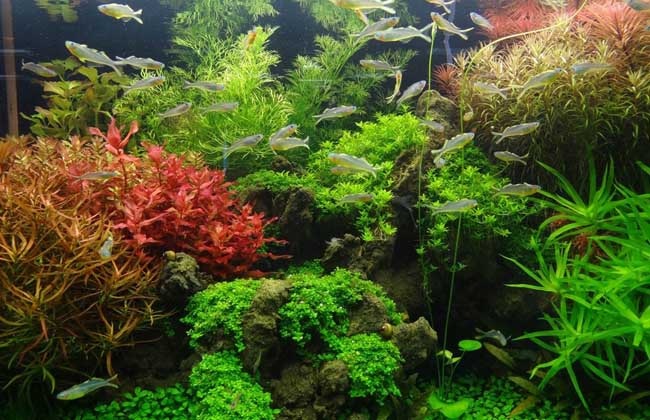
A planted tank is an aquarium themed around aquatic plants. Generally, planted tanks house small schooling tetras, or angelfish, dwarf cichlids and the like, as well as a small number of algae-eating organisms such as shrimp, snails or algae-eating fish. However, a few planted tanks are purely focused on the aquatic plant landscape. Creating a beautiful planted tank involves many things you need to know and many little techniques, so let us take a look at this aquascaping tutorial!
Lighting System
In a planted tank, lighting is not only beautiful like stage lighting, but ample, high-quality light is also an essential condition in a natural ecological tank. Aquatic plants need to absorb light for photosynthesis, and beneficial microorganisms also need light to provide energy for their activity, so lighting can be said to be the power source of a natural ecological tank.
Filtration System
In nature, water flows constantly, continuously replenishing the CO2, oxygen and nutrients that aquatic plants need to grow. In addition, through decomposition and purification by microorganisms in the environment, it stays crystal clear at all times. A planted tank is a closed space, so water purification needs the help of a filtration program, which also provides water circulation in the planted tank.
Carbon Dioxide
Carbon dioxide is an essential condition for photosynthesis. Since the water in a planted tank is still water, it cannot continuously supply carbon dioxide like the flowing water in nature, so a carbon dioxide supply system is needed to supplement the carbon dioxide concentration in the water, providing for the photosynthesis of aquatic plants, which then produces the oxygen needed by fish and microorganisms.
Substrate for Aquatic Plants
The substrate supplies attachment and nutrients for the roots of aquatic plants, and provides a place for beneficial microorganisms to live. It is the most important foundation in aquatic plant cultivation. The condition of the substrate in a planted tank directly affects the growth of the aquatic plants, so when building a natural substrate, in addition to basic gravel or soil, it is also recommended to add natural nutrients, beneficial microorganisms and electric magnetic stones that activate the substrate.
Fertilization Management
When a planted tank is first set up, you must wait until the aquatic plants are about to grow new shoots before fertilizing. Fertilizers include base fertilizer, root fertilizer, liquid fertilizer, iron fertilizer and other types. When adding root fertilizer, in order to prevent root rot, it must be buried in the substrate 2 to 3 cm away from the aquatic plants. As for water-soluble fertilizers, the first time you add them you can put the specified amount directly into the tank, but afterwards, each time you change the water, if you add liquid fertilizer according to the amount of water changed, there is no need to worry about excess fertilizer accumulating in the aquarium. Whichever type of fertilizer it is, it can only work effectively when the water quality is stable, the carbon dioxide concentration is suitable and the water temperature is appropriate. If these conditions fall out of balance, the excess fertilizer in the aquarium will cause algae to appear.
Water Change Management
The extent of water changes in a planted tank varies with the number and species of aquatic plants. Generally, about 1/4 to 1/3 of the water is changed every one to two weeks. If carbon dioxide is not added, then a 1/4 to 1/3 water change should be carried out every 2 to 3 days. Changing water at this frequency allows you to effectively use the carbon dioxide in tap water and can also suppress the occurrence of algae. The water used for changes should preferably have its temperature adjusted first, and be added to the tank after a water conditioner is added. In addition, when taking water out of the tank, it is better to use a siphon hose at the same time to suck out the debris hidden among the aquatic plants or in the substrate.
Trimming Aquatic Plants
Several weeks after aquascaping, fast-growing stem plants will grow to twice their original height, disrupting the balance of the arrangement, and at this point the aquatic plants must be trimmed. The simplest trimming method is to cut the longer stem plants to an appropriate length. In addition, if some aquatic plants that float on the water surface are left unchecked, they will affect the lighting for the plants below, so they should be trimmed to an appropriate length. Some people use their fingernails to trim, but this easily damages the aquatic plants, so it is better to use scissors as much as possible.