A Detailed Guide to the Cultivation Techniques and Management Methods of Osmanthus fragrans 'Semperflorens'
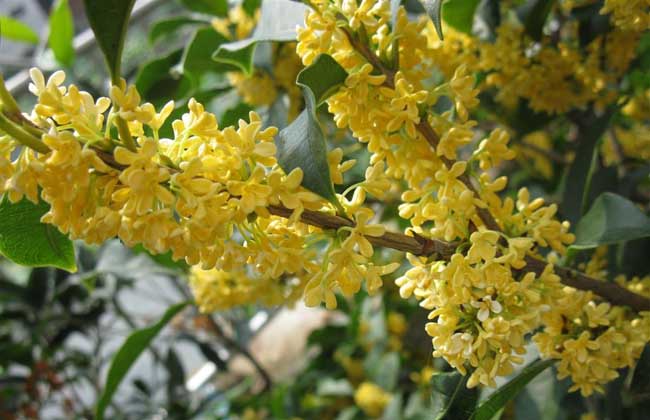
Osmanthus fragrans 'Semperflorens' is one of the most common types of osmanthus. It is a variety of Osmanthus fragrans in the genus Osmanthus, and its biggest difference from other varieties is that it blooms year-round, that is, it blooms in all four seasons, so another name for Osmanthus fragrans 'Semperflorens' is Yueyuegui (Monthly Osmanthus). However, its fragrance is also the faintest among the many osmanthus varieties, and the floral scent can hardly be detected. Now let us take a look at the cultivation techniques for Osmanthus fragrans 'Semperflorens' trees!
Growth Habits of Osmanthus fragrans 'Semperflorens'
Osmanthus fragrans 'Semperflorens' prefers a warm and humid climate and has a certain degree of cold resistance, but it is not tolerant of severe cold. It likes light and also tolerates shade, and during the seedling stage it needs a certain amount of shading. It does not have high requirements for soil, and prefers slightly acidic soil in high, dry terrain that is rich in humus. Deep, fertile, moist, and well-drained sandy soil is especially suitable. It is not tolerant of arid and barren soil, and avoids saline-alkaline soil and waterlogged land. When planted in excessively wet land with poor drainage, it will cause poor growth, root rot, and leaf drop, ultimately leading to the death of the entire plant.
Propagation Techniques for Osmanthus fragrans 'Semperflorens'
1. Softwood cuttings: Select excellent mother plants with superior varieties, vigorous growth, and no pests or diseases for cutting collection. When processing the cuttings, cut them into 2-3 cm lengths, retain 1-2 leaves at the top, cut the upper end into a flat opening, and cut the base into a slanted surface. The slanted surface should be smooth to facilitate insertion and healing for rooting. After disinfecting the cuttings, soak them in rooting powder for 10 minutes and then insert them. After insertion is completed, water them promptly and cover with plastic film and a sunshade net or straw curtain. Spray a 2000-fold carbendazim solution once every 7 days, and spray a 0.2% urea or monopotassium phosphate solution once every 10 days.
2. Air layering: The air layering method is mostly carried out before spring budding, and can also be carried out during summer growth. Carrying it out during the plum rain season also has very good results. Make cuts or ring-bark one- or two-year-old branches, fill the wound with rice husk ash, moss, potting soil, perlite, and other materials, then wrap and bind the wound. Keep it moist at all times, but the water should not be excessive. After rooting, it can be cut away from the mother plant.
3. Rootstock grafting: The rootstocks mainly used for grafting Osmanthus fragrans 'Semperflorens' include privet (Ligustrum), ash (Fraxinus), lilac (Syringa), and fringe tree (Chionanthus). The disadvantage of using privet as a rootstock is that its root system is overly developed, making it unsuitable for pot cultivation, and it also blooms late. The disadvantage of using ash as a rootstock is its short lifespan, and in winter it easily drops leaves and produces fewer flowers. When lilac is used as a rootstock, the trunk is thick at the top and thin at the bottom, making the tree shape top-heavy. Fringe tree as a rootstock has good compatibility, drought and cold resistance, strong adaptability, and a long lifespan, with trees able to live for more than a hundred years. Therefore, the most suitable rootstock for the grafted propagation of potted osmanthus is fringe tree.
Cultivation Techniques for Osmanthus fragrans 'Semperflorens'
1. Soil: Osmanthus fragrans 'Semperflorens' is suitable for growing in loose, fertile, well-drained acidic soil. Generally, 60% broadleaf humus soil, 25% coniferous humus soil, 10% river sand or fine furnace ash, and 5% well-fermented pig manure or chicken manure can be mixed to prepare it.
2. Placement: Osmanthus fragrans 'Semperflorens' likes light. When cultivated indoors, it should be placed in a sunny and ventilated location, maintaining 8 to 12 hours of light per day.
3. Temperature: Osmanthus fragrans 'Semperflorens' likes warmth. Generally, it grows well at 18°C to 25°C, with many flowers and a delicate fragrance. If the temperature is below 15°C, it enters a semi-dormant state and blooms less. It can overwinter at 3°C to 5°C, but it cannot bloom.
4. Humidity: Osmanthus fragrans 'Semperflorens' requires keeping the pot soil moist, but it must not be waterlogged. When watering, follow the principle of watering when dry and stopping when wet, and avoid water accumulation, so as to prevent root rot or leaf drop. Especially when blooming, water should not be excessive, so as to avoid bud drop and affect flowering.
5. Fertilization: Osmanthus fragrans 'Semperflorens' likes fertilizer. During the budding and flower bud differentiation periods, more diluted fertilizer water containing phosphorus and potassium should be applied so that the branches and flower buds grow robustly. Especially a few days before flowering, applying some diluted fertilizer water will make the flowers larger, the color more vivid, and the fragrance stronger.
6. Pests: The main pests of Osmanthus fragrans 'Semperflorens' are red spider mites and white peach scale, which can be controlled by spraying pesticides.