Key Technical Points and Precautions for Transplanting Osmanthus Trees
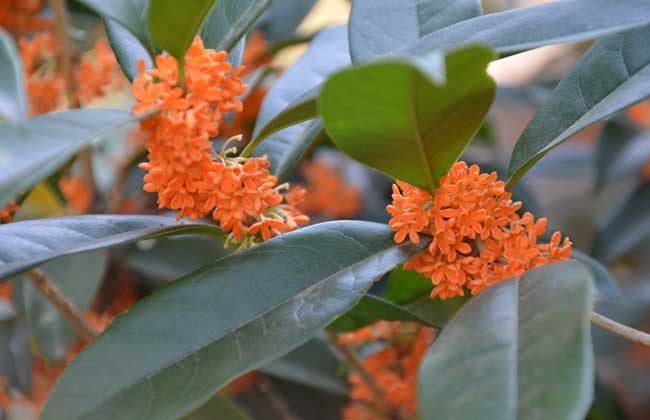
The cultivation of osmanthus has a long history in our country. In ancient Chinese poetry praising flowers, the number of works praising osmanthus is also quite considerable. It has been deeply loved by Chinese people since ancient times. It not only has a beautiful tree shape and stays evergreen all year round, but also fills the air with fragrance when the autumn air is crisp and clear. It is widely used in landscape construction. Below, let us take a look at osmanthus tree transplanting techniques!
Transplanting Time for Osmanthus Trees
When transplanting large osmanthus trees, the choice of season is very important. Generally (under normal circumstances), the semi-dormant period of a healthy tree can be chosen. For example, in Jiangnan, it can be done from after the Mid-Autumn Festival to the end of winter the following year (from mid-September to around February 15 of the following year, except during freezing snowy weather), because this is precisely its semi-dormant stage, and new buds have not yet sprouted, which is beneficial to the coordination of various factors within the tree. At the same time, it can also be done during the plum rain season in Jiangnan, because at this time the tree has finished its first growth peak and has already enriched its internal nutrients, so the survival rate is relatively high. Conversely, when transplanting in other seasons, corresponding measures must be taken to regulate water, nutrients, oxygen, temperature, light and other aspects according to the balanced survival characteristics of the tree and the actual situation of environmental factors, so transplanting is difficult and costly.
Osmanthus Tree Transplanting Techniques
1. Tree selection: For osmanthus tree transplanting, choose osmanthus trees with a full tree shape, lush branches and leaves, no pests or diseases, and that are easy to dig up and hoist for transport.
2. Digging the pit: About one week before transplanting, dig the tree pit at the new planting site. The pre-dug tree pit diameter should be about 1 m larger than the packaging diameter of the transplanted tree, and the height should be level with the height of the transplant packaging. Place the excavated topsoil and subsoil separately, spread the soil out to dry, and at the same time clean out impurities such as bricks and tiles from the soil. Then mix in ferrous sulfate at a 10:1 ratio (with soil as 10 parts). This increases the acidity of the soil, disinfects the soil, and also enhances fertility.
3. Pruning: Pruning osmanthus is one of the keys to transplant survival. Because osmanthus has weak sprouting ability, trunk cutting and branch cutting are not advisable. You can only prune the leaves of the osmanthus, cutting off the leaves with scissors while leaving the petioles, protecting the axillary buds, and retaining one third of the original number of leaves. This can both reduce water evaporation and preserve the beauty of the original crown.
4. Lifting the seedling: Hard packaging is best for transplanting osmanthus. One week in advance, water the osmanthus tree to be transplanted thoroughly once so that its root system absorbs enough water. This makes it easier to dig into a ball and prevents the soil ball from breaking apart due to overly dry soil. The diameter of the soil ball should be 6 to 8 times the crown diameter of the plant at 1 m above ground, and the height should be 70% of the soil ball diameter. If conditions permit, digging it larger is even better.
5. Planting: Before planting, backfill the pre-dug tree pit with 10 to 15 cm of original soil brought back with the transported osmanthus tree. Because osmanthus trees are not tolerant of waterlogging, the planting depth of the osmanthus should be 10 to 15 cm higher than the original ground level. First lower the osmanthus tree and place it according to its original growth orientation, then place one plastic pipe in each of the four corners of the tree pit. After the tree pit is filled with soil, this increases root breathability. Then remove the template in order while backfilling soil to 1/3 of the soil ball height, filling original soil tightly around the soil ball, filling one layer and tamping one layer to prevent the soil ball from breaking. After the tree pit is completely filled and tamped, build a berm, add support, and water thoroughly for the first time.
6. Management: First, water thoroughly once again 3 to 4 days after the first watering. Second, after the water has completely dried in the shade, surround the roots with the remaining soil around the original tree pit to form a mound that is high in the middle and low around the edges, so that the osmanthus tree will not drown due to accumulated water. Third, in the following spring, be sure to water once with spring water. Fourth, at an average temperature of about 20°C, spray the leaves and branches once every half month with a mixture of potassium dihydrogen phosphate and fungicide (carbendazim, etc.). This both applies foliar topdressing to the osmanthus tree and plays a sterilizing role.
Precautions for Transplanting Osmanthus Trees
1. Before transplanting a large osmanthus tree, if there is sufficient time, in the spring or autumn two years earlier, dig a ring-shaped trench at a place 10 cm smaller than the soil ball diameter, with a depth of more than 60 cm. Any large lateral roots encountered should be cut off with a sharp tool. If a relatively large lateral root about 6 cm thick is encountered, treat it by peeling off a ring of bark. After all wounds are treated with "wound coating agent," fill the ring trench back in.
2. The time for transplanting osmanthus trees should be chosen in early spring or autumn, preferably with no wind or rain, not intense light, and moderate soil dryness and moisture at the time of digging, so that ball formation strength is greatest, avoiding soil balls scattering or collapsing due to being too dry or too wet.
3. Determine the soil ball diameter at about 7 times the diameter at breast height of the tree to be transplanted. When digging to a certain depth, gradually contract it so that the soil ball takes a hemispherical shape. During the digging process, be extremely careful to avoid breaking the soil ball. For all thick and thin roots, cut them off with a sharp tool, and apply "wound coating agent" to all cuts to prevent water loss and pathogen infection.
4. When digging to a certain depth, tightly tie a 30 cm wide waist band around the upper part of the soil ball with straw rope. After the soil ball is formed, spray the soil ball once with "Large Tree Root Power No. 1," then tie one end of the straw rope to the base of the trunk, tightly bind the soil ball in a net-like manner at equal intervals, and also tightly wrap the main trunk with straw rope. Cut off most small branches and leaves, cut off over-wide side trunks that affect transport, and apply "wound coating agent" to the cuts. Then bind the branches to reduce the crown, facilitating hoisting and transport.
5. After hilling up soil around the osmanthus tree, immediately set up fixtures (four, from four directions) to support the large tree and prevent it from swaying and affecting survival. Use "Large Tree Root Power No. 2" and water the roots thoroughly once. Both "Large Tree Root Power No. 1 and No. 2" have the effect of enhancing root vitality and promoting rooting. Water thoroughly once again within a short time. The soil should remain moist but not wet, moist but not dry, and attention should be paid to hilling and tamping the soil so that there are no gaps between the soil ball and the soil, and the round platform always maintains a fixed shape.
6. After transplanting the osmanthus tree, promptly tidy the crown, remove branches and leaves broken or damaged during transport, cut off as many leaves and small branches that do not affect the tree shape as possible, and reapply "wound coating agent" to the cuts. In autumn and winter, temperatures are lower and the tree's metabolism is slow. If not heavily pruned, a false appearance of survival may occur. In the following spring, as temperatures rise, because the root system has not recovered and water supply is insufficient, a large number of branches and leaves may suddenly dry up, and by then it will be too late to rescue them. When transplanting in autumn for overwintering, an additional layer of plastic film can be wrapped outside the straw rope wrapped around the trunk, and film can be placed over the soil ball round platform to preserve warmth and moisture.
7. After transplanting the osmanthus tree, it is best to promptly set up a shade shed. This can play an important protective role against high temperatures and strong light in summer. Under continuous sunny and high-temperature conditions, spray water or antitranspirant on the crown and trunk to maintain the humidity of the branches and trunk and facilitate survival.
Summary: Transplanting large osmanthus trees is a relatively difficult project. To restore them to their original tree shape and lushness generally requires 3 to 5 years. During this process, there can be no negligence. As long as we use scientific methods and treat every step carefully and conscientiously, success will become inevitable.