How Tall Can Lucky Bamboo Grow? A Full Analysis of Its Normal Growth Height
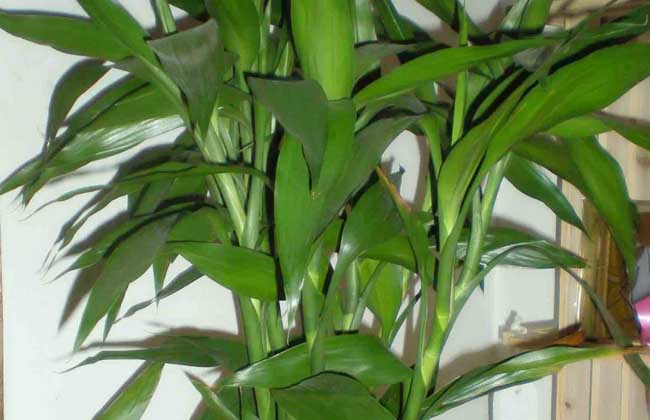
Lucky bamboo, also known as wan shou zhu, kai yun zhu, fortune tower and ribbon tree, is a perennial evergreen herbaceous plant of the genus Dracaena in the family Agavaceae (Asparagaceae). It originated in Cameroon in western Africa and is now a common ornamental plant in China, symbolizing great wealth and prosperity. Many people like to grow it at home as positive encouragement for themselves. Let us take a look below at how tall lucky bamboo can grow!
How tall can lucky bamboo grow?
There is no fixed answer to how tall lucky bamboo can grow. If it is grown well, it may grow more than ten centimeters or even several tens of centimeters in a year; if it is grown poorly, it may grow only a few centimeters. Under normal circumstances, lucky bamboo can reach a height of 1.5-2.5 m or more, but for commercial ornamental cultivation a height of 80-100 cm is appropriate. If it grows too tall, it can be pruned; if it is planted in a pot, it can be braided, and cutting it off is also fine.
Does lucky bamboo bloom?
Lucky bamboo can bloom. Its umbel bears 3-10 flowers growing in the leaf axils or opposite the upper leaves, with 6 tepals and a bell-shaped purple corolla. The berry is nearly spherical and black. Blooming in lucky bamboo, like blooming in other plants, is a normal stage of growth and development, but it rarely blooms when cultivated in China. Things are precious when they are rare, so once it blooms people take it to mean that good luck is coming, a beautiful hope and blessing.
Is lucky bamboo toxic?
Lucky bamboo is not toxic, so everyone can grow it with peace of mind, and the sap of lucky bamboo is also non-toxic. The leaves and stems contain well-developed fibrous tissue. During growth it can be attacked by two pests, red spider mites and caterpillars. Red spider mites suck the sap from its leaves, while caterpillars eat the leaves.
How to grow lucky bamboo
1. Soil culture: Cut a sturdy stem of lucky bamboo at least 10 cm long with leaves, cut the cut end at a slant to encourage aerial roots, insert it into a sand bed, and maintain the temperature at around 25 degrees; it will take root and survive in one month.
2. Water culture: For water-culture propagation of lucky bamboo, also first cut a sturdy stem 10 cm long with leaves, cut it at a slant, then insert it into water, taking care that one third of the whole plant is submerged. Because water contains few nutrients, a nutrient solution needs to be added to improve the survival rate.
3. Bottle culture: Bottle culture of lucky bamboo is arguably the method with the greatest ornamental value, and most people use this method. However, with this method you need to note that the nutrients in water are not as rich as those in soil, so a nutrient solution must be added, otherwise yellow leaves will appear.
4. Temperature: Lucky bamboo is a southern plant and likes high temperatures. The temperature suitable for its growth is 20-28 degrees. It also has a very strong ability to adapt to low temperatures; generally lucky bamboo can tolerate low temperatures of 2-3 degrees.
5. Humidity: Lucky bamboo likes shade and moisture and tolerates waterlogging. It should be watered frequently. For soil culture, the soil must not dry out, and it should be watered in time. For water culture, the water should be changed often to ensure the water's nutrients.
6. Soil: Lucky bamboo needs good permeability, so the soil should be loosened and fertilized often. It is best to sprinkle on a little sand, and some leaf mold can be appropriately added as organic fertilizer.
7. Light: Lucky bamboo likes a semi-shaded environment and is not strict about light, but it must not be exposed to strong light for a long time, otherwise yellow leaves and slow growth will occur.