Can Lucky Bamboo Take Sunlight? Detailed Guide to Light and Care
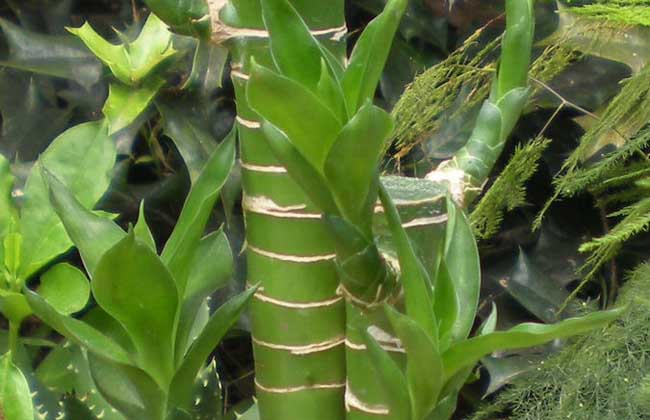
Lucky Bamboo is a potted plant everyone is thoroughly familiar with. In Chinese plant culture it is a symbol of good fortune and carries auspicious meaning, but growing Lucky Bamboo well is no simple task. Without solid potted-plant skills, problems such as yellow leaves, root rot and slow plant growth may appear. Let's take a look below at whether Lucky Bamboo can take sunlight!
Can Lucky Bamboo Take Sunlight?
Lucky Bamboo cannot take sunlight. Although light is a necessary condition for countless plants to carry out photosynthesis, Lucky Bamboo does not go along with this. Lucky Bamboo is a shade-loving plant and cannot take sunlight. It is suitable for placement in a semi-shaded, ventilated spot, and just a little scattered light is enough for it. Of course, an indoor environment that is too dark should also be avoided. If there is no light at all, Lucky Bamboo cannot carry out photosynthesis, and naturally cannot grow healthily.
Can Lucky Bamboo Be Placed in the Bedroom?
Lucky Bamboo can be placed in the bedroom. Lucky Bamboo is easy to keep alive, is non-toxic, and also helps increase air humidity. Placed in the bedroom it can also make the resting environment more secluded and peaceful. There is no need to worry that Lucky Bamboo releases carbon dioxide at night and competes with people for oxygen, affecting your sleep, because the effect of potted plants on indoor air is almost negligible. Moreover, Lucky Bamboo can help improve air quality in rooms that are not often ventilated, and it also has a disinfecting function, so placing it in the bedroom is a very good choice.
How to Grow Lucky Bamboo
1. Soil culture: For Lucky Bamboo, cut a thick, sturdy stem of at least 10 cm, with leaves, cut the cut end at a slant to encourage aerial roots, insert it into a sand bed, and maintain the temperature at around 25 degrees; in one month it will take root and survive.
2. Water culture: For water-culture propagation of Lucky Bamboo, also first cut a thick, sturdy stem of 10 cm, with leaves, cut it at a slant, then insert it into water. Note that one third of the whole plant should be submerged in the water, and because the nutrients in water are scarce, to raise the survival rate you need to add nutrient solution.
3. Bottle culture: Bottle culture of Lucky Bamboo should be said to be the method with the greatest ornamental value, and most people use this method. But with this method you need to note that the nutrients in water are not as rich as in soil, so nutrient solution must be added, otherwise yellow leaves will appear.
4. Temperature: Lucky Bamboo is a southern plant and likes high temperatures. The temperature suitable for Lucky Bamboo growth is 20-28 degrees. As for low temperatures, Lucky Bamboo also has extremely strong adaptability; generally Lucky Bamboo can accept low temperatures of 2-3 degrees.
5. Humidity: Lucky Bamboo likes shade and moisture and tolerates waterlogging. Watering should be frequent. For soil culture, the soil must not be dry, and it should be watered in time; for water culture, the water should be changed often to ensure the water's nutrients.
6. Soil: Lucky Bamboo needs good permeability. The soil should be loosened and fertilized often. It is best to sprinkle a little sand on it, and you can appropriately add some leaf mold as organic fertilizer.
7. Light: Lucky Bamboo likes a semi-shaded environment and is not strict about light requirements, but it cannot be exposed to strong light for a long time, otherwise yellow leaves and slow growth will appear.