Can a Money Tree Take Direct Sunlight? Detailed Light and Care Guide
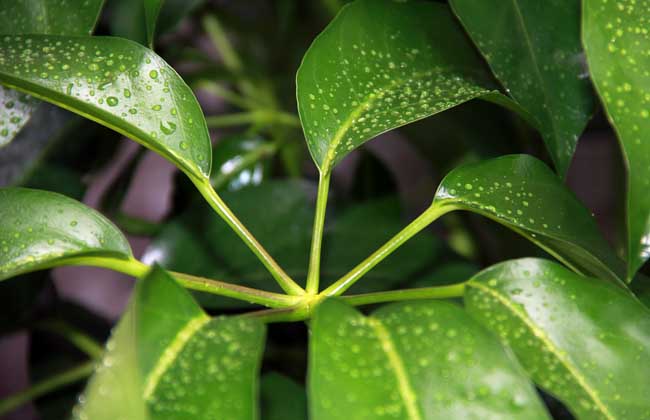
The money tree (Pachira aquatica) is an evergreen small tree in the Malvaceae family, native to Costa Rica in Latin America, Australia, and some small islands in the Pacific; it is also found in the tropical regions of southern China, and has always been a popular potted plant among gardening enthusiasts, who like to keep one both at the office and at home. Let's take a look below at whether a money tree can take direct sunlight!
Can a Money Tree Take Direct Sunlight?
Yes, a money tree can take direct sunlight. The money tree likes sun but also tolerates shade; if you want the plant to grow well, you still need to give it plenty of light. Grown long-term in weak light, its branches become thin, the leaf stalks droop, and the leaves turn pale green. When moving a money tree from indoors to outdoors after overwintering, it must adapt to the light gradually, otherwise the leaves will suffer sunscald. You can choose a mild, sunny midday in mid-to-late March of the following year, move the pot outside, let it receive direct sunlight for 1-2 hours, then gradually extend the light exposure until it is managed under full light.
The Money Tree's Growing Environment
The money tree is highly adaptable, liking light yet tolerating shade, and grows well in full sun, partial sun, or shade. However, grown long-term in a dark place, its vigor will decline. When summer arrives, it is best to shade it 50% to prevent intense sun from scorching the leaf tips and leaf edges. For indoor ornamental growing, it should be placed where there is some scattered light, and it should not stay there continuously for more than 30 days. If it shows declining vigor or leggy growth, it should gradually be exposed to sunlight, and never suddenly exposed to strong light, to prevent it from dying from not adapting.
Money Tree Care and Management
1. Potting soil selection: Most money trees bought now come in soil provided by the seller. Gardeners need not repot immediately after buying; keep it growing first and consider repotting later. If repotting, money tree pots generally use loose garden soil or peat soil, leaf mold, and coarse sand, with a small amount of compound fertilizer or chicken manure as base fertilizer and growing medium.
2. Watering management: The money tree's root system is very underdeveloped, and many money trees die mainly from root rot. How much to water at one time varies by region, and the pot and soil used also differ, so there is no fixed watering standard. Generally speaking, watering once a month is not considered little. In addition, a plant won't die quickly from lack of water and will recover quickly after watering, but if it is waterlogged it is basically beyond saving. For a money tree, you can usually mist it more and water it less.
3. Fertilizer management: A money tree does not need fertilizing when the soil is fertile enough. If it has been grown for a long time, you can consider giving it a light fertilizer; never use a strong fertilizer. For fertilizing, you can use some common foliage fertilizers, and be sure to fertilize lightly.
4. Proper pruning: Generally speaking, money trees have been beheaded, so each spring you can also prune appropriately; this makes them more attractive and also promotes the growth of new branches.
5. Pest and disease control: For money tree stem rot in the early stage, spray 1000 times dilution of 50% water-soluble fungicide powder, once every 10 days, for 2-3 consecutive treatments. For anthracnose, spray 800 times dilution of 50% wettable chlorothalonil powder or 600 times dilution of 50% carbendazim, once every 7-10 days. For cabbage caterpillars, inchworms, and red spider mites, regularly spray 800 times dilution of 40% omethoate or 1000 times dilution of 50% dichlorvos, once every 7 days for 2-3 consecutive sprays.