What are the planting methods for Buddhist pine seeds?
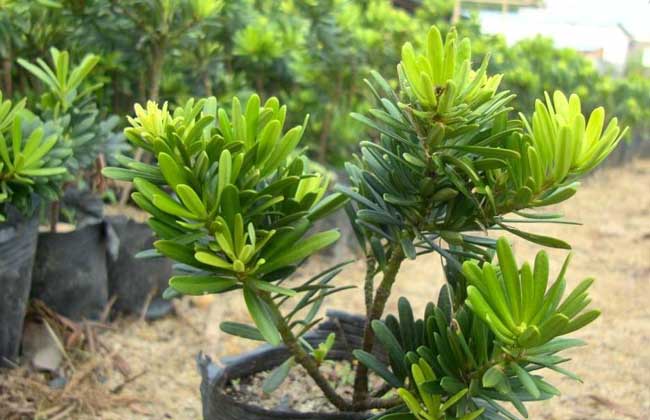
Buddhist pine (Podocarpus macrophyllus) is an evergreen coniferous tree in the family Podocarpaceae, genus Podocarpus. It is cultivated in all provinces south of the Yangtze River, and is also distributed in Japan. It is now mainly used in pots for ornamental viewing across both northern and southern regions, and has extremely high ornamental value. Currently, engineering seedlings with a diameter at breast height of more than 10 cm on the market mainly rely on imports. Let us take a look below at how to plant Buddhist pine seeds!
Buddhist pine growth habits
Buddhist pine prefers a warm, humid climate, has weak cold tolerance and strong shade tolerance, and likes well-drained, moist sandy loam. It has strong adaptability to soil and can even survive on saline-alkali soil. It has relatively strong resistance to various polluting gases such as sulfur dioxide, hydrogen sulfide and nitrogen oxides, and strong resistance to pests and diseases. In China it is produced in Jiangsu, Zhejiang, Fujian, Anhui, Jiangxi, Hunan, Sichuan, Yunnan, Guizhou, Guangxi, Guangdong and other places. It is cultivated in courtyards as an ornamental tree, and wild trees are very few.
Buddhist pine seed storage
After Buddhist pine seeds are collected, they should be placed in a relatively dry and ventilated place as much as possible. The best condition for storing the seeds is a place without too strong light. An environment that is too hot or too humid will also affect the storage of Buddhist pine seeds. Too great a temperature difference will cause Buddhist pine seeds to germinate early. The best way to store Buddhist pine seeds is to seal them well and put them in the refrigerator. Seeds stored this way will neither germinate early nor lose their moisture.
Sowing Buddhist pine seeds
Before sowing Buddhist pine seeds, soak the seeds for about 4 days so they fully absorb water. You can use warm, cooled boiled water for soaking; seeds treated this way have a higher germination rate. When sowing, sow by row spacing, with 20 cm between each row and 10 cm between each plant. When sowing, the depth for burying the seeds is based on covering the seeds, then cover them with grass to keep the seeds moist. After sowing, spray the seeds with water once a day. After 8 to 9 days from sowing, remove the grass cover, provide good sun protection and shade, and do not expose them to the sun.
Buddhist pine seedling cultivation techniques
About 40 days after sowing, Buddhist pine seeds will germinate. Note the spacing between seedlings; where they are too dense, transplant the small seedlings with soil to empty spots. Be careful not to let the newly emerged seedlings be drenched with water, so as to ensure the survival rate of the seedlings. When the seedlings grow to about 6 leaves, they can be appropriately watered with diluted biogas water. It is recommended not to use chemical fertilizers. Because the seedlings grow slowly, transplant after 1 year with a plant and row spacing of 20x20 cm, or move them into 15 cm nutritional bags, 1 plant per bag. Transplant again after another year with a plant and row spacing of 1x1 m. After 3 years of seedling cultivation, seedling-grown plants can reach a height of 1 to 1.3 m and a crown width of up to 1 sq m, with a tower-shaped crown, and can be used for landscaping or continue to be grown into larger seedlings.