How to Prune Buddhist Pine? Detailed Pruning Methods Explained
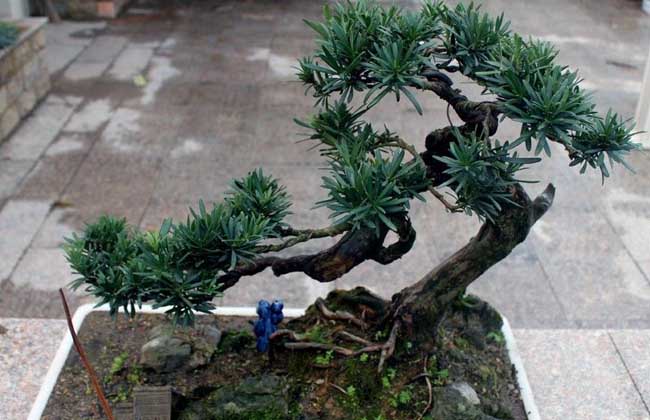
Buddhist pine (Podocarpus macrophyllus) is an evergreen coniferous tree of the Podocarpaceae family, genus Podocarpus, commonly grown as a potted ornamental. In cultivation, its tolerance for pruning and small leaf shape are usually used to create various forms, such as spherical, conical, and multi-layered spherical shapes. The main pruning methods include thinning, heading back, and renewal pruning. Let's take a look below at how to prune Buddhist pine!
Thinning Method for Buddhist Pine
Thinning Buddhist pine means cutting branches off from the base. Thinning improves ventilation and light penetration for the tree stump, concentrates nutrient supply, and promotes vigorous growth. Thinning young trees early can help them develop and grow normally. When shaping, thinning allows the retained structural branches to receive sufficient nutrients and speeds up the formation of the shape. For a formed stump bonsai, thinning helps balance nutrients so that it remains vigorous even when old. When thinning, cut off diseased and pest-infested branches and burn them immediately to prevent the spread of pests and diseases, and promptly remove any branches that spoil the appearance. Generally, of two parallel branches growing close together, one should be removed; of stacked branches and opposite branches, one of each pair should be removed; of whorled branches, only one should be kept and all the rest removed; and water sprouts, as well as upright branches, drooping branches, and reverse-growing branches emerging from the main branches, should all be removed. For forked branches and crossing branches, one fork should be removed. For small shoots sprouting on tree species with strong sprouting ability, all should be removed early except for one shoot left at a position where a branch is missing, which is slowly induced to fill the gap, so as to avoid consuming nutrients and weakening the tree's vigor.
Heading Back Method for Buddhist Pine
Heading back Buddhist pine means cutting long branches short to stimulate the axillary buds below the cut to sprout, forming stronger side branches, thereby promoting branching and making shaping easier. After thinning out surplus branches during shaping, the retained structural branches should be headed back to encourage them to sprout 2 to 3 times a year. One heading back per flush of growth will rapidly increase the branching grade of the structural branches and keep each order of branching very short without elongating the branches. Therefore, heading back is an effective measure for controlling growth and maintaining dwarfness in stump bonsai, and also an important means of giving the stump the form of a large tree and achieving the shape early.
Renewal Pruning Method for Buddhist Pine
Renewal pruning Buddhist pine means cutting back perennial branches. It is a powerful measure for reducing the size of a large tree and also an important means of promoting new shoots and restoring tree vigor. For stump specimens with good posture but a large canopy and long main branches, heading back and thinning one-year-old branches alone cannot meet the requirements of stump bonsai shaping; renewal pruning can make a large tree smaller, which is beneficial for stump bonsai shaping. For some tree species with strong sprouting ability, the amount of renewal pruning can be greater, that is, cutting away all branches and leaves and keeping only the skeleton of the stump, to stimulate new shoots below the cut.