How to grow Japanese podocarpus? A detailed guide to cultivation methods
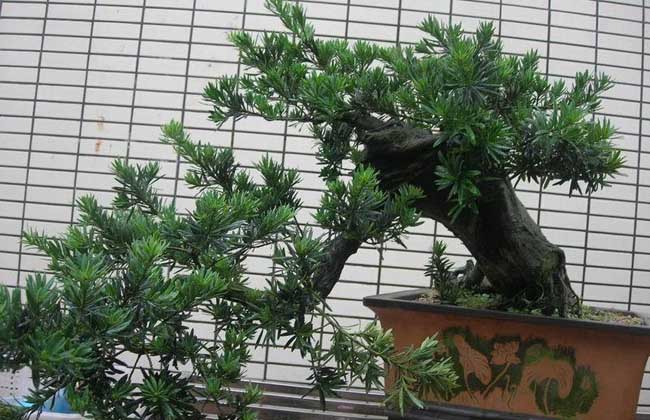
Japanese podocarpus (Podocarpus macrophyllus) has a graceful, antique elegance, with relatively small, deep green leaves. It can be planted as a specimen or in groups, and is also suitable as a hedge or bonsai material, with high ornamental value. Planted around a villa, it combines high ornamental value with a high-end look; paired with some lighter-colored landscaping plants and flowers, it easily becomes a beautiful sight. Let's take a look together at the cultivation methods for Japanese podocarpus!
Growth habits of Japanese podocarpus
Japanese podocarpus has a broad ovate crown and strip-shaped lanceolate leaves. It is dioecious, or occasionally monoecious. The seeds are ovate and borne on a fleshy, swollen receptacle, with a flowering and fruiting period in October. It prefers a warm, humid, semi-shaded environment and has strong adaptability, growing easily even under intense sun. It has fairly strong resistance to pests and diseases, relatively weak cold tolerance, and prefers loose, fertile, well-drained sandy soil.
Propagation methods for Japanese podocarpus
1. Seed propagation: Harvest and store the seeds before the fruit naturally drops when the flesh turns red. Shake the tree to collect the fallen fruit; naturally fallen fruit is also fine. Picked fruit should not be dried in the sun; sowing immediately is best. If you want to wait until early spring of the next year to sow, you can only first wash off the flesh and bury the seeds in moist sand for storage, keeping the sand moist.
2. Cutting propagation: In mid-May, use last year's branches, cut off branches 10 cm long, keep about 5 leaves, and soak them in water for 2 to 3 hours. When planting the cuttings, insert them slightly deeper, so that 2 to 3 leaves can be buried in the soil, then cover them well with plastic film. In mid-to-late September, pay attention to sunlight and remove the plastic film.
Cultivation methods for Japanese podocarpus
1. Reasonable fertilization: Japanese podocarpus likes fertilizer, so apply thin fertilizer frequently. Use mainly nitrogen fertilizer, and you can add an appropriate amount of black alum to make alum fertilizer water. During the growing season, fertilize once every 1 to 2 months; fertilization can be done together with watering. For large-area planting, the half-round trench application method can be used, applying 300 to 500 grams of quick-soluble compound fertilizer each time. For potted plants, spray water fertilizer containing 0.5 to 1.0% compound fertilizer or diluted cake liquid fertilizer each time.
2. Light management: Japanese podocarpus is a neutral to shade-leaning tree species. It can accept relatively strong light and can also grow in a relatively shaded environment. Although summer temperatures are high and sunlight is intense, because large Japanese podocarpus trees benefit from high temperatures and strong light in maintaining their tree posture and leaf shape, there is no need to shade large podocarpus trees in summer. However, since seedlings have tender tissues, they should not be exposed to strong light for long periods, so it is best to place them under tree shade for care.
3. Water management: Podocarpus is not a plant of the pine family and is not drought-tolerant; on the contrary, it tolerates shade and moisture. During the growing season, pay attention to watering frequently, but it should not become waterlogged. On sunny summer days, water frequently; generally water once in the morning and once in the evening, and also frequently spray water on the leaves so the leaf color stays fresh green and growth is good. Summer usually has more rain as well, and since it is not tolerant of waterlogging, be careful to prevent long-term water accumulation.
4. Pest and disease control: Japanese podocarpus commonly suffers from leaf spot disease and sooty mold. For leaf spot disease, spray 50% carbendazim or thiophanate-methyl wettable powder at 600 to 800 times dilution for control; for sooty mold, wash it off with soapy water or clean water. Common pests include bagworms, scale insects, and white wax insects, which can be killed by spraying 40% omethoate emulsion at 1000 times dilution or 80% dichlorvos emulsion at 1000 times dilution.
Note: Home potted Japanese podocarpus should be kept outdoors in a ventilated place all year round and should not be kept indoors for long periods, otherwise the leaves will turn yellow and drop, leading to death. In summer, avoid exposure to intense sun at high temperatures and place it in a semi-shaded spot for care. During the growing season, water can be slightly more plentiful. In hot summer, water promptly when the potting soil is dry; water thoroughly and adequately. In autumn and winter, water can be appropriately reduced. In East China, in winter, when the temperature drops to 5°C, it should be moved indoors to overwinter, and the amount of watering should be controlled; the potting soil is better kept slightly dry.