Which regions are the main production areas of Buddhist pine distributed in?
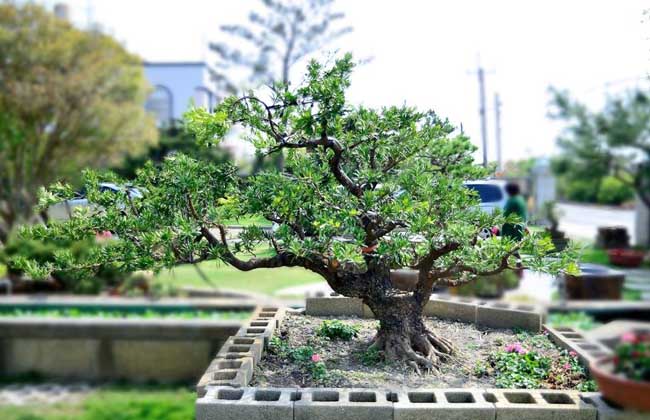
Buddhist pine, also known as Luohanshan, Evergreen Luohanshan, Tushan, Money Pine, etc., is an evergreen coniferous tree of the genus Podocarpus in the family Podocarpaceae. Its crown is broadly ovate, and its bark is grayish brown to dark gray. Its wood is fine and uniform, easy to process, and can be used for furniture, utensils, stationery, and farm tools. Its fruit, root bark, and leaves have medicinal value. Let us take a look below at where the production area of Buddhist pine is!
Where is the production area of Buddhist pine?
Buddhist pine is native to China, but due to historical reasons, there are very few large Buddhist pines old enough in tree age, and the number of large-specification Buddhist pine landscaping seedlings is also extremely limited. It is cultivated in courtyards as an ornamental tree in Jiangsu, Zhejiang, Fujian, Anhui, Jiangxi, Hunan, Sichuan, Yunnan, Guizhou, Guangxi, Guangdong, and other places, while wild trees are very few. It is also distributed in Japan.
The production environment of Buddhist pine
Buddhist pine prefers a warm and humid climate and has weak cold tolerance. In North China, it is often grown in pots for ornamental purposes. It has strong shade tolerance and prefers well-drained, moist sandy loam. It has strong adaptability to soil and can also survive on saline-alkali soil. It has relatively strong resistance to various polluting gases such as sulfur dioxide, hydrogen sulfide, and nitrogen oxides, and has strong resistance to pests and diseases. It is commonly propagated by sowing and cuttings.
Cultivated varieties of Buddhist pine
1. Taiwan Buddhist pine: Taiwan Buddhist pine is an evergreen small tree, with alternate leaves, linear-oblanceolate, with a rounded-obtuse apex and revolute leaf margins. Flowers are axillary; male flower cones are solitary, cylindrical, and sessile; female flower cones are solitary. The seed is drupe-like, elliptical, dark blue when mature, and the seed receptacle is fleshy and red when mature. It is produced along the coast of Lanyu Island in Taiwan, China, and is also distributed in the Philippines. It prefers a high-temperature, humid, and sunny environment. It has good salt tolerance and resistance to strong winds, but poor drought tolerance, and both its cold tolerance and shade tolerance are poor. It can be used in coastal windbreak belts, hedges, courtyard beautification, potted plants, etc.
2. Japanese Buddhist pine: The bark of Japanese Buddhist pine is dark gray and cracks in scaly patches. The branches and leaves are dense, and the leaves are spirally arranged, linear-lanceolate, 7-10 cm long and 5-8 mm wide, with an acuminate or obtuse apex, a cuneate base, and a short petiole. The midrib is distinctly raised on both sides. Male cones are spicate and often 3-5 clustered in leaf axils; female cones are solitary in leaf axils and stalked. Seeds are ovate, less than 1 cm in diameter, purple or purplish red when mature, covered with a white bloom, and borne on a thick fleshy seed receptacle. The seed receptacle is red or purplish red and stalked.
3. Sparrow-tongue Buddhist pine: Sparrow-tongue Buddhist pine is an excellent tree species that is precious, easy to shape, and easy to manage. The leaves are about 1.8-2 cm long and about 0.4 cm wide. The spring growth tip is obtusely ovate, the leaf tip is not pointed, and the central vein is prominent, like a sparrow's tongue, with a fleshy texture. Common types include Zhejiang sparrow tongue and Nantong sparrow tongue. Generally, Nantong sparrow tongue is regarded as the authentic type. If the summer and autumn shoots are pinched off after autumn each year, the branches and leaves appear dense, the leaves stand upright, and the internodes are short, making it very beautiful and neat. Old potted plants often form strange roots, which look very appealing when lifted. The cross-section of the old trunk of many years in pots is often not round, which is also one of its characteristics. The characteristic of Zhejiang sparrow tongue is that the leaves are more spreading, the tip is more pointed, and the texture is thinner.