A detailed guide to Podocarpus styling techniques, teaching you to create a beautiful tree shape
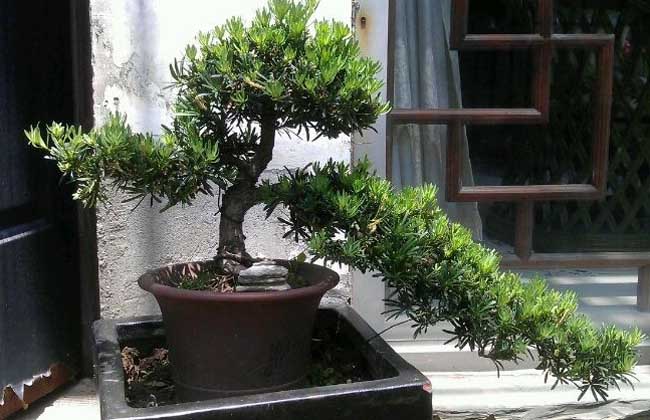
Podocarpus is also known as Luohanshan, Tushan, Jinqiansong, etc. The purpose of styling is to shape according to the tree and apply techniques according to the material, using superb artistic expression methods to draw out the highest artistic realm from an ordinary tree shape and maximize its ornamental value. Common styling methods include pruning, tying, pressing, binding, and hanging. Let's take a look at Podocarpus styling techniques together below!
Podocarpus styling techniques
1. Pruning: You can use Podocarpus's tolerance for pruning and its small leaf shape to create various shapes, such as spherical, conical, multi-layered spherical, etc. Simply prune according to the pre-designed shape. For example, if pruning is designed as a three-layered sphere with a total height of 2 m, then the lower layer is about 50 cm high, the middle layer is about 40 cm high, and the top layer is 30 cm high. All branches on the trunk between the first and second layers, 45 cm, and between the second and third layers, 35 cm, need to be cut off, and then the three spheres are pruned.
2. Tying: For tying-based styling, sturdy bamboo sticks and strong hemp rope can be used. Tie the bamboo sticks and branches tightly and firmly with hemp rope, then fix one end of the bamboo stick to the trunk, so that by adjusting the direction of the bamboo stick, the branches grow in a specific direction according to the stylist's intention, achieving the purpose of styling. It should be noted that tying-based styling is suitable for younger Podocarpus trees, while older Podocarpus trees, because their branches are thick and strong, make styling difficult and the effect poor.
3. Pressing: Pressing-based styling mainly uses the method of bending and tilting the trunk, so that the tree body presents an artistic beauty on a slanted plane completely different from that of an upright plane. Because Podocarpus's branches resemble human arms, and the clustered, hemispherical leaves growing at the top of the branches look like human palms, combined with the bent tree body, it is like a greeter bending at the waist and arms to welcome guests. It is very vivid and lifelike.
Podocarpus pruning methods
1. Thinning: Podocarpus thinning means cutting branches off from the base. Through thinning, the tree stump can have good ventilation and light transmission, concentrated nutrient supply, and vigorous growth. Thinning young trees early can help them develop and grow normally. When shaping, thinning can allow the retained styling branches to receive sufficient nutrients and accelerate the formation of the shape. For a formed stump bonsai, thinning can play a role in balancing nutrients, keeping it old but not declining. During thinning, cut off diseased and pest-infested branches and burn them immediately to prevent the spread of pests and diseases. Branches that hinder the overall appearance should also be cut off promptly.
2. Short pruning: Podocarpus short pruning means cutting long branches short to stimulate the axillary buds below the cut to sprout and form stronger side branches, thereby promoting branching and making styling easier. During shaping, after thinning out excess branches, the retained styling branches should be short-pruned to encourage the styling branches to sprout 2 to 3 times a year. Short-pruning once each time buds sprout will rapidly increase the branching order of the styling branches and can make each order of branches very short without elongating the branches.
3. Renewal pruning: Podocarpus renewal pruning means carrying out retractive pruning on perennial branches. It is a powerful measure for reducing the size of a large tree and is also an important means of promoting the sprouting of new branches and restoring tree vigor. For stump bonsai plants with a relatively good tree posture but a large canopy and long main branches, short pruning and thinning of one-year-old branches alone cannot meet the styling requirements of the stump bonsai. Renewal pruning can make a large tree smaller, which is beneficial for stump bonsai styling. For some tree species with strong sprouting ability, the amount of renewal pruning can be greater, that is, cutting away all branches and leaves and retaining only the skeleton of the tree stump to stimulate new branches to sprout below the cut.
Podocarpus cultivation methods
1. Soil: Podocarpus cultivation requires a slightly acidic culture soil rich in humus, loose and fertile, and well-drained. In alkaline soil, the leaves turn yellow and growth is slow. It has a long lifespan, reaching several hundred years, or even over a thousand years.
2. Watering: Podocarpus is not a plant in the Pinaceae family and is not drought-tolerant. On the contrary, Podocarpus is tolerant of shade and moisture. During the growing period, attention should be paid to frequent watering, but it should not become waterlogged. In the Shunde area, on sunny summer days, attention should be paid to frequent watering. Generally, it should be watered once in the morning and once in the evening. In addition, water should often be sprayed on the leaves to keep the leaf color fresh green and the growth good. Summer rainfall is usually relatively high, and Podocarpus is not tolerant of waterlogging, so attention should be paid to preventing long-term standing water.
3. Sunlight: Podocarpus is a neutrally to slightly shade-tolerant tree species. It can accept relatively strong light and can also grow in a more shaded environment. Although summer temperatures are relatively high and sunlight is strong, because large Podocarpus trees benefit from high temperature and strong light for maintaining tree posture and leaf shape, it is not necessary to shade large Podocarpus trees in summer. However, because Podocarpus seedlings have tender tissues, they should not be exposed to strong light for long periods. It is recommended to place them under tree shade for care.
4. Temperature: Podocarpus is suitable for pot cultivation in northern regions. When the outdoor temperature stabilizes at around 10°C, move it outdoors and place it in a wind-sheltered, sunny spot for care. After summer arrives, move it to a semi-shaded place. In winter, when the temperature does not drop to 5°C, it should be moved indoors. After moving indoors, control watering, and it can overwinter safely as long as it does not freeze.
5. Fertilizing: Podocarpus likes fertilizer, so apply thin fertilizer frequently. The fertilizer should mainly be nitrogen fertilizer, and an appropriate amount of black alum can be added and fermented into alum fertilizer water. During the growing period, fertilize once every 1 to 2 months. Fertilizing can be done together with watering (water-to-fertilizer ratio of 9:1).
6. Pests and diseases: Podocarpus is mainly harmed by leaf spot disease and anthracnose. Spray with 50% thiophanate-methyl wettable powder at 500 times dilution. Pests include scale insects, red spiders, and bagworms, which can be killed by spraying with 40% omethoate emulsifiable concentrate at 1500 times dilution.