How to Grow and Care for Buddhist Pine (Podocarpus macrophyllus)
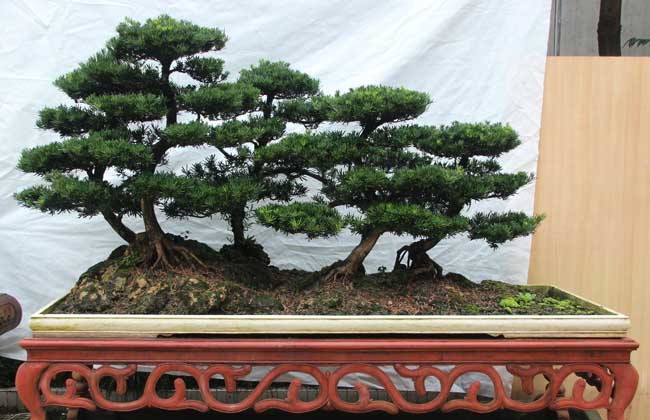
Buddhist Pine, also known as Tu Shan, Money Pine, Luohan Shan and so on, is an evergreen coniferous tree of the genus Podocarpus in the family Podocarpaceae. It is native to China and widely cultivated along the Yangtze River basin and the southeastern coastal areas. It has extremely high ornamental value, its wood is fine and even and easy to work, and it has medicinal value. It can be used for furniture, utensils, stationery and farm tools, and so on. Let us take a look at how to grow Buddhist Pine!
Growth Habits of Buddhist Pine
Buddhist Pine prefers a warm, humid climate, has weak cold tolerance and strong shade tolerance, and likes moist sandy loam with good drainage. It adapts well to soil and can even survive on saline-alkali soil. It is fairly resistant to various polluting gases such as sulfur dioxide, hydrogen sulfide and nitrogen oxides, and has strong resistance to pests and diseases. In China it is produced in Jiangsu, Zhejiang, Fujian, Anhui, Jiangxi, Hunan, Sichuan, Yunnan, Guizhou, Guangxi, Guangdong and other places. It is cultivated in gardens as an ornamental tree, and wild trees are very few.
Propagation Methods of Buddhist Pine
1. Sowing: Buddhist Pine can be propagated by sowing in August, usually in an open seedbed, sowing as soon as the seeds are collected, covering with rice straw, taking care to shade, keeping the substrate moist, and covering with plastic film in winter to prevent freezing.
2. Cuttings: Buddhist Pine can be propagated by cuttings in spring and autumn. For spring cuttings in mid-March, select stout 1-year-old dormant branches as cuttings. For autumn cuttings in July to August, select semi-lignified green branches as cuttings. The cuttings should all have a heel, and attention should be paid to shading, with March being the most suitable time for transplanting.
How to Grow Buddhist Pine
1. Soil: Growing Buddhist Pine requires a slightly acidic culture soil rich in humus, loose and fertile, and with good drainage. In alkaline soil the leaves turn yellow and growth is slow. It is long-lived, reaching several hundred years, or even over a thousand years.
2. Watering: Buddhist Pine is not a plant of the pine family and is not drought-tolerant. On the contrary, Buddhist Pine tolerates shade and moisture, and during the growing season it should be watered regularly, but it should not become waterlogged. In the Shunde area, on sunny summer days it should be watered regularly, generally once in the morning and once in the evening, and the leaves should also be sprayed with water frequently so that the leaf color stays fresh green and growth is good. Summer usually brings more rain as well, and since Buddhist Pine does not tolerate waterlogging, care should be taken to prevent prolonged standing water.
3. Sunlight: Buddhist Pine is a neutral to shade-leaning tree species; it can take fairly strong light and can also grow in a shadier environment. Although summer temperatures are high and the sunlight is strong, since large Buddhist Pine trees benefit from high temperatures and strong light for maintaining their tree form and leaf shape, there is no need to shade large Buddhist Pine trees in summer. However, because the tissue of young Buddhist Pine seedlings is tender, they should not be exposed to strong light for long periods, and it is best to keep them under tree shade.
4. Temperature: In northern regions Buddhist Pine is suitable for pot cultivation. When the outdoor temperature is stable at around 10°C, it can be moved outdoors and kept in a wind-sheltered, sunny place; after summer arrives, move it to a semi-shaded spot. In winter, when the temperature does not drop to 5°C, it should be moved indoors; after being brought indoors, watering should be controlled, and it can overwinter safely as long as conditions do not freeze.
5. Fertilizing: Buddhist Pine likes fertilizer and should be given light fertilizer frequently, mainly nitrogen fertilizer, to which an appropriate amount of black alum can be added and fermented into alum fertilizer water. During the growing season it can be fertilized once every 1 to 2 months, and fertilizing can be done together with watering (water-to-fertilizer ratio of 9:1).
6. Pests and Diseases: Buddhist Pine is mainly harmed by leaf spot disease and anthracnose, which can be sprayed with a 500-fold dilution of 50% thiophanate-methyl wettable powder. Pests include scale insects, red spider mites and large bagworm moths, which can be killed by spraying with a 1500-fold dilution of 40% omethoate emulsifiable concentrate.
Notes on Growing Buddhist Pine
1. During the growing season of Buddhist Pine, it is better for the potting soil to be slightly dry. If watered too much and the potting soil stays moist for a long time, it will cause root rot and yellow leaves. In severe cases, a large number of leaves fall off and the plant eventually dies. But in summer the water requirement is greater and watering should be plentiful; if the potting soil is too dry, the leaves easily scorch.
2. During the growing period, pay attention to pruning and pinching back plants that have already been shaped, to prevent the branches and leaves from growing leggy and to maintain the graceful form of the Buddhist Pine. When repotting, be careful to cut away excess roots and rotted fibrous roots, and at the same time cut away overly dense branches and leggy branches.
3. In winter, when the outdoor temperature drops to 5°C, it should be moved indoors; after being brought indoors, control watering and stop fertilizing. Generally, repot once every 2 years, and repotting can be done in either spring or autumn. When repotting, be careful to properly cut away excess roots and decayed fibrous roots, and at the same time cut away overly dense branches and add new culture soil.
4. Potted Buddhist Pine should usually be placed on a high platform or stone pedestal, which can reduce ants, earthworms and other insects crawling in through the drainage hole at the bottom of the pot and harming the plant.
5. When planting Buddhist Pine, make sure the roots are spread out, cover with soil to 2 cm below the rim of the pot, water thoroughly once, and place the pot in a shaded, ventilated place. Let the seedling recover for 7 to 10 days, and after the Buddhist Pine has regained its vigor, move it to a sunny, moist environment, keep the potting soil moist, and let it grow vigorously.
6. The cause of leaf tip death in Buddhist Pine is mostly fungal infection of the shoot tips during hot, rainy seasons. If the Buddhist Pine plant grows leggy, with tender tissue, if the seedlings are too dense with poor ventilation, or if wounds form from sunscald, it is easily infected by pathogens and this disease is induced.