What is the outlook for Pinus bungeana cultivation? This article gives you the full picture
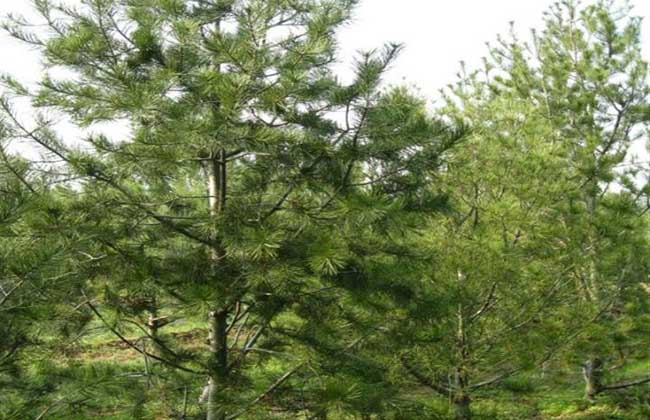
Pinus bungeana (lacebark pine) is an evergreen tree of the genus Pinus in the family Pinaceae, reaching up to 30 m tall. Young trees have grayish-green bark, while old trees have grayish-brown or grayish-white bark that peels away in flakes to reveal pink inner bark. The tree has a graceful form and unusual bark, making it suitable for ornamental use. Its wood can be used for house construction, furniture, stationery and other purposes, and its fruit can be used as medicine. Let us take a look below at what the cultivation prospects for Pinus bungeana are like!
Cultivation returns of Pinus bungeana
1. Nutrient-bag seedlings: For small Pinus bungeana seedlings, one mu of land yields 300,000 plants per year. The seed investment is 80 jin, at 100 yuan per market jin. Labor costs, pesticide costs and seed investment come to about 15,000 yuan in total, yet by calculation the annual profit is far greater than the investment cost, with profit basically guaranteed at around 8 to 20 times, and for every additional year the seedlings grow, the profit will increase several times over.
2. Large-specification seedlings: A 1 m Pinus bungeana is priced at around 200 yuan, with a growth cycle of about 8 years. A 1.5 m Pinus bungeana has a market price of around 350 yuan, and growing from 1 m to 1.5 m takes only 1 year. That is to say, in one year a large Pinus bungeana tree increases in value by about 150 yuan. A 2 m Pinus bungeana is priced at around 800 yuan; growing from a 1 m Pinus bungeana in the first year to 2 m takes 3 years, meaning it can appreciate by 600 yuan within three years. At a height of 1.5 m and above it can be used in landscaping projects, meaning that a purchased 1 m Pinus bungeana grown for 3 years can earn about 600 yuan per plant.
Cultivation value of Pinus bungeana
1. Medicinal value: The fruit of Pinus bungeana is bitter in taste and warm in nature, with effects of relieving cough, resolving phlegm and calming asthma. It has a marked therapeutic effect for people whose throats are often uncomfortable, especially those with coughing and phlegm, and can be collected oneself, soaked in hot water and taken.
2. Economic value: The trunk of Pinus bungeana has very good grain, and its wood is also of the light and soft type; wooden furniture made from it lasts a long time in use. If building wooden houses in scenic areas, the wood characteristics of Pinus bungeana also meet the requirements. After deep processing it shows a unique luster, and its grain in joinery is absolutely beautiful.
3. Landscape value: Pinus bungeana has the indomitable character of a pine, and its white bark is a style all its own. Whether planted over large areas or as a single solitary specimen along the sides of roads, it is the most beautiful scenery, and its chance of surviving in any soil is very high, so its ability to improve soil and purify the environment is in no way inferior.
Cultivation prospects of Pinus bungeana
1. Market demand: Pinus bungeana seedlings belong to a national second-class rare and protected plant, and it is also a precious tree species that is currently uniquely scarce in China. The market supply-demand relationship has a direct impact on the price of Pinus bungeana seedlings. For example, in the Beijing market a Pinus bungeana of 3 m or more costs 3,000 yuan per plant. Since 2000, the price has remained very high and has been driven higher and higher, and this is especially evident in Pinus bungeana seedlings. Next, in Beijing, Tianjin, Hebei, Shandong, Shanghai, Zhejiang, Jiangsu, Hangzhou, Hefei and Dalian, demand keeps increasing, which has also driven the price of these seedlings upward.
2. Market space: China has many deciduous tree species and few evergreen tree species, while demand for evergreen tree species is large. Pinus bungeana is simple and vigorous, with a graceful tree form and a broad, tower-shaped crown; it is majestic, upright and evergreen through all four seasons, making it an indispensable preferred tree species in gardens. It can be planted in clusters or as a solitary specimen on green spaces, and can also be used as a street tree or for afforestation in scenic areas. For example, the greenery on Beijing's Chang'an Avenue uses Pinus bungeana to set off the capital's solemn and majestic air.
3. Strong adaptability: Pinus bungeana is a slow-growing plant, with slow growth speed and a long growth cycle, so its price is relatively high. It has strong environmental adaptability, likes light and tolerates shade, tolerates poor land and is even more tolerant of saline-alkali soil. It does not demand much from the soil and can adapt to a soil pH of 7.5 to 8. It resists severe drought and strong wind, has few pests and diseases, and has low management costs. Moreover, this tree species is extremely resistant to sulfur dioxide, hydrogen fluoride pollutants and soot in the air, and can grow at high temperatures of 40 degrees and low temperatures of -40 degrees.
4. Scarce resources: Pinus bungeana has natural forest distribution groups in Shanxi, Henan, Shaanxi and southern Gansu in China, but the numbers are not large. Things are precious when they are rare, and its propagation can only be done by division planting and seed sowing. Within a certain period the quantity will be small and the price will not fall straight down, so nursery cultivation can still be profitable. In landscape projects it has already become a "mature tree"; after nursery cultivation, repeated transplanting and multiple root pruning, it has well-developed fibrous roots, a firm soil ball, little root damage from transplanting and a high survival rate. In the new era, landscape planning and design require diversity of tree varieties, which also makes Pinus bungeana seedlings a special variety, widely applied and forming part of the price factor.