How to Propagate the Lacebark Pine? A Detailed Guide to Common Propagation Methods
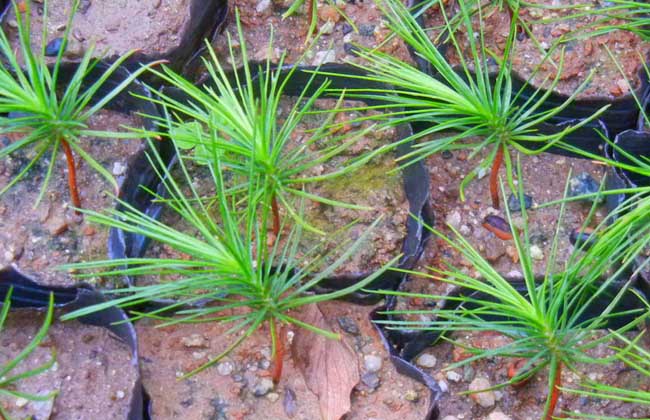
The lacebark pine (Pinus bungeana) is a tree species endemic to China. It is a light-loving species that tolerates poor soil and relatively dry, cold climates, and it grows well on calcareous and loess soils in cool, mild climates with deep, fertile, moist soil. It has extremely high cultivation value. Its propagation methods include seed propagation, cutting propagation and grafting propagation, among which seed propagation is generally the most commonly used. Let us take a look below at how to propagate the lacebark pine!
Seed Propagation of the Lacebark Pine
For seed propagation of the lacebark pine, the seedling-raising site should preferably be well-drained, flat and deep sandy loam. Sowing immediately after the soil thaws in early spring can reduce damping-off in pine seedlings. Because it fears waterlogging, sowing should be done on raised beds. Water the bed thoroughly before sowing; about 1 kg of seeds per 10 sq m can produce 1000 to 2000 seedlings. After broadcast sowing, cover with 1 to 1.5 cm of soil and cover with plastic film, which can increase the germination rate. After the seedlings emerge completely, gradually increase the ventilation time until the film is removed entirely. After sowing, the seedlings emerge with the seed shell attached, which falls off on its own after about 20 days; during this period, bird damage must be prevented. During the seedling stage, shade frames should be set up to prevent sunscald, and before winter the soil should be mounded up for cold protection. Young seedlings have a long taproot and few lateral roots, so when transplanting, take care to damage the lateral roots as little as possible, otherwise they are prone to dying.
Cutting Propagation of the Lacebark Pine
Rooting of softwood cuttings of the lacebark pine requires both suitable moisture and suitable oxygen, so the cutting medium must have good water retention and aeration; vermiculite, quartz sand, river sand and peat are generally used as the cutting medium. Because rooting of cuttings requires oxygen, the shallower the better, generally 0.5-4 cm; for indoor cuttings, the shallower the better as long as the cuttings do not fall over. The cutting length is generally 4-14 cm or more, and within this range there should be 2-4 internodes. Treating the cuttings by soaking them in an indoleacetic acid solution (concentration 0.005%-0.01%) for 6-24 hours can increase the rooting rate.
Grafting Propagation of the Lacebark Pine
If the lacebark pine is propagated by softwood grafting, the softwood should be grafted onto older Chinese pine (Pinus tabuliformis) rootstock. When grafted onto 3-year to 4-year-old Chinese pine rootstock, the survival rate generally reaches 85% to 95%, and the compatibility is strong and growth is fast. The scion should be selected from robustly growing new shoots, with a thickness of 0.5 cm being ideal. Before grafting, water the Chinese pine thoroughly once; this ample moisture helps the formation of callus tissue. Winter grafting should be carried out in a greenhouse, where the temperature must be kept above 0°C. Below 0°C, wounds heal slowly and the survival rate is low. It can be done from November in winter to February of the following year; after one month it can survive, and the survival rate can reach above 75%.