Detailed Guide to Planting Lacebark Pine Seeds
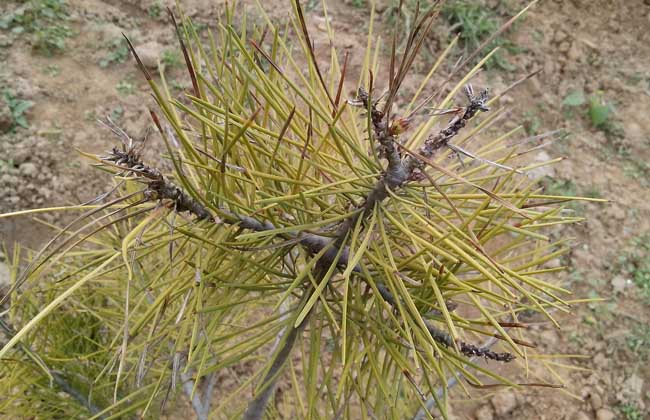
The lacebark pine (Pinus bungeana) is a tree species endemic to China, also known as white-bark pine, three-needle pine, and white-fruit pine. It is light-demanding, tolerant of poor soil and relatively dry, cold climates, and grows well in cool climates on deep, fertile, moist calcareous and loess soils. It can be propagated by seed, cuttings, and grafting, but seed propagation is commonly used in actual production. Let's take a look below at how to plant lacebark pine seeds!
Lacebark Pine Seed Propagation
Lacebark pine seeds should be stratified in sand for 60 days before sowing, or soaked in warm water to speed up germination. Sow on raised beds, and the bed surface must not accumulate water. After sowing, cover with plastic film to raise soil temperature and preserve moisture. They will sprout and emerge in about 15 to 20 days. Once the seedlings are uniform, remove the film immediately, and spread a layer of sawdust between the rows to preserve moisture and prevent mud from splashing onto and smothering the seedlings during watering. The bed soil must not be too wet, to avoid damping-off disease. First-year seedlings reach 5 to 7 cm in height and have poor cold resistance, so in northern nurseries they should be covered with soil for winter protection. If conditions allow, it is best to build a shade frame for one month after emergence to prevent damage from high temperatures and sunscald. Because mice love to eat pine seeds, scatter some rat poison on the bed surface before building the arched frame and covering it with film.
Transplanting Lacebark Pine Seedlings
Lacebark pine seedlings grow slowly and are best planted densely. If you need to continue cultivating large-sized saplings, they must go through 2 to 3 more transplants before final planting. Two-year-old seedlings can be transplanted with soil in early spring before the terminal buds begin to sprout, with a spacing of 20 to 60 cm, taking care not to damage the terminal buds. After planting, water twice in succession, then water again after 6 to 7 days. For 4- to 5-year-old seedlings, a second transplant with a soil ball can be carried out, with a spacing of 60 to 120 cm. After they survive, keep the soil around the roots loose, apply 100 to 120 kg of decomposed organic fertilizer per plant, water thoroughly after covering with soil, and then strengthen management to promote growth and cultivate strong seedlings.
Lacebark Pine Seedling Stage Management
1. Reasonable watering: After the lacebark pine seedlings have all emerged, gradually increase the ventilation time of the seedbed, and harden the seedlings to enhance their resistance. The seedlings are relatively shade-tolerant; after removing the film, immediately cover with shade netting to prevent damage from high temperatures, sunscald, and damping-off. Water promptly during long dry spells without rain or during high summer temperatures.
2. Weeding and loosening the soil: For weed control in lacebark pine, follow the principle of removing weeds early, while small, and completely. Weed between plants by hand to avoid damaging the seedlings. After weeding broadcast-sown seedlings, cover with a suitable layer of soil to prevent cracks. For drill-sown seedlings, carry out weeding and soil loosening together, and thin and fill in seedlings at the same time, then drain promptly.
3. Timely fertilizing: For lacebark pine seedlings, base fertilizer should be the mainstay, with topdressing as a supplement. From mid-May to the end of July, during the peak growth period, apply topdressing 2 to 3 times, mainly nitrogen fertilizer. Apply decomposed human or pig manure at 3 dan per mu, diluted with about 20 dan of water; decomposed cake fertilizer at 5 to 15 kg per mu, mixed into about 15 dan of cake fertilizer water; and apply about 4 kg of urea per mu. In the later growth stage, stop applying nitrogen fertilizer and increase phosphorus and potassium fertilizer to promote lignification of the seedlings. You can also spray the leaves with a 0.3% to 0.5% potassium dihydrogen phosphate solution.