How to grow a lacebark pine bonsai? Teaching you the correct care methods
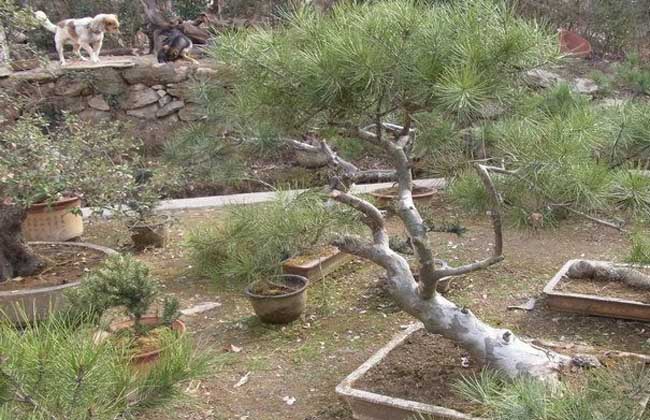
The lacebark pine, also known as white bone pine, three-needle pine, white fruit pine, tiger skin pine, coiled dragon pine, etc., is an evergreen tree of the genus Pinus in the family Pinaceae. Its branches are vigorous, it stays green through all four seasons, and its form is ancient and elegant, making it an excellent bonsai tree species. How to make the needles of a lacebark pine bonsai short and dense is an important question worth studying. Let us take a look below at how to grow a lacebark pine bonsai!
Sufficient light
There are many cultivated varieties of lacebark pine bonsai, commonly including long-leaf lacebark pine bonsai, short-leaf lacebark pine bonsai, golden-leaf lacebark pine bonsai, silver-leaf lacebark pine bonsai, twisted-leaf lacebark pine bonsai, etc. Regardless of the variety, sufficient light should be maintained. When a lacebark pine bonsai is placed in a spot with sufficient light, the needles grow long and weak, and the internodes of the branches are also longer, but in hot summer it is best to provide slight shade and cooling to favor growth. It is cold-resistant and afraid of heat, and excessively high temperatures are unfavorable to its growth.
Proper water restriction
Lacebark pine bonsai is drought-tolerant and averse to waterlogging. Proper water restriction can shorten the needles, and the effect is especially good during the period before and after buds sprout and needles emerge. Too much watering will make the needles grow longer, and water accumulation easily causes root rot and death, so it is best for the potting soil to be slightly dry. Of course, watering should differ according to different seasons and different periods.
Controlled fertilization
Lacebark pine bonsai is tolerant of poor soil and should not be fertilized heavily. Too much fertilizer or concentrated fertilizer easily damages the root system. Fertilization is not suitable in high-temperature seasons, and in severe cases it can cause the tree to die. Controlled fertilization can shorten the needles, while too much fertilizer makes the needles grow longer. Usually in spring, fertilizing 1 to 2 times each is sufficient, and in the year of potting, fertilizing should be even less.
Reasonable pot selection
The lacebark pine bonsai is a flat-needle tree species, tolerant of drought and poor soil. Generally speaking, the pot chosen should be slightly smaller and shallower, and too large or too deep is to be avoided. Using a smaller pot helps produce short needles, while using too large or too deep a pot easily causes water accumulation and root rot. For the cascade style, a deep pot may be used, and more broken tiles should be placed at the bottom of the pot to facilitate drainage and air permeability. It is best to choose a simple and elegant purple clay ceramic pot, and the pot shape must match the tree's posture.
Timely bud removal
Bud removal is an important means of controlling growth and maintaining a beautiful tree shape. It is best done every spring before the new buds elongate and the needles emerge. Remove 1/2 to 2/3 of the bud length, and it is best to do this on sunny days to help the wound heal. If the terminal buds are too dense, more can be removed; where buds are sparse, less can be removed; where buds are long, more can be removed; where buds are short, less can be removed; where growth is vigorous, more can be removed; where growth is weak, less can be removed or none at all. Bud removal should also be decided according to the needs of styling. After years of bud removal, the needles can be made short and dense and the tree shape compact.
Pruning and wiring processing
The lacebark pine bonsai has strong sprouting ability, and its branches are supple and elastic, tolerant of pruning and easy to wire. Wiring and pruning are not only needed for styling, but can also control growth and shorten the needles, and can also control growth and shorten the needles, making the tree shape more beautiful. Pruning and wiring for styling are best carried out from winter to early spring during the dormant period. Wounds need to be treated with wax, clay, or black tape to prevent resin flow, otherwise it will affect the tree's growth and may even cause death. Using metal and coir together achieves better results.