How to grow potted roses? A detailed guide to cultivation methods
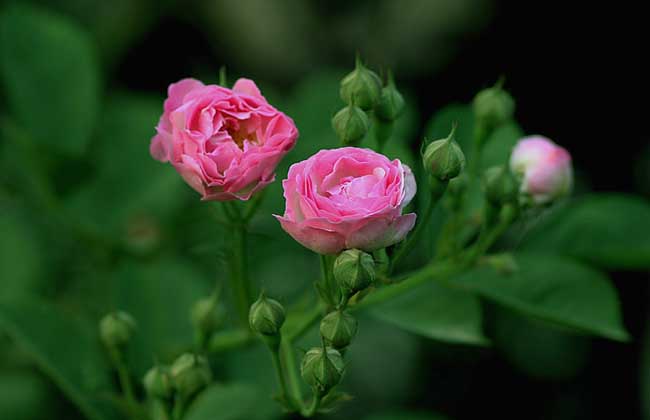
Most roses are world-famous ornamental plants. They prefer to grow among shrubs beside roads, field edges or on hilly land, and are widely distributed across the cold-temperate to subtropical regions of Asia, Europe, North Africa and North America. They have extremely high ornamental value and a very long history of cultivation in China, and are very well suited to bonsai cultivation. Let us take a look below at how to grow potted roses!
How do roses reproduce?
Rose seeds can be used to raise seedlings, but in production, softwood cuttings from the current year's shoots are mostly used, as they root easily. Rare and precious varieties are harder to root from cuttings and can be propagated by layering or grafting; seedlings from vegetative propagation can bloom in the same year. For plants used as pot flowers, older branches from superior varieties should be selected and propagated by layering, and attention should also be paid to pruning the main bud to achieve artificial dwarfing. For plants used as cut flowers, varieties that can form mother branches for harvesting flowers and that have large, brightly colored blooms should be selected for propagation. Roses can also be propagated by tissue culture, water culture, grafting, division and other methods.
How are roses transplanted?
1. Potting soil preparation: When preparing nutrient soil for potted roses, attention should be paid to drainage, aeration and the balance of various nutrients. The ratio is 5 parts garden soil, 3 parts leaf mold: 2 parts rice husk ash. It is suitable to repot, trim roots and change the soil each year before and after overwintering, increasing the pot diameter year by year; clay pots are best.
2. Transplanting time: Potting roses is not restricted by season; as long as the seedling root system is suitably developed or the plant is moved with a soil ball, it can be potted in spring, summer and autumn. For large field-grown roses, potting is best done during the dormant period after leaf fall in early winter or before sprouting in early spring; otherwise normal growth and development are affected, tree vigor weakens, and a longer time is needed to restore vigor. For small rose seedlings, potting is not restricted by time; as long as they have been successfully cultivated, they can be potted, to prevent leggy growth and weakening.
3. Potting method: For small rose seedlings, pick up the seedling and shake it gently so the roots spread out fully; larger seedlings do not need this. Usually one plant per pot; when pots are scarce, two or three plants per pot is acceptable (later, when they branch, there may not be enough space). Roses grown in large pots have thick stems, green leaves, large flowers, many stamens and bright colors.
Rose cultivation and management
1. Watering: Watering roses varies with the season. During the winter dormant period, keep the soil moist; just do not let it dry out completely. In early spring, before the branches sprout and as the branches and leaves grow, increase the amount of water appropriately, watering once in the morning and once in the evening each day. During the peak growing season and the flowering period, the amount of water needs to be increased. In summer, with high temperatures and increased water evaporation, the plant is in a weak, semi-dormant state and is most averse to drying out and dehydration; water once in the morning and once in the evening each day, and avoid direct sun exposure. When watering at high temperatures, a small amount of water should seep from the bottom of the pot each time, indicating it has been watered thoroughly. When watering, do not splash water on the leaves, to prevent disease.
2. Fertilizing: Roses like fertilizer. The base fertilizer should mainly be slow-release organic fertilizer, such as decomposed cow manure, chicken manure, soybean cake, oil residue, etc. Add liquid fertilizer water once every half month, which can keep the leaves thick, dark green and glossy. Before sprouting in early spring, apply a stronger liquid fertilizer once; note not to fertilize during the flowering period; after the flowers fade in June, apply liquid fertilizer once more; around September, when the fourth or fifth axillary buds are about to sprout, apply a medium-strength liquid fertilizer once more; in December during the dormant period, apply decomposed organic fertilizer to overwinter.
3. Pruning: After each season's bloom, comprehensive pruning must be carried out. Generally, light pruning is suitable: promptly cut off spent flowers and thin, weak, crossing and overlapping branches, keep thick, young branches, leaving only 3-6 cm from the base, keep outward-facing buds, and prune into a natural open-center shape, making the plant shape attractive and extending the flowering period. In addition, for potted roses, choose varieties that are dwarf, free-flowering and strongly fragrant.
4. Disease prevention: Roses are easily infected by many diseases, and most are caused by fungi, such as powdery mildew, black spot, rust, etc. In daily care, attention must be paid to pruning branches and leaves to facilitate ventilation and aeration. Before pests and diseases occur, sprays can be applied for prevention, sterilization and disinfection. If pests and diseases have already occurred, corresponding measures must be taken for treatment, so as not to affect the growth and flowering of the roses.