How to propagate roses? A detailed explanation of common propagation methods
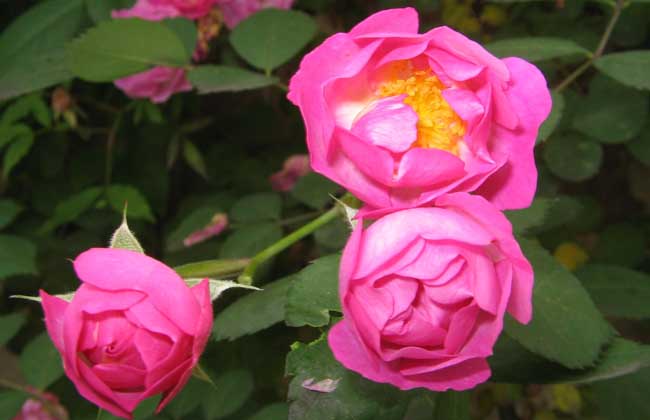
Roses are one of the world's famous ornamental plants, preferring to grow among shrubs beside roads, field edges, or on hilly ground. Wild roses are mostly distributed naturally along streams, roadsides, garden edges, and field corners, often growing in dense thickets with branches in full splendid bloom. After light rain or morning dew, the petals are soaked with a rosy flush, making a rather beautiful scene, and they have high planting value. Let's take a look below at the propagation methods for roses!
Planting time for roses
Roses can be planted in all four seasons. During the growing season the root system must be kept moist, and in winter protection against cold is needed, but the suitable period is from after leaf fall in autumn to before bud break in spring, of which the period from after leaf fall in autumn to before the ground freezes is the best planting time. To make the plants grow quickly and expand into a flower thicket, large-hole planting must be carried out, with holes 1 m long and wide and 0.6-0.8 m deep, or planting trenches 0.6-0.8 m deep and wide dug out. Apply organic fertilizer and superphosphate per plant, mix them evenly with soil and apply them concentrated at a soil depth of 0.2-0.5 m; after planting, firm the soil and water thoroughly in time.
Propagation methods for roses
Rose seeds can be used for raising seedlings, but in production, softwood cuttings from the current year's young shoots are mostly used for raising seedlings, as they root easily. Precious cultivars are harder to root from cuttings and can be propagated by layering or grafting; seedlings from asexual propagation can bloom in the same year. For seedlings used as potted flowers, relatively old branches of superior cultivars should be selected and propagated by layering, and attention should also be paid to pruning the main bud and carrying out artificial dwarfing. For seedlings used as cut flowers, cultivars that can form mother stems for flower harvesting and have large, brightly colored flowers should be selected for raising seedlings. Roses can also be propagated by tissue culture, water culture, grafting, division, and other methods.
Cultivation and management of roses
1. Fertilization management: Roses like fertilizer and also tolerate poor soil. In March, apply 1 to 2 times a nitrogen-based liquid fertilizer to promote the growth of branches and leaves; in April to May, apply 2 to 3 times a fertilizer based mainly on phosphorus and potassium to promote more flower bud formation and more blooming; after flowering, apply one rejuvenating fertilizer and then no further fertilization is needed. Roses are sun-loving flowers, like warmth, and also tolerate cold; in North China and areas to the south, they can overwinter safely outdoors.
2. Watering management: Roses like moisture but fear wetness and waterlogging. From bud break to before flowering, water can be given a little more, to the degree that the soil is moist but not waterlogged; after flowering, watering must not be excessive, and the soil should be allowed to dry and then be watered alternately. In the rainy season, attention should be paid to drainage to prevent waterlogging.
3. Pruning and trimming: Roses have strong sprouting ability and grow luxuriantly. If not pruned in time, under conditions of muggy heat, humidity, insufficient light, and poor ventilation, pests and diseases are likely to occur, so pruning should be carried out once after flowering. When pruning, healthy semi-lignified branches of the current year can be selected for cuttings and placed in a semi-shaded spot; after rooting, they can be transplanted and planted out the following spring. Alternatively, in early spring before bud break, the rooted suckers sprouting from the base can be cut off with roots and planted separately.