When is the most suitable time to plant roses?
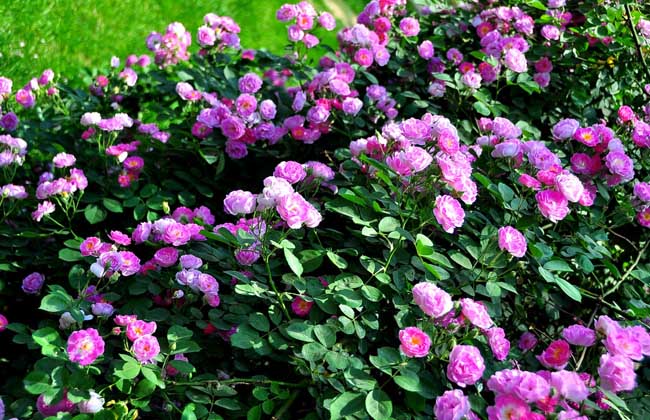
The rose is one of the world's famous ornamental plants and has a long history of cultivation in China. After roses were introduced to China in the 18th and 19th centuries, they were crossed with existing varieties and repeatedly backcrossed, producing varieties such as the Chinese rose, the perfume rose, the wild rose and the rugosa rose, all with extremely high ornamental value. Let's take a look below at when roses are planted!
When are roses planted?
Roses can be planted in any season of the year. During the growing season the root system must be kept moist, and in winter protection against cold is needed, but the period from leaf fall in autumn to bud break in spring is preferable, and the time from leaf fall in autumn to before the ground freezes is the best planting period. To help the plants grow and expand the flower cluster as quickly as possible, large-hole planting must be carried out, with the hole 1 m long and wide and 0.6-0.8 m deep, or a planting trench 0.6-0.8 m deep and wide dug. Apply organic fertilizer and superphosphate per plant, mix them evenly with the soil and apply them concentrated at a soil depth of 0.2-0.5 m, firm the soil after planting, and water thoroughly in good time.
Propagation methods for roses
Rose seeds can be used for raising seedlings, but in production softwood cuttings from the current year are mostly used, as they root easily. Rare and valuable varieties are harder to root from cuttings and can be propagated by layering or grafting; seedlings from asexual propagation can bloom in the same year. For seedlings used as pot flowers, older branches of superior varieties should be chosen and propagated by layering, and attention should also be paid to pruning the main bud and carrying out artificial dwarfing. For seedlings used as cut flowers, varieties that can form flower-bearing mother branches and have large, brightly colored flowers should be chosen for propagation. Roses can also be propagated by tissue culture, water culture, division and other methods.
How to grow roses
1. Soil: Roses are not strict about soil, tolerating drought and poor soil. For cultivation, soil that is deep, loose, fertile, moist and well drained is most suitable, though they can also grow normally in heavy clay soil. Whether planted in the ground or in pots, the growing medium for roses is best when it is fully rotted sandy soil.
2. Light: Roses are light-loving flowers and rather prefer full sunlight; they also tolerate partial shade, are fairly cold hardy and have very strong adaptability. Apart from the severe cold of winter, they can be planted throughout the south. During the growing period, roses should be guaranteed sufficient sunlight so they can have luxuriant foliage and bloom abundantly.
3. Watering: Roses like moisture but fear waterlogging and waterlogged conditions. From bud break to before flowering, a little more water may be given, with soil that is moist but not waterlogged being best. After the roses finish flowering, the amount of watering should be reduced; when watering, the soil should be allowed to dry and then be watered, and in the rainy season attention should be paid to drainage and preventing waterlogging, so as to avoid root rot from standing water.
4. Fertilizing: Roses relatively like fertilizer and also tolerate poor soil. In March, a nitrogen-based liquid fertilizer may be applied 1 to 2 times to promote luxuriant branches and leaves; in April and May, a phosphorus- and potassium-based fertilizer may be applied 2 to 3 times to encourage more buds and more flowers; after flowering, apply a rejuvenating fertilizer once more, and then fertilizing can be stopped. Roses need one application of soil mounding and fertilizer each winter.
5. Pruning: Pruning and shaping is an indispensable step in growing most flowers, and naturally roses are no exception; especially when grown as pot flowers, pruning and shaping deserve even more attention. Generally, mature roses are pruned once each year before growth starts in spring, with a moderate amount, ensuring the rose branches are neither too dense nor too sparse and the shape is attractive. Each winter, the old branches and densely growing branches of roses should be pruned regularly to maintain good light penetration and ventilation, which can reduce pests and diseases.