How to Plant Rose Seeds? A Detailed Guide to the Planting Method
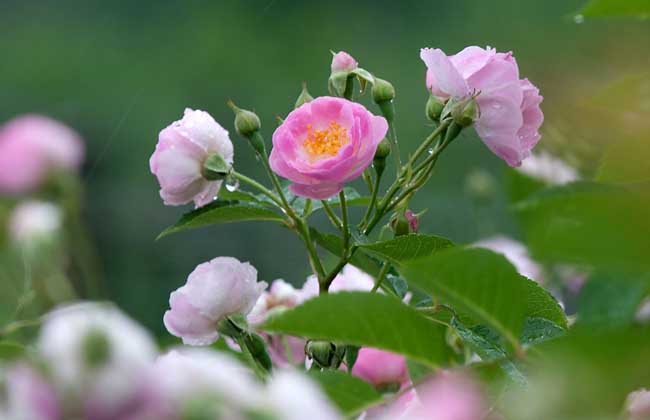
The rose has been a fine ornamental flower prized since ancient times. For cultivated varieties, division, cuttings and layering are commonly used for propagation, generally carried out in the three periods of spring, early summer and early autumn. In addition to these, sowing propagation can also be chosen; sowing is generally done after autumn, or spring sowing after sand storage. Let's take a look below at how to plant rose seeds!
Sowing
Soak the rose seeds in water for 1 to 2 days, then remove them and mix in 3 times their volume of moist sand. The appropriate moisture level is when the sand holds together in a ball with no water seeping out between the fingers. Put the sand-mixed seeds into a container and keep them constantly moist. This treatment is usually carried out in winter. Before sowing in spring, sieve out the seeds, air them in the sun and sprinkle with water; once half of the seeds have cracked open, they can be sown.
Watering
Watering roses varies with the season. During the winter dormant period, keep the soil moist, but do not let it dry out completely. In early spring, before the branches sprout and as the foliage grows, increase the water amount appropriately, watering once each morning and evening. During the peak growing season and the flowering period, the water amount needs to be increased. In summer, with high temperatures and greater water evaporation, the plant is in a weak, semi-dormant state and is most averse to drying out and dehydration, so water once each morning and evening and avoid direct sun exposure. When watering at high temperatures, a small amount of water should seep from the bottom of the pot each time, indicating a thorough watering. Do not splash water on the leaves when watering, to prevent disease.
Fertilizing
Roses like fertilizer. The base fertilizer should mainly be slow-release organic fertilizer, such as rotted cow manure, chicken manure, soybean cake, oil residue and so on. Add liquid fertilizer water once every half month, which keeps the leaves thick, deep green and glossy. Before sprouting in early spring, apply a relatively concentrated liquid fertilizer once. Be careful not to fertilize during the flowering period. After the flowers fade in June, apply liquid fertilizer once more. In September, when the fourth or fifth axillary buds are about to sprout, apply a medium-strength liquid fertilizer once more. In December, during the dormant period, apply rotted organic fertilizer to overwinter.
Pruning
After each season's flowering period ends, comprehensive pruning must be carried out. Light pruning is generally appropriate: promptly cut off the faded flowers and the thin, weak, crossing and overlapping branches; keep thick, young branches but leave only 3 to 6 cm from the base, keep the outward-facing buds, and prune into a natural open-center shape, making the plant shapely and extending the flowering period. In addition, for potted roses, choose varieties that are dwarf, many-flowered and richly fragrant.
Disease Prevention
Roses are easily infected by many diseases, most of which are caused by fungi, such as powdery mildew, black spot and rust. In daily care, pay attention to pruning branches and leaves to help with ventilation and air flow. Before pests and diseases occur, spray with a medicinal solution for prevention, sterilization and disinfection. If pests and diseases have already occurred, take corresponding measures for treatment, so as not to affect the growth and flowering of the rose.