Detailed Guide to Growing Roses and Points to Note
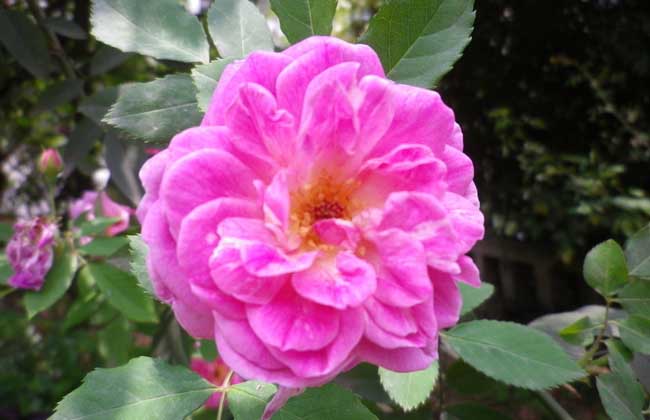
The rose is one of the world's famous ornamental plants and has a long history of cultivation in China. As far back as 1630, when Wang Xiangjin wrote the Qunfangpu, in 1688 when Chen Haozi wrote the Michuan Huajing, and in 1708 when Wang Hao wrote the Guang Qunfangpu, there were already records of roses, Chinese roses, rugosa roses, and Banks' roses. Let us now take a look at rose growing methods and points to note!
Rose Propagation Methods
Rose seeds can be used for raising seedlings, but in production, softwood cuttings from the current year's young shoots are mostly used, as they root easily. Precious varieties are harder to root from cuttings and can be propagated by layering or grafting; seedlings from vegetative propagation can bloom in the same year. For seedlings used as potted flowers, older branches from superior varieties should be selected and propagated by layering, and attention should also be paid to pruning the main bud for artificial dwarfing. For seedlings used as cut flowers, varieties that can form flower-bearing mother branches and produce large, brightly colored flowers should be selected for propagation. Roses can also be propagated by tissue culture, water culture, grafting, division, and other methods.
Rose Growing Methods
1. Soil: Roses are not strict about soil, tolerating drought and poor soil. For cultivation, deep, loose, fertile, moist soil with good drainage is most suitable, though they can also grow normally in heavy clay soil. Whether planted in the ground or in pots, the growing medium for roses is best made of fully decomposed sandy soil.
2. Light: Roses are light-loving flowers and prefer ample sunlight, though they also tolerate partial shade and are fairly cold-hardy, with very strong adaptability. Except for overwintering in severe winter cold, they are suitable for planting throughout southern China. During the growing period, roses should be guaranteed sufficient sunlight so they can grow lush foliage and bloom abundantly.
3. Watering: Roses like moisture but fear wetness and waterlogging. From bud break to before flowering, they can be watered somewhat more, with the best condition being moist soil without standing water. After the roses finish flowering, watering should be reduced. When watering, the soil should be allowed to dry and then be watered thoroughly. In the rainy season, attention should be paid to drainage to prevent waterlogging, so as to avoid root rot from standing water.
4. Fertilizing: Roses quite like fertilizer but also tolerate poor soil. In March, a nitrogen-based liquid fertilizer can be applied 1 to 2 times to promote lush branches and leaves. In April and May, a phosphorus- and potassium-based fertilizer can be applied 2 to 3 times to encourage more buds and more flowers. After flowering, apply one more fertilizer to restore vigor, and then stop fertilizing. Roses need one application of soil mounding and fertilizer each winter.
5. Pruning: Pruning and shaping is an indispensable step in growing most flowers, and naturally roses are no exception, especially when grown as potted flowers, where pruning and shaping deserve even more attention. Generally, mature rose plants are pruned once each year before spring growth begins, with a moderate amount, ensuring the branches are neither too dense nor too sparse and the shape is attractive. Every winter, the old branches and densely growing branches of roses should be pruned regularly to maintain good light penetration and ventilation, which can reduce pests and diseases.
Points to Note for Roses
1. Rose anthracnose
[Symptoms] The lesions appear on the leaf margins, semicircular, with the lesion edge dark brown and the center brown to light brown; later, small black dots form on the lesions. The pathogen overwinters on diseased fallen leaves. Under warm, humid conditions, spores germinate and infect the leaves. When plants are too dense and moisture lingers for a long time, the disease is likely to occur. Anthracnose mostly occurs sporadically and can be controlled at the same time when treating black spot and leaf spot.
[Control] In late autumn and early winter, clean the garden promptly and collect diseased fallen leaves to burn in a centralized manner. Strengthen maintenance, prune appropriately, and thin out overly dense branches to ensure good ventilation and light penetration. When necessary, spray 20% Longkejun (thiodiazole-copper) suspension concentrate at 500 times dilution, or 78% Kobo (mancozeb) wettable powder at 600 times dilution, 75% Daconil (chlorothalonil) wettable powder at 600 times dilution, 50% Shibagong or Shibaike (prochloraz) wettable powder at 1000 times dilution, or 25% Tanteling wettable powder at 500 times dilution.
2. Rose powdery mildew
[Symptoms] Leaves, petioles, young shoots, and flower buds can all be affected. On mature leaves, irregular white powdery mildew spots appear; diseased leaves gradually turn brown starting from the leaf tip or margin, causing the entire leaf to dry up and fall off. When young leaves are infected, chlorotic spreading spots appear, gradually enlarging with indistinct edges; white powdery spots form on both the front and back of young leaves, later covering the entire leaf, and the leaf turns pale gray or purplish red. New leaves become wrinkled and deformed. After petioles and new shoots are infected, the internodes shorten and the stems become thinner; some diseased shoots dry up, and the diseased parts are also covered with white powder. When flower buds are infected, the buds and pedicels are covered with white powder, and the calyx, petals, and pedicels become deformed; in severe cases they shrivel and die, losing their ornamental value. The powdery mildew pathogen overwinters on diseased buds. Planting too densely, applying too much nitrogen, poor ventilation, and insufficient sunlight make the disease likely to occur.
[Control] Choose powdery mildew-resistant varieties. When pruning in winter, take care to cut off diseased branches and diseased buds. During the disease period, apply less nitrogen fertilizer and more phosphorus and potassium fertilizer to improve disease resistance. Pay attention to ventilation and light penetration, drain promptly after rain, and prevent moisture from lingering, which can reduce disease occurrence. In the early stage of the disease, spray 20% triadimefon emulsifiable concentrate at 1000 times dilution, or 20% triadimefon-sulfur suspension concentrate at 1000 times dilution, or 50% carbendazim wettable powder at 800 times dilution. If resistance develops to the above fungicides, switch to spraying 12.5% myclobutanil emulsifiable concentrate or 30% Triforine wettable powder at 3000 times dilution. In early spring before bud break, spray 2-3 degrees Baume lime sulfur mixture or 45% crystalline lime sulfur at 40-50 times dilution to kill overwintering pathogens.
3. Rose beetles
[Characteristics] Rose beetles mainly damage roots, leaves, flower buds, and other parts, seriously affecting flower yield and quality.
[Control] Use light traps, willow and poplar branch traps, and shaking to capture and kill them. When the damage is severe, spray 2.5% deltamethrin at 2000-3000 times dilution or 50% phoxim at 1000-1500 times dilution. Both are quite effective, but must never be sprayed during the flowering period.