How to Grow Petunias? Detailed Guide to Planting Methods and Care Tips
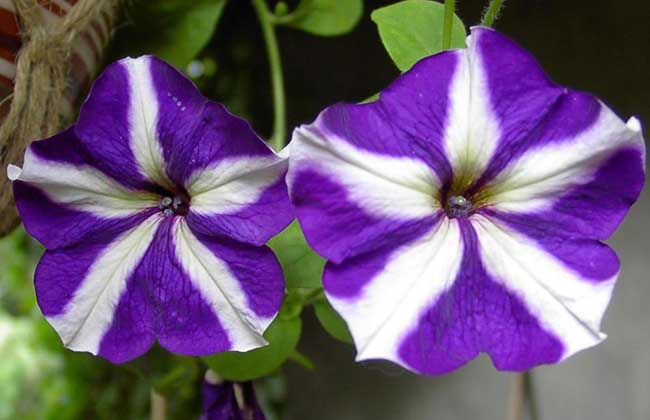
Petunia is actually not the same as morning glory; its scientific name is Petunia hybrida, a perennial herbaceous plant of the genus Petunia in the Solanaceae family. It is also known as jianzihua, dwarf trumpet, sweet potato flower, etc. It originated in Argentina, South America, and is now widely cultivated around the world. It is commonly cultivated for ornamental purposes in city parks across northern and southern China. With suitable climate or greenhouse cultivation, it can bloom in all four seasons. Let us take a look together at the planting methods for petunias!
Petunia Growing Habits
Petunias prefer warm and sunny environments, are not tolerant of frost, and fear waterlogging. The optimal growing temperature is 13-18°C. In winter, the temperature should be 4-10°C; if below 4°C, plant growth stops. In summer, they can withstand high temperatures above 35°C. During the hot summer season, watering should be done in the morning and evening to keep the potting soil moist. During the plum rain season, there is a lot of rain, which is very unfavorable for petunia growth. If the potting soil is too wet, stems and leaves tend to grow leggy; if there is a lot of rain during the flowering period, flowers easily fade or rot. If the potting soil has standing water for a long time, roots will rot and the plant will die. Therefore, potted petunias should use loose, fertile, and well-draining sandy loam soil. Petunias are long-day plants and require ample sunlight during the growing period. Under normal light conditions, it takes about 100 days from sowing to flowering.
Petunia Seed Propagation
In the middle and lower reaches of the Yangtze River, under protected conditions, petunias can be sown and seedlings raised throughout the year. Since the flowering period is generally controlled for May 1st and National Day, the sowing time is October-November for autumn sowing and June-July for spring sowing. Before sowing, fill the medium, water thoroughly, and after sowing, finely mist to moisten the seeds. The seeds must not be covered with any medium, otherwise germination will be affected. After sowing, maintain the medium temperature at 22-24°C; seedlings emerge in 4-7 days. After the first pair of true leaves appears, apply a nitrogen fertilizer solution at 50×10-6 concentration, and pay attention to ventilation; the seedlings can also gradually be exposed to light. When the seedlings have 2-3 pairs of true leaves, the medium temperature can be lowered to 18-20°C, and every 7-10 days apply 0.1% urea solution or 0.1% compound fertilizer solution with NPK 15-15-15. At this stage, still pay attention to ventilation to prevent disease, and spray with chlorothalonil or thiophanate-methyl at 800-1000 times dilution about every 1 week. When the plant has 3 pairs of true leaves, the root system has already formed well. Temperature, humidity, and fertilization requirements are the same as before; still pay attention to ventilation and disease prevention.
How to grow petunias?
1. Fertilizing: Petunias love fertilizer, and the difference between using and not using fertilizer is huge. After 4 true leaves appear and until the temporary planting stage, apply Bivon at 2000 times dilution once a week. From temporary planting to final planting, apply Bivon at 1500 times dilution once a week. During temporary planting, a little slow-release fertilizer can be added appropriately. From final planting until the plant is full, apply Bivon at 1000 to 1500 times dilution twice a week. From bud formation to full bloom, apply Bivon and Bikaihua at 1000 times dilution mixed together twice a week. Sometimes petunias can be deficient in iron, so a little ferrous sulfate can be added.
2. Watering: Petunias prefer dry conditions and fear wetness. During growth, they need sufficient water, especially during the hot summer season when they need a lot of water. Watering can be done in the morning, noon, and evening to keep the potting soil moist, but do not cause water to accumulate in the pot. Otherwise, long-term standing water in the pot will cause root rot and lead to plant death. Also, do not let it be too wet, otherwise stems and leaves will easily grow leggy.
3. Light: Petunias are long-day plants and require ample sunlight during the growing period. Most petunia varieties, under normal light, need about 70-90 days from sowing to flowering. If there is insufficient light or too many cloudy and rainy days, flowering is often delayed by 10-15 days, and there will be fewer flowers. If the plant grows in a long-day environment in spring and summer, it will quickly form buds, and the time from sowing to flowering can take only about 60-70 days.
4. Temperature: Petunias prefer a warm environment. The most suitable temperature for their growth is in summer, some varieties can withstand high temperatures above 35°C, but plant growth is slow, and most varieties will stop growing. In winter, the temperature should be 4-10°C. If the temperature is below 4°C, plant growth will stop. In a low-temperature environment of -2°C, they will not be damaged by frost.
5. Pruning: Generally, petunias do not need pinching, but some varieties do. Pinching can be done when the seedlings are 5-6 cm tall. Generally, bud thinning is not needed throughout the growing period, but sometimes bud thinning is used to control the flowering period. Under high-temperature and high-humidity conditions in summer, plants easily lodge; pay attention to pruning and training, and remove spent flowers to achieve abundant flowers and lush leaves. If old, diseased, or withered leaves are found during growth, remove them at any time. For old plants overwintering, in early spring when repotting, heavy pruning can be done. After pruning, apply nitrogen fertilizer once or twice to help them recover and grow and bloom again.
6. Pests and diseases: Common diseases of petunias include white mold, leaf spot, viral disease, and aphids, etc.
① White mold: After onset, promptly remove diseased leaves, and at the early stage of disease, spray 75% chlorothalonil at 600-800 times dilution.
② Leaf spot: Try to avoid bruising the leaves and pay attention to preventing wind damage, sunscald, and frost damage. Promptly remove diseased leaves and burn them, pay attention to clearing fallen leaves, and spray 50% amobam at 1000 times dilution.
③ Viral disease: An indirect control method is to spray insecticides to control aphids, spraying 40% omethoate at 1000 times dilution. Tools and hands that have come into contact with diseased plants during cultivation operations must be disinfected.
④ Aphids: When large numbers of aphids are found, they should be isolated promptly, and sprayed with 10% omethoate emulsion at 1000 times dilution, or malathion emulsion at 1000-1500 times dilution, or dichlorvos emulsifiable concentrate at 1000 times dilution, or Gaobo (70% imidacloprid) water-dispersible granules at 15000-20000 times dilution.