How to Grow Morning Glory Seeds? A Detailed Guide to Planting Methods
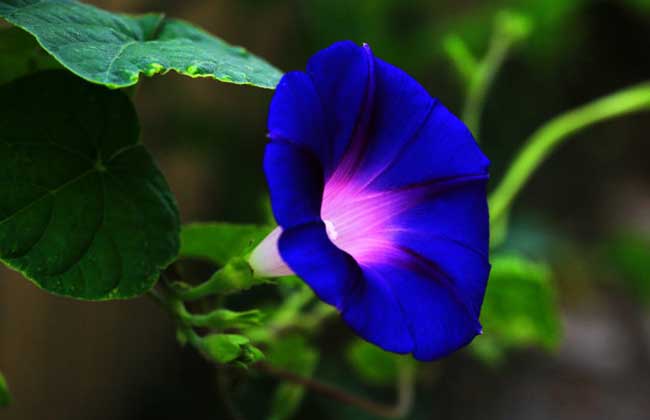
Morning glory is an annual twining herbaceous flowering plant of the genus Ipomoea in the family Convolvulaceae. It likes a mild climate, plenty of sunlight, and a humid, well-ventilated environment. Morning glory also adapts well to soil, is fairly tolerant of drought and saline-alkaline conditions, and is not afraid of high temperatures and intense summer heat. It is a deep-rooted plant, so when planted in the ground the soil should be deep. Let's take a look below at how to grow morning glory seeds!
Propagating Morning Glory from Seed
Morning glory is usually propagated from seed. The sowing period is spring and summer, and sowing is best done at 20-25°C; it can bloom in summer and autumn. When sowing, the seeds need to be soaked in warm water, and after 4-6 hours treated moderately with sulfuric acid, then scattered in the soil and covered with a thick layer of soil, about 1 cm or so. Keep the soil moist, and they will sprout in about 5-6 days. Once two leaves have grown, they can be transplanted.
Sowing Morning Glory in Pots
For potted morning glory, early April is suitable. Use half ordinary potting soil and half plain sandy surface soil, fill a No. 2 tube pot (inner diameter 13 cm), and sow 4 to 5 seeds per pot by dibbling. Because the seed coat is thick and germination is slow, you can cut a small notch in the seed coat above the hilum with a small knife. After sowing, keep at 25°C, and they will germinate in about 7 days. When the two cotyledons have grown flat, thin and transplant the seedlings; you can remove the whole root ball from the pot and separate the seedlings with their soil. When growing as a potted plant, at the same time remove 1 cm from the lower end of the main root and plant in a No. 2 tube pot with ordinary potting soil, one plant per pot. Note that when transplanting morning glory in the open ground, the main root must never be bruised; transplant seedlings when small and early, and the bigger the soil ball the better.
Transplanting and Establishing Morning Glory Seedlings
When the morning glory seedlings have grown 6 to 7 leaves and are about to start vining, take the whole root ball out and repot into an unglazed pot (inner diameter 24 cm) to establish. The potting soil should be fertilized potting soil, and apply 50 g of hoof and horn pieces as a base fertilizer. After planting, water thoroughly. Once the potting soil has settled, insert a thin bamboo pole 1 m long straight into the center of the pot. Then take about 3 m of galvanized wire, wrap one end around the bamboo pole level with the soil surface, then spiral it upward from the pot rim to form a neat tower-shaped spiral support that is wide at the bottom and narrow at the top. Fix the upper end of the wire to the top of the bamboo pole. Morning glory is a left-twining plant, so the spiral direction of the wire must match the morning glory's habit of twining to the left. When the main vine climbs along the wire to the top of the pole, pinch off the growing tip. Pinch the tips of the side vines each time they grow to 6 to 7 leaves; this makes the flowers larger and keeps the vines growing and blooming continuously.
How to Save Morning Glory Seeds
For good varieties of morning glory, be sure to save good seeds. After they mature in autumn, collect the seeds, label them by category, and store them. If variations appear, they should be kept with even greater care. For hybridizing morning glory, after selecting the female and male parents, cut off the upper end of the flower bud at dusk the day before flowering, then remove the stamens and wrap it in a wax paper bag. The next morning, remove the wax paper bag, use the stamens of the male parent to hand-pollinate, then wrap it again in a wax paper bag. After one or two weeks the wax paper bag can be removed, but the pollinated seed pod must be clearly marked and recorded. The following year, plant all the hybrid seeds well, and after flowering observe the results; from this you can study the effects of various genetic factors.