What are the characteristics of morning glory? A full analysis of morphological features and growth habits
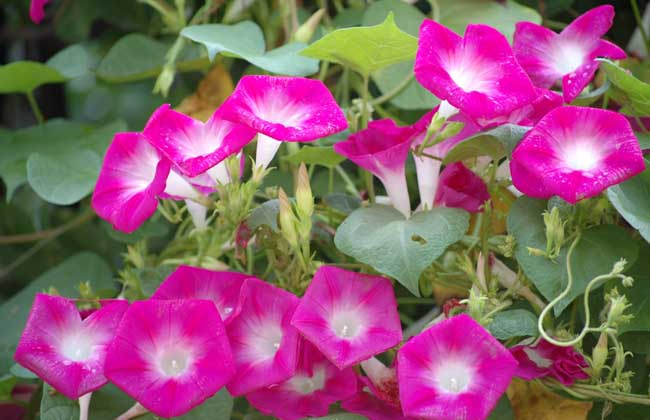
Morning glory is also known as trumpet flower, jinjiaolazi, large morning glory, qinniangzi, and so on. It belongs to the Convolvulaceae family, genus Ipomoea, and is an annual twining herb. Its sprawling stems are slender, its corolla is trumpet-shaped, and its flower colors are bright and beautiful. Besides being cultivated for ornament, its seeds are a commonly used traditional Chinese medicine, with effects of promoting diuresis, expelling phlegm, and killing insects. Now let us take a look at what characteristics morning glory has!
The growing environment of morning glory
Morning glory is a flower with very strong vitality. Morning glory likes a mild climate, ample sunlight, and a humid, well-ventilated environment, and it also has strong adaptability to soil. It is relatively tolerant of drought and saline-alkaline conditions and is not afraid of high temperatures and intense summer heat. It is a deep-rooted plant, so when planted in the ground, the soil should be deep. However, large morning glory seedlings do not tolerate transplanting, and friends who like morning glory must pay attention to this point.
The medicinal value of morning glory
The seeds of morning glory are a commonly used traditional Chinese medicine. The black ones are called "heichou", and the cream-colored ones are called "baichou". They contain resin glycosides, pigments, fatty oils, organic acids, and other components. Heichou is mostly used in medicine and has the effect of promoting diuresis. It mainly treats edema and abdominal distension, difficult urination and defecation, and other conditions. Grind it into a fine powder, add egg white, apply it to the affected area before bedtime, wash it off with clean water the next morning, and use it continuously for one week to help eliminate freckles. However, heichou is somewhat toxic, so never take it orally.
The flower color characteristics of morning glory
Morning glory often changes color. Purple morning glory sometimes turns blue, and sometimes turns red. The reason it changes color is that morning glory contains a pigment. When this pigment encounters liquids of different properties, it shows different colors. Because the properties of the liquid inside the plant are affected by external conditions and often undergo some changes, this also causes the color of morning glory to change accordingly.
The variety characteristics of morning glory
1. Ipomoea hederacea: leaves have three deep lobes; flowers are medium-sized, 1 to 3 borne in the leaf axils, in clear blue, rose red, or white.
2. Ipomoea purpurea: leaves are broad and heart-shaped, with entire margins; flowers are small, in white, rose red, clear blue, and other colors.
3. Ipomoea nil: leaves are large with long petioles and have three lobes, with the central lobe relatively large; the leaves tend to develop irregular yellow-white patches. Flowers are borne 1 to 3 in the leaf axils, the common peduncle is shorter than the petiole, and the flowers are large, with a flower diameter reaching 10 cm or more. It is native to tropical Asia and Africa and is most widely cultivated in Japan, where it is called asagao, and many horticultural varieties have been bred, with diverse flower shapes and rich, colorful flower colors, making it widely popular in many places.