Is it good to grow plum blossoms at home? Benefits and considerations of growing plum blossoms at home
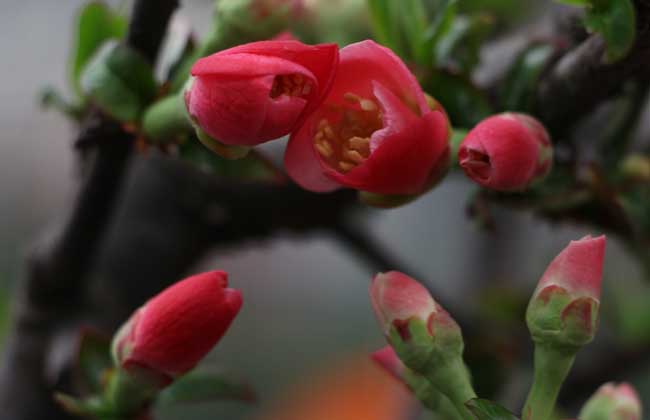
The plum blossom is a deciduous tree of the genus Prunus in the rose family (Rosaceae), and has been cultivated in China for more than 3,000 years. However, some people strongly oppose growing plum blossoms at home, believing that the character "mei" (plum) sounds the same as "mei" (mold), which would bring bad luck. Others believe the plum blossom is "a noble gentleman who endures hardship," and that growing plum blossoms can improve one's fortunes. Let's take a look below at whether growing plum blossoms at home is good or not!
Is it good to grow plum blossoms at home?
It is good to grow plum blossoms at home. Since ancient times, the plum blossom has carried a positive meaning; the ancients often compared themselves to plum blossoms, and poems or sayings that insulted plum blossoms were rarely seen. It has always been loved by Chinese people, and even in modern times there is no such negative saying. In terms of scent, the plum blossom's fragrance is not confusing, unpleasant or toxic, and placing it in the home will not affect human health. In feng shui, there is also no claim by professionals that plum blossoms cannot be grown, so those who love them can plant them with peace of mind and should not be influenced by others.
The feng shui role of plum blossoms
The plum blossom has four virtues: yuan at birth, heng at flowering, li at fruiting, and zhen at maturity. It also represents the five blessings of happiness, fortune, longevity, smoothness and peace, which correspond to the five elements in feng shui. Planting plum blossoms and bamboo in the courtyard carries the meaning of "bamboo and plum double happiness," with bamboo symbolizing the husband and plum symbolizing the wife; it is often used to congratulate a new happy event and marital harmony. A pattern of magpies chirping on plum blossoms is often called "good news of early spring," "good news of spring light," or "happiness on the eyebrows," taking a homophone or implied meaning. However, it is not suitable to hang plum blossoms in the living room, especially an old plum tree, because the plum blossom is cold in nature. In ancient times, many women would paint plum blossoms with their menstrual blood as a keepsake. If hung in the home's living room, female yin energy would be excessive, and there could even be a reversal of yin and yang. Couples in the home would be prone to quarrels, the male owner would go out to work and encounter setbacks, peach blossom luck would rise, the female owner would become sentimental, it would be hard for the home to meet helpful benefactors, and wealth luck would decline accordingly.
How to grow plum blossoms
1. Soil: It has low requirements for soil, tolerates poor soil and cold, and fears waterlogging. It is suitable for growing in moist soil with loose, fertile topsoil, good drainage and slightly clayey subsoil.
2. Watering: Pay attention to watering during the growing period, and often keep the potting soil moist but on the drier side. It should neither be waterlogged nor too wet or too dry. Follow the principle of watering when dry and stopping when wet. Generally, water less on cloudy days and when the temperature is low, and water more otherwise. In summer, water 2 times a day; in spring and autumn, water 1 time a day; in winter, water thoroughly only after the soil has dried completely.
3. Sunlight: During the growing period, place it in a sunny, well-ventilated location. If kept in a shaded environment with insufficient light, it will grow weak and bloom sparsely.
4. Temperature: It is very sensitive to temperature and generally tolerates low temperatures of -10°C. It blooms when the average temperature in early spring reaches -5 to 7°C. If low temperatures occur, the flowering period is delayed; if low temperatures occur during flowering, the flowering period can be extended.
5. Fertilizing: Fertilize reasonably. Apply base fertilizer well before planting, and mix in a small amount of potassium dihydrogen phosphate. Apply potassium dihydrogen phosphate once more before flowering, and apply fully decomposed cake fertilizer once at flowering to supplement nutrients. In June, compound fertilizer can also be applied once to promote flower bud differentiation. After leaf fall in autumn, apply organic fertilizer once, such as decomposed manure.
6. Pruning: After potting a plum blossom for container growing, heavy pruning should be carried out to lay the foundation for making a bonsai. Mainly follow the natural tree shape, cut off crossing branches, upright branches, dry branches, overly dense branches, etc., and shorten side branches to promote abundant flowers and lush leaves.