How to grow potted plum blossoms? A detailed guide to care methods
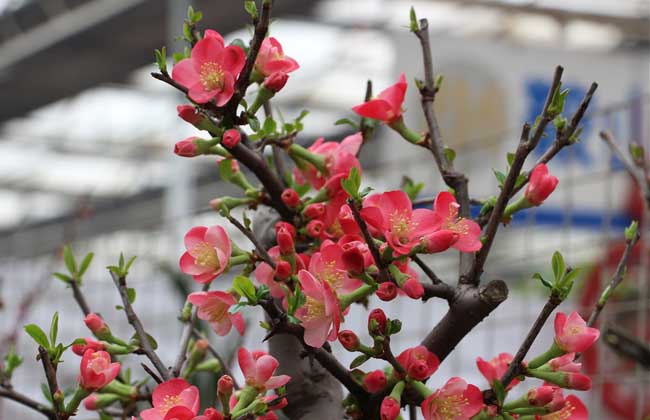
The plum blossom is a deciduous tree of the genus Prunus in the rose family (Rosaceae), and sometimes the term also refers to its fruit (the plum) or its flowers (plum blossoms). It originated in southern China and has a cultivation history of more than three thousand years. Whether grown for ornament or as a fruit tree, it has many varieties, and many types can not only be planted in the open ground for viewing but can also be grown as potted flowers and shaped into plum stumps. Let us take a look below at how to grow potted plum blossoms!
The growth habits of plum blossoms
The plum blossom likes a warm climate and is not strongly cold-hardy. Apart from the apricot-plum (armeniaca) strain varieties, which can tolerate lows of -25 degC, it generally tolerates lows of -10 degC. It is fairly drought-tolerant, not tolerant of waterlogging, and long-lived, able to reach a thousand years. During the flowering period it is especially sensitive to climate change, liking relatively high air humidity but avoiding torrential rain. It tolerates high temperatures and can still grow at 40 degC, and grows and develops best in areas with an annual average temperature of 16-23 degC. It is very sensitive to temperature, flowering when the average temperature in early spring reaches -5 to 7 degC. If low temperatures occur, the flowering period is delayed; if low temperatures occur during flowering, the flowering period can be extended. During the growing season it should be placed in a spot with ample sunlight and good ventilation. If kept in a shaded environment with insufficient light, it will grow spindly and weak and bloom sparsely. In winter, do not move it indoors too early; moving it indoors in late November is appropriate, so that flower bud differentiation can fully go through the vernalization stage. In winter it should be placed in a sunny spot indoors, with the temperature kept at around 5 degC.
How to pot up plum blossoms
After 2-3 years of planting and pruning in the nursery, plum blossoms can be planted in pots to make potted plum blossoms or bonsai for people to admire. The potting soil is generally made by mixing one part leaf mold, three parts vegetable garden soil, and a small amount of sandy soil. This kind of soil is soft in texture and rich in nutrients, with good aeration and drainage performance; it will not cake and crack when dry, and will not clump tightly when wet. Potting up is generally done after the Start of Spring (Lichun) once the ground thaws. When growing, an unglazed clay pot is better. Spread a layer of broken pot pieces flat on the bottom of the pot to help drainage, prevent nutrient loss, and increase the spatial area to aid ventilation and air permeability. Cut off the overly long main root and a small number of lateral roots, keeping more fibrous roots. First pour in a small amount of soil, then place the plum stump into the pot. After adding soil, shake the pot so the loose soil settles and binds tightly with the roots. Water thoroughly and place in the sun.
How to fertilize plum blossoms
Plum blossoms tolerate poor soil and do not need much fertilizer. Generally, too much fertilizer is not needed; too much causes rampant growth of branches and leaves and makes it hard to form flower buds, but it is also absolutely essential not to have too few nutrients, which would cause poor growth. Potted plum blossoms often grow poorly because of limited potting soil and nutrient leaching. Besides applying base fertilizer and phosphorus-potassium fertilizer in the growing medium when potting up, decomposed human urine and cake water fertilizer should also be applied during the growing season. When fertilizing, wait until new roots growing from the base of the plum blossom have reached more than 3 cm (that is, 15-20 days after potting up), and follow the principle of going from less to more and from dilute to concentrated, step by step, so as to avoid damaging the roots and killing the plant through too early or too concentrated application. During the growing season, fertilize once a week. When the new shoots have finished growing and water restriction begins, nitrogen fertilizer should be controlled to avoid overly vigorous branch growth; at the same time, spray phosphorus-potassium fertilizer on the leaves each week or apply quick-acting phosphorus-potassium fertilizer to promote flower bud formation. After the physiological differentiation of flower buds is complete (around the Start of Autumn, Liqiu), apply fertilizer water 2-3 times a month. Around the Spring Festival, when the flower buds swell, fertilize once or twice, mainly with quick-acting fertilizer (human urine or urea), to force flowering.
How to water plum blossoms
1. Plum blossoms fear waterlogging most, but should not be too dry either. The roots of the plum must not remain for a long time in wet soil with poor drainage, otherwise they easily rot and the plant dies. The plum blossom is a broadleaf tree species and needs more water during the summer growing season. If water is lacking, photosynthesis will be weakened and nutrient accumulation reduced, which will affect the normal growth of the plum stump and its flower formation. The number of waterings and the amount used should be determined by the temperature, humidity and the drainage condition of the potting soil. During the growing season, the potting soil should be kept moist. When the branches grow to 15-20 cm, before flower bud differentiation, follow the principle of "do not water until dry, and water thoroughly when you do." Water again when the new shoots wilt and droop, carrying out "water restriction" to control the growth of new shoots, allow nutrient accumulation, and promote flower bud differentiation.
2. The buds of the plum blossom are precocious. Throughout the entire vegetative growth process, it can sprout 2-3 rounds of new shoots. If watering is not properly controlled and a second round of new shoots is allowed to sprout and grow, flower buds will be hard to form, and the following year it will not bloom or will bloom very little. However, if water is lost excessively, then after watering the leaves still cannot return to normal, the leaf tips turn yellow and dry and fall off, and flower bud differentiation is also affected. If the leaves are found to be severely withered, the whole plum blossom plant can be immersed in water and taken out after 40 minutes, and it may be expected to recover to normal. From late July to August, after the physiological differentiation of flower buds is complete, normal watering should be resumed. In winter, when temperatures are low, water less but keep the air moist, so as to prevent the flower buds from drying out and dropping.
Pest and disease control for plum blossoms
1. Plum blossoms have many pests and diseases, but none are devastating. The main pests include aphids, trunk-boring longhorn beetles, slug moths, plum tent caterpillars, black prominent moths and apricot globular scale insects. Longhorn beetles are the main trunk-boring pests and cause great damage. Adults can be caught in June-July; after hatching, the adults can be hooked out and killed, or cotton soaked in 200-300 times diluted dichlorvos can be inserted into the insect holes to poison them. For aphids, from early April onward, spray 800-1000 times diluted dichlorvos every 10 days, or spray with water in which discarded tobacco shreds have been soaked, which often works.
2. Anthracnose and powdery mildew are the main diseases of plum blossoms, damaging leaves and leaf tips. First small brown spots appear on the leaf surface, then gradually widen and become somewhat round, with concentric ring patterns appearing inside, later forming gray patches, until the leaf falls off. From May onward, spraying 500-600 times diluted carbendazim or 600 times diluted thiophanate can control it, and in early spring the plum tree can also be sprayed with 5 degC lime sulfur mixture.
Pruning techniques for plum blossoms
1. Plum blossom trees have strong sprouting ability and easily send out too many branches. If allowed to grow freely, this often causes a messy tree shape, which not only affects ventilation and light penetration but is also unfavorable for abundant flowering, and easily breeds pests and diseases. Moreover, since plum blossoms mostly form flowers on new shoots of the current year, whether planted in the ground or in pots, or made into stump scenes or bonsai, proper pruning should be carried out. This not only keeps the plum blossom growing vigorously with a beautiful tree shape but also achieves the goal of strong branches and abundant flowers year after year.
2. For large plum trees, young trees can be headed back at 60-80 cm above the ground, leaving 3-5 buds, and allowed to grow outward naturally, with gradual pruning and bud removal to form a "natural open-center" crown. This shape suits the natural branching habit of the plum tree, is both ventilated and light-permeable, and makes full use of space, so the crown takes shape quickly, grows vigorously, and expands the flowering area. When pruning young plum trees, follow the principle of pruning strong branches less, so that they grow in balance, and keep lateral buds or outward-facing buds so the branches grow horizontally and slantingly. For formed trees, follow the principle of "prune strong branches lightly, prune weak branches heavily" to promote the formation of flowering branches. In addition, dead, diseased, pest-infested, overly dense and rampant branches on the trunk and branches must be cut off right at the base.
3. At the turn of spring and summer, also thin out overly dense buds appropriately to save nutrients and aid ventilation and light penetration. For plum trees that have already bloomed, prune after flowering. Flowering branches with branches under 30 cm and cluster flowering branches with branches between 11-25 cm bloom densely, so the plant should be encouraged to produce more of these flowering branches. For potted plum blossoms, leave 2-3 buds and prune heavily, or pinch off the growing tip when grafted buds sprout and grow to 10 cm, to promote many lateral branches, making the plant low and quick to take shape. For formed plum stumps, besides leaving 2-3 buds and pruning heavily, specific issues such as how many branches to keep and their length, and the direction of the cut, must also be considered.
Shaping methods for plum blossoms
1. Curved-trunk style: In curved-trunk style plum blossom bonsai, "straight has no grace, upright has no scenery," so the trunk should be curved rather than straight. Bend the trunk into irregular curves, requiring the curves to be natural, with 1-3 bends being appropriate. Young tree trunks are thin and easy to train by wiring. Tie a thin rope at the base, slowly bend the trunk, and when the desired curve is reached, tie the rope at a suitable point and fasten it with a dead knot to fix it. The degree of curvature should gradually decrease from bottom to top. Alternatively, use lead wire of suitable thickness, fix it at the roots, and wind it around the trunk. Then bend it as needed. For thicker trunks that are hard to bend, use a sharp blade to make two or three horizontal cuts on the inner side of the trunk, reaching 1/3 to 1/2 of the way into the xylem, wrap the wounds with plastic wrap, and then bend the trunk. Also check frequently so the wire does not become embedded in the tree and affect growth.
2. Slanting-trunk style: Slanting-trunk style plum blossom bonsai is elegant and bold, with unique charm, and is much loved by people. It is also easy to cultivate and make: when potting up, simply slant the trunk to one side and it can be grown into shape. Small bonsai in the lying-trunk style and cascade style are elegantly refined, graceful in posture, and free and bold. To make them, cut off the thin side of the radiating roots, plant the thicker roots on the other side straight into the pot, and lay the trunk horizontally close to the pot surface to make the lying-trunk style. Bend and train the front part of the trunk below the pot surface to make the cascade style. Exposed roots can express "elegant stone, secluded fragrance, gnarled and intertwined roots" in a thousand varied forms. Take a potted plum stump, choose one with a low plant shape and many thick lateral roots, lift it out with the soil ball in the autumn of the same year or the following spring, fill the pot with growing medium, place it in the pot, and after repeated flushing and watering, the plum roots will form in the shape of eagle claws.
3. Attached-wood style: Attached-wood style plum blossom bonsai takes shape quickly and is easy to style. Choose an old, vigorous dead tree stump or dead plum stump, carve a groove along the branches and trunk on its back, and bind current-year or two-year-old branches into the groove to fix them. After several years of cultivation, because the young tree grows rapidly and swells, tumor-like growths appear around the groove, seeming to be integrated with the old stump.
4. Plum-stump style: Plum-stump style plum blossom bonsai has different styles in different parts of China. For example, in Yangzhou the plum trunk is split away by half to reveal the vigorous old trunk, called split plum. In Shandong and Henan, the main branches are bent to the left and right and tied into a screen shape. In Anhui and Sichuan, the trunk is bent left and right like a swimming dragon, called dragon-swimming plum.