What is the symbolic meaning of the plum blossom? A full analysis of its symbolism
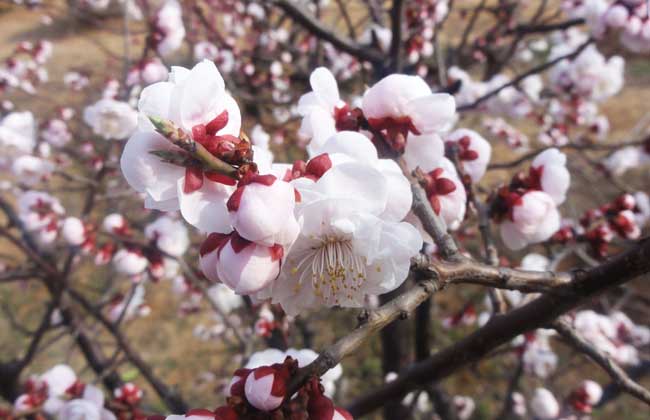
The plum blossom is a spiritual symbol of the Chinese nation and China, symbolizing the spiritual qualities of firmness and perseverance, unyieldingness, courage to take the lead, and unremitting self-improvement. It is a deciduous tree of the genus Prunus in the rose family, and together with the orchid, bamboo, and chrysanthemum it is listed as one of the "Four Gentlemen"; it is also called one of the "Three Friends of Winter" together with the pine tree and bamboo. Now let us take a look at what the symbolic meaning of the plum blossom is!
The symbolic meaning of the plum blossom
In the history of Chinese literature and art, there are a great many plum poems and plum paintings, symbolizing noble purity, a spirit of proud integrity, fearlessness of severe cold, strength, beauty, and a person who is poor yet virtuous. With its firm and unchanging, noble and pure, strong, and modest character, it inspires people to resolve to strive. In the severe cold it blooms before all other flowers, bringing spring to the world alone, and therefore the plum is also often used by the common people as an auspicious symbol of announcing spring and bringing good news.
The spiritual qualities of the plum blossom
1. The ancients said the plum possesses four virtues: when the bud first forms it is yuan, when it blooms it is heng, when it sets seed it is li, and when it ripens it is zhen. Later people also said that the five petals of the plum blossom are the symbol of the five blessings: the first is happiness, the second is blessing, the third is longevity, the fourth is smooth success, and the fifth is peace, which we hope for most of all. The five petals respectively symbolize happiness, blessing, longevity, smooth success, and peace.
2. The plum is often used by the common people as an auspicious symbol of announcing spring and bringing good news. Chen Zhisui's short poem "Plum Blossom" writes: "In order to make the companions who struggle against the severe cold hold on, it reveals the news of spring to people." It is also one of the Three Friends of Winter and the first of the Four Gentlemen among flowers. Since ancient times people have praised its spirit of braving the snow and its solitary, noble beauty in not competing with the hundred flowers for spring.
3. The plum blossom is a spiritual symbol of the Chinese nation, possessing strong and widespread appeal and driving force, symbolizing the spirit of firmness and perseverance, indomitability, courage to take the lead, and unremitting self-improvement. Folk legend says that other flowers all bloom only in spring, but it is different: the colder it is, the more the wind bullies and the snow presses, the more spirited and elegant its blossoms become. For thousands of years, the plum blossom's lofty qualities and steadfast integrity, welcoming the snow and spitting forth splendor, scenting the air in the cold, with an iron frame and icy heart, have encouraged generation after generation of Chinese people to brave danger and hardship, press boldly forward, and create an excellent life and civilization.
The flower language and legend of the plum blossom
The flower language of the plum blossom is strength, proud integrity, and elegance; the flower language of the red plum is steadfast unyieldingness, braving frost and snow, and being gorgeously charming; the flower language of the white plum is purity and steadfast unyieldingness; the flower language of the wintersweet is purity, strength, working quietly and unknown, and selfless dedication. There is also a bleak yet beautiful legend about the flower language of the plum blossom.
Legend says that many years ago, in a peaceful village, there was a pair of martial-arts-trained senior and junior fellow apprentices who loved each other deeply. One day, a monster suddenly appeared, doing every evil deed, and people's quiet life was thrown into disorder. To save the villagers, the pair carried swords on their backs and went to find the monster. After several days of fierce fighting, victory was in sight, and the senior fellow apprentice also felt his strength gradually failing. Just then, the monster thrust a sword at the senior fellow apprentice. Seeing him in danger, the junior fellow apprentice leaped forward and shielded him, and the sharp sword plunged deep into her chest. The senior fellow apprentice was shocked pale, and with all his strength he thrust several swords in a row at the monster.
At last, the monster was killed. The senior fellow apprentice lifted up his junior fellow apprentice, whose face had already turned pale, and cried out loudly, but due to excessive loss of blood, she was quickly failing. She gave him a faint smile and said: "You are brave, I love you, I will always love you!" With that she closed her beautiful eyes. The senior fellow apprentice was overcome with grief, and suddenly a miracle happened: a great snow fell all across the sky, the junior fellow apprentice in his arms slowly disappeared, and before him a young seedling emerged.
The senior fellow apprentice knew that it was his junior fellow apprentice transformed, and he could not help but stroke the seedling in endless sorrow. His tears fell upon the seedling, and it quickly grew into a large tree. This tree had no leaves but was covered with white flowers, and a faint delicate fragrance spread for a thousand li. This was the plum blossom. The senior fellow apprentice could not bear to part with his junior fellow apprentice, and from then on he built a house beside the plum tree, every day reciting poetry and practicing swordplay in front of it. Until the day he was to die, leaning against that white plum tree, he spoke all the words of love of a lifetime that could never be finished, and after death he too became a plum blossom; the flowers it bore were bright red, and that was his passionate love.