Key Technical Points for Bamboo Willow Planting and Cultivation Management Methods
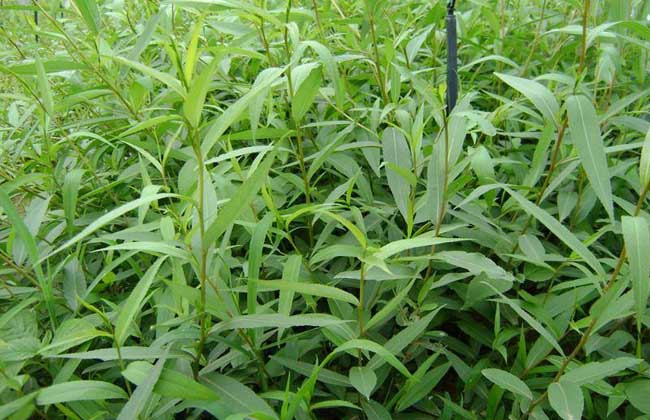
Bamboo willow is a type of willow, belonging to the genus Salix in the family Salicaceae, also known as American bamboo willow or fast-growing bamboo willow. It has a very wide range of uses and is an ideal tree species for industrial raw material forests, small and medium-diameter timber cultivation, street trees, landscape greening, and farmland shelterbelts. It is divided into different strains according to different adapted regions and characteristics. After trials in many places, Bamboo Willow No. 3 has the widest adaptability and the best performance. Let's take a look at bamboo willow planting techniques below!
Planting Characteristics of Bamboo Willow
1. Wide range of uses: Bamboo willow is an ideal tree species for industrial raw material forests, small and medium-diameter timber cultivation, street trees, four-side planting, landscape greening, and farmland shelterbelts. At the same time, bamboo willow wood has good basic density, high natural whiteness, no hollow core, and no black heart. It is a high-quality raw material for manufacturing fiberboard, blockboard, and plywood, and has excellent pulp performance, superior to other fast-growing tree species such as poplar and eucalyptus.
2. Good fast-growing performance: Under suitable site conditions, the rotation period for industrial raw material forest cultivation of bamboo willow is generally two years for small-diameter timber, three to four years for medium-diameter timber, and five to six years for large-diameter timber, with extremely high economic benefits and a short investment payback period.
3. High-density planting capability: For large and medium-diameter timber, bamboo willow can be planted at 110-220 trees per mu, and for small-diameter timber at 500-600 trees per mu, which can improve the economic benefits per unit land area. It is the preferred tree species for establishing industrial raw material forests.
4. Strong adaptability: Bamboo willow is resistant to salinity and alkalinity (it can adapt to heavily saline-alkali areas with soil pH 8.0-8.5 and salt content of 0.8%), and resistant to flooding (it can still grow normally after being flooded for two months). It can be planted in lake beaches and saline-alkali land, expanding afforestation areas, improving land utilization, and reducing afforestation costs.
Growing Conditions for Bamboo Willow
1. Light requirements: Bamboo willow branches all grow upward, with a small angle between side branches and the main trunk, and uniform branching, making it more suitable for dense planting. Its tree form has higher photosynthetic efficiency than other willows, and it grows rapidly in areas with no less than 1400 hours of sunlight during the growing season.
2. Temperature conditions: Whether bamboo willow can safely overwinter does not depend on the extreme low temperature, but on the lignification before leaf fall. The gradient from high temperature to low temperature before leaf fall should not be too large. In the south, when the temperature is above 35°C, if the day-night temperature difference is less than 10°C, heat dormancy may occur. During this period, seedling growth decreases. When the day-night temperature difference is greater than 10°C, normal growth occurs.
3. Water conditions: Bamboo willow has very strong aerial roots and strong flooding tolerance. Trials in the Yangtze River basin show that it can endure deep water flooding that does not exceed the top for more than two months, or planting in shallow water areas where it remains submerged all year without dying, but growth decreases. Bamboo willow grows rapidly when soil moisture is moderate, but when soil moisture drops below 40%, growth potential is inhibited. When irrigation conditions are available, irrigate promptly when soil moisture drops below 30% to ensure normal and rapid growth of bamboo willow.
4. Soil requirements: Bamboo willow prefers fertile soil. It grows rapidly in plots with soil organic matter content of 2%-10%. It grows fastest in sandy loam with 50% soil porosity, good aeration, and good water retention, followed by sandy soil and clay. It can grow under conditions with pH below 8.5 and salt content of 8‰. In plots with the same salt content, growth depends on the nutrient element content of the plot.
Bamboo Willow Planting Techniques
1. Watering and irrigation: Bamboo willow is sensitive to water. When water is lacking, plants grow slowly, leaves turn yellow and wilt, and may even drop leaves and die, especially in hot summers. During prolonged drought, the resistance of bamboo willow is significantly weakened, making it highly susceptible to pests and diseases. In spring drought areas, irrigation is best done when buds and leaves are sprouting, laying the foundation for seedling rooting and germination. During summer drought, irrigate promptly to fully realize the growth potential of seedlings. When the groundwater level is too high and soil water content is excessive, bamboo willow grows poorly due to root oxygen deficiency. During continuous rainy periods, promptly drain accumulated water from the forest. When seedlings enter the overwintering preparation stage, water supply should be controlled to promote lignification of seedlings. For seedlings left in beds to overwinter, after entering dormancy, water once with freezing water.
2. Rational fertilization: The topdressing time for bamboo willow should be arranged before the fast-growing period, at the beginning of fast growth, and in the middle period. The principle is to promote early growth and control late growth. Topdressing should not be too late, to avoid excessive vegetative growth, reducing lignification, and being unfavorable for overwintering. Generally, fertilization can be combined with irrigation. June to September is the fast-growing period for bamboo willow, the period of greatest annual growth for seedlings, with the highest water and fertilizer requirements. Fertilization should be based on whether there is soil moisture and precipitation. If soil moisture is insufficient, no matter how much fertilizer is applied, seedlings cannot absorb it, and it may even cause fertilizer burn. Therefore, checking water before fertilizing is very important.
3. Loosening soil and weeding: Due to frequent watering, bamboo willow nursery soil often becomes compacted, affecting seedling root development. Cultivation and soil loosening can loosen the soil, break up compaction, and increase soil aeration, thereby facilitating root respiration. Loosening the soil can also cut off soil capillaries and reduce water evaporation. Weeding has a great impact on young forest growth. It not only prevents weeds from competing with seedlings for soil nutrients and water, but also increases light effects and reduces pest and disease transfer hosts. Nursery weeding should implement the principle of “weed early, weed small, weed completely” that is, immediately remove weeds cleanly after they sprout and emerge, without delay, to prevent weeds from competing for soil nutrients and water. Herbicides must be used with caution to avoid phytotoxicity.
4. Pruning and bud removal: Bamboo willow in nursery cultivation generally does not undergo pruning because there are few side branches. However, to increase light penetration and aeration in the nursery, bud removal can be carried out on a small number of side branches, which is beneficial for seedling height growth.
5. Pest and disease control: During the growth and development process, bamboo willow also encounters various pests and diseases. Mild cases cause poor growth, while severe cases cause plant death. Therefore, pest and disease control in nurseries should be strengthened. Nursery pest and disease control should focus on prevention, with prevention being more important than treatment, following the policy of early treatment, treating small problems, and complete treatment. During the seedling stage, common fungicides such as thiophanate-methyl, carbendazim, and chlorothalonil can be sprayed alternately on a regular basis for control, especially during hot and rainy seasons.