What are the propagation methods for willow trees? A complete guide
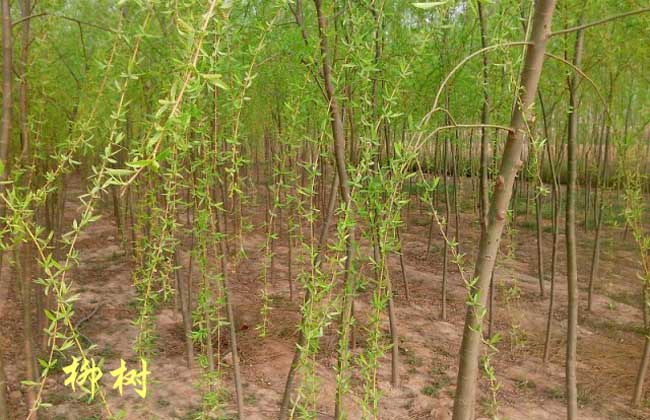
Willow is the general name for a group of plants in the genus Salix of the family Salicaceae. There are quite a number of species, and they crossbreed easily. Hybrids have strong growth vigor and adaptability and are easy to propagate vegetatively. Excellent clonal varieties can be obtained by vegetative propagation through selection from natural or artificial hybrid populations, and plant tissue culture can also be used to rapidly obtain large quantities of high-quality saplings. Let us take a look below at the propagation methods for willow trees!
Growth habits of willow trees
Willow belongs to plants with a broad ecological amplitude and has wide adaptability to the environment. It is a light-loving, moisture-loving, cold-tolerant mesophytic to moisture-preferring tree species, but some species are also relatively drought-tolerant and salt-alkali-tolerant and can grow in places with harsher ecological conditions. In plains and fertile fields with superior site conditions, it grows even better. Its general lifespan is 20 to 30 years, and a few species can reach over a hundred years. Its annual growth period is relatively long, it sprouts early and sheds leaves late, and a few species in the south are evergreen trees.
Origin and distribution of willow trees
Willow trees are suited to various different ecological environments. Willows grow in mountains, plains, sand dunes and polar regions alike, and are mainly distributed in the temperate regions of the Northern Hemisphere. Salix matsudana is produced in the plains of North China, Northeast China and Northwest China. Salix babylonica is found throughout China, and has been introduced and planted in many countries in Europe, Asia and the Americas. Salix koreensis, Salix capitata, Salix dolichostyla, Salix pierotii, Salix balfouriana, Salix gracilistyla, Salix integra and others are mostly produced in Northeast China, and are also found in Korea, Japan and the Russian Far East. Salix fragilis is native to Europe, and has been introduced and planted in Northeast China. Salix alba is produced in **, China, Gansu, Qinghai and Tibet, and is also distributed in Iran, Pakistan, northern India, Afghanistan, Russia and Europe. Salix chaenomeloides is produced in the middle and lower reaches of the Yellow River basin and southern Liaoning Province, and is also found in Korea and Japan. Salix yunnanensis is produced in Yunnan, Guangxi, Guizhou and Sichuan, China. Salix purpurea is produced in the lower reaches of the Yangtze River basin in China. Salix magnifica is produced in Sichuan Province, China. Salix leucopithecia has been introduced and planted in cities such as Beijing, Shanghai and Guangzhou, China.
Propagation methods for willow trees
Willow trees are commonly propagated by cuttings, which can preserve the excellent characteristics of the mother tree. Cutting propagation is the main method, and sowing for seedling raising can also be used. Cuttings are taken in early spring. Select excellent plants with fast growth and few pests and diseases as mother trees for collecting cuttings. Before bud break, cut 2- to 3-year-old branches and cut them into 15 to 17 cm lengths as cuttings. Insert them upright at a plant and row spacing of 20×30 cm. After insertion, water thoroughly, keep the soil moist at all times, promptly remove buds and weeds, and apply topdressing 3 to 4 times after rooting. Young seedlings are susceptible to damage by weevils, aphids and willow leaf beetles. For sowing and seedling raising, collect seeds in April and sow them immediately after collection. The thousand-grain weight of the seeds is 0.4 grams, the germination rate is 70 to 80%, and about 0.25 kg is sown per mu. In that year the seedling height is 80 to 100 cm. Transplanting is suitable from after leaf fall in winter to before buds sprout in early spring of the following year. After planting, water thoroughly and set up supports.