When Does Sophora japonica Bloom? A Detailed Guide to Its Blooming Period
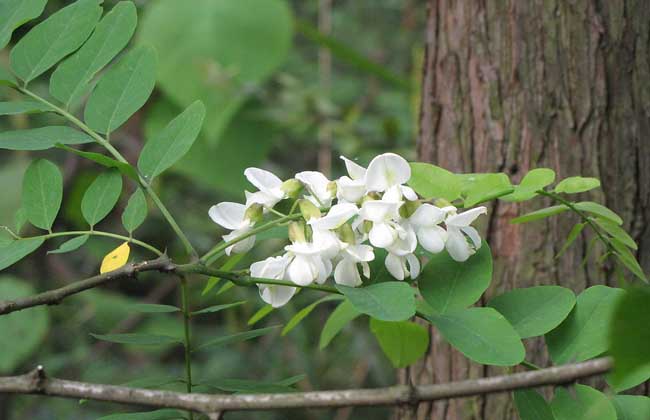
Sophora japonica flowers, also known as black locust flowers, are the flowers of the pagoda tree (Sophora japonica), a plant in the genus Sophora of the Fabaceae family. They are multiple flowers borne in racemes, pale yellow, with papilionaceous corollas. When in full bloom they form clusters, overlapping and hanging down. They can be cooked and eaten, and can also be used as traditional Chinese medicine or dye. They can be used medicinally, having cooling, astringent, hemostatic and blood pressure-lowering effects, and are also an important nectar source plant. Let us take a look below at when Sophora japonica usually blooms!
When Does Sophora japonica Bloom?
Pagoda trees are often planted beside houses and roads, and are widely cultivated throughout China, mainly in the north, with the Loess Plateau and the North China Plain being the most common areas. They generally bloom from April to May each year, and the blooming period is generally about 10 to 15 days.
The Origin and Distribution of Sophora japonica
Sophora japonica is native to China, and is now widely cultivated in all provinces and regions of northern and southern China, being especially common in North China and the Loess Plateau region. It is also distributed in Japan and Vietnam, grows wild in Korea, and has been introduced and cultivated in countries across Europe and the Americas.
The Medicinal Value of Sophora japonica Flowers
[Nature and Flavor] Bitter in flavor, neutral in nature, non-toxic.
[Meridian Entry] Liver and Large Intestine meridians.
[Effects] Cools the blood and stops bleeding, clears the liver and drains fire. It is mainly used to treat intestinal wind with bloody stool, bleeding hemorrhoids, bloody dysentery, blood in the urine, strangury with blood, abnormal uterine bleeding, hematemesis, epistaxis, liver-fire headache, red and swollen painful eyes, throat impediment, loss of voice, and carbuncles, abscesses and sores.
[Contraindications] Sophora japonica flowers are cool in nature, so people with deficient cold of the spleen and stomach should not eat them.
1. Sophora japonica flowers have the effects of clearing heat, cooling the blood, stopping bleeding and lowering blood pressure, and have significant therapeutic effects on hematemesis, blood in the urine, bleeding hemorrhoids, red eyes due to wind-heat, hypertension, hyperlipidemia, cervical lymph node tuberculosis, vascular sclerosis, blood in the stool, diabetes, retinitis, psoriasis and so on.
2. Sophora japonica flowers can expel parasites and treat pharyngitis.
3. Sophora japonica flowers can enhance the resistance of capillaries, reduce vascular permeability, and restore elasticity to fragile blood vessels, thereby lowering blood lipids and preventing vascular sclerosis.