Seed Propagation Methods and Key Technical Points for Sophora japonica
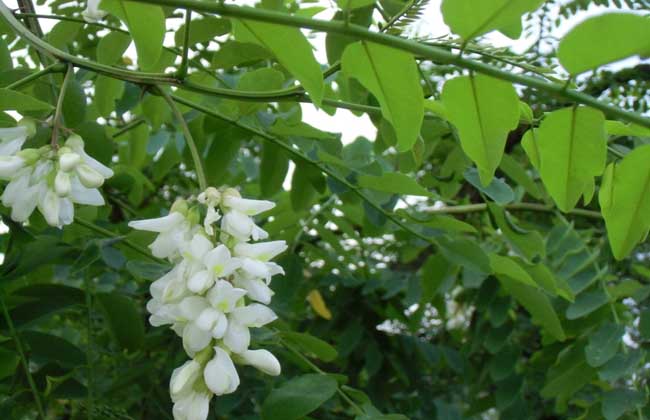
Sophora japonica is also known as the pagoda tree, locust tree, bean locust, white locust, and fine-leaf locust, among other names. It originated in China and is now widely cultivated across the northern and southern provinces and regions. It has strong adaptability and high planting value, and there are many propagation methods, but seed propagation is commonly used, and seed propagation of Sophora japonica is not difficult. Let us take a look at the seed propagation methods for Sophora japonica below!
Selection of Seedling Land for Sophora japonica
The seedling-raising land for Sophora japonica should preferably be flat terrain with good drainage and irrigation conditions, fertile soil, and deep loam or sandy loam. It can adapt to neutral, calcareous, and slightly acidic soils, and can grow normally in mildly saline-alkaline soil (with a salt content of about 0.15%), but grows poorly in dry, barren, and low-lying waterlogged nursery land.
Seed Treatment of Sophora japonica
1. Soaking method: First soak the seeds in 80°C water, stirring continuously until the water temperature drops below 45°C, then leave for 24 hours and remove the swollen seeds. For seeds that have not swollen, repeat the above method 2 to 3 times until they reach the swollen state. Cover the swollen seeds with a wet cloth or straw curtain to promote germination by sweating. After 1.5 to 2 days, when about 20% of the seeds have begun to sprout, they can be sown.
2. Sand storage method: Generally, seeds are sand-stored 10 to 15 days before sowing. Before sand storage, soak the seeds in water for 24 hours so that the sand reaches a moisture content of 60%, that is, it forms a ball when squeezed in the hand and breaks apart when touched. Mix the seeds and sand evenly at a volume ratio of 1:3, place them in a pit dug in advance, and then cover with plastic sheeting. During sand storage, turn the mixture once every day and keep it moist. When 50% of the seeds have germinated, they can be sown.
Sowing Methods for Sophora japonica
1. Sowing time: Spring sowing is generally used, preferably in early to mid-April. The sowing rate is 10 to 12 kg per mu.
2. Sowing method: For ridge sowing, the ridge spacing is 70 to 80 cm, the ridge bottom width is 40 to 50 cm, the surface width is about 30 cm, the ridge height is 15 to 20 cm, the sowing width is 10 cm, and the soil cover is 1.5 to 2 cm. Flat sowing without ridges can also be used, with a row spacing of 60 to 70 cm and a sowing width of 5 cm. After sowing, press the soil so that the seeds and soil are closely combined. If conditions permit, cover with plastic film.
Thinning and Transplanting of Sophora japonica
1. Timely thinning: After sowing, Sophora japonica seeds generally begin to emerge in 7 to 10 days and emerge completely in 10 to 15 days. For plots covered with plastic film, remove the film when the seedlings have grown 2 to 3 true leaves. When the seedlings are 15 cm tall, thin them in 2 to 3 rounds, with a final spacing of 10 to 15 cm and about 8,000 seedlings retained per mu.
2. Transplanting management: For landscaping seedlings, they generally take 3 to 4 years before they can leave the nursery. Because the buds on the top branches of the seedlings are dense and the internodes are short, the trunk is very prone to bending. In the spring of the following year, transplant the one-year-old seedlings at a plant spacing of 40 to 50 cm and a row spacing of 70 to 80 cm, and immediately after planting, cut the main trunk back at 3 to 5 cm above the ground. Since Sophora japonica has sprouting ability, a large number of sprouts are likely to emerge after trunk cutting. When the young sprouting shoots grow to about 20 cm, select and retain 1 strong, upright shoot as the main trunk and remove all the other branches. After that, pay attention at all times to removing sprouts and side branches. Temporarily retain the thin and weak side branches on the upper, middle, and lower parts of the main trunk, as this is beneficial for preventing the main trunk from bending. In this way, the seedling height can reach more than 3 m the following year.