What are the propagation methods for the pagoda tree? Learn how to grow seedlings in one article
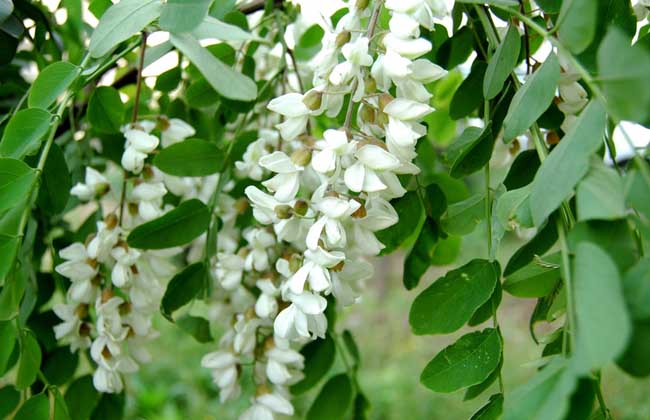
The pagoda tree, also known as Chinese scholar tree, huairui, douhuai, baihuai, xiyiehuai, etc., is a tree of the genus Styphnolobium in the Fabaceae family. It originated in China and is now widely cultivated in all provinces and regions across the north and south, and is especially common in North China and the Loess Plateau region. It is light-loving yet slightly shade-tolerant, can adapt to colder climates, has deep and well-developed roots, has no strict requirements for soil, and has extremely high planting value. Let us take a look together at the propagation methods for the pagoda tree!
Root burial propagation of the pagoda tree
1. Seed root preparation: The pagoda tree's root segments can be introduced after leaf fall, and stored buried in sandy soil before planting. Master the moisture level of the sandy soil well - the root segments must neither be dehydrated and dried out, nor subjected to excessive moisture that causes mold and rot.
2. Land preparation: For seedling raising, choose sandy loam with deep soil layers, flat terrain, convenient irrigation and drainage, and no sources of pest or disease infection. Apply 2500 kg of livestock and poultry manure per 667 sq m, or apply 50 kg of phosphate fertilizer and diammonium as base fertilizer, and use insecticides such as carbofuran to kill underground pests. The land should be deep-plowed, finely prepared, and raked level, with beds about 1 m wide.
3. Seedling raising: The seedling raising time is early to mid-March in the south, and late March to early April in the north. Select smooth root segments 1-2 years old, 5-10 mm in diameter, with no traces of pests or disease, and cut them into 5-7 cm lengths for later use. Open furrows along the bed, with a furrow spacing of 50 cm and a depth of 5 cm, then lay the root segments flat in the furrows at a plant spacing of 30 cm, cover with fine sandy soil, water thoroughly to settle the roots, cover well with plastic film, and seedlings will emerge in about one month.
Cutting propagation of the pagoda tree
1. Cutting time: The cutting time is the same as for root burial seedling raising, or it may be slightly earlier.
2. Cutting selection: Select lignified hard branches 8-20 mm in diameter, cut them into 15 cm long cuttings, cut the upper end flat, 1-2 cm from the bud, and cut the lower end into a 45-degree slant, 5 mm from the bud. Separate the upper and lower ends, bundle 50 cuttings per bundle, soak the lower ends in a 50 mg/kg rooting powder solution for 3-4 hours, then remove them for later use.
3. Cutting method: The land preparation requirements are the same as above. Insert the branches into the soil at a 45-degree angle at a row spacing of 20 cm × 40 cm, and cover the bed with plastic film.
Seed propagation of the pagoda tree
1. Seedling site selection: For Chinese scholar tree seedling raising, choose flat terrain, good irrigation and drainage conditions, fertile soil, and deep loam or sandy loam. It can adapt to neutral, calcareous, and slightly acidic soils, and can grow normally in mildly saline-alkali soil (salt content about 0.15%), but grows poorly in dry, barren, and low-lying waterlogged nursery land.
2. Seed treatment
① Soaking method: First soak the seeds in 80°C water, stirring continuously until the water temperature drops below 45°C, then leave for 24 hours and remove the swollen seeds. For seeds that have not swollen, repeat the above method 2-3 times until they reach the swollen degree. Cover the swollen seeds with a wet cloth or straw curtain to keep them warm and promote germination. After 1.5-2 days, when about 20% of the seeds have begun to sprout, they can be sown.
② Sand storage method: Generally, store the seeds in sand 10-15 days before sowing. Before sand storage, soak the seeds in water for 24 hours, and bring the sand moisture content to 60%, that is, it forms a ball when squeezed in the hand and breaks apart when touched. Mix the seeds and sand evenly at a volume ratio of 1:3, place them in a pit dug in advance, and then cover with plastic sheeting. During sand storage, turn them once every day and keep them moist. When 50% of the seeds have germinated, they can be sown.
3. Sowing method: Spring sowing is generally used, and in Zhuozhou it is usually appropriate to sow in early to mid-April. The sowing rate is 10-12 kg per mu. Ridge sowing or flat-bed sowing can be used. For ridge sowing, the ridge spacing is 70-80 cm, the ridge bottom width is 40-50 cm, the surface width is about 30 cm, the ridge height is 15-20 cm, the sowing width is 10 cm, and the soil cover is 1.5-2 cm. Flat-bed sowing without ridges can also be used, with a row spacing of 60-70 cm and a sowing width of 5 cm. After sowing, press the soil so that the seeds and soil are closely combined, and if conditions permit, cover with film.