Which regions are the main production areas of the Chinese pagoda tree (Sophora japonica) distributed in?
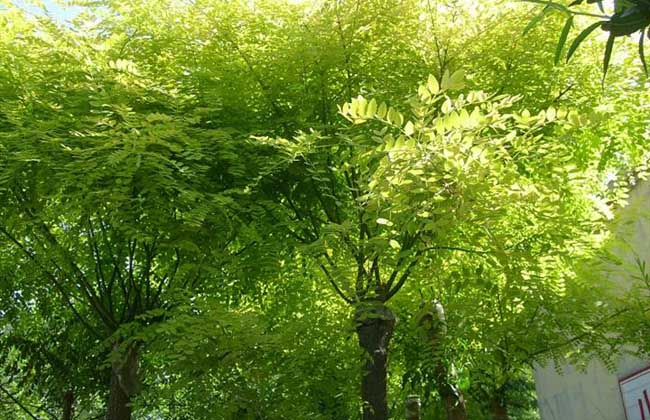
The Chinese pagoda tree, also known as the pagoda tree, Sophora flower bud, bean pagoda tree, white pagoda tree, domestic pagoda tree, etc., is a tree of the genus Sophora in the Fabaceae family. Its flowers and pods are used in medicine and have cooling, astringent, bleeding-stopping and blood pressure-lowering effects. Its leaves and root bark have heat-clearing and detoxifying effects and can treat sores and toxins. Its wood is used for construction. Its seed kernels contain starch and can be used for brewing wine or as paste material and feed. Its bark, branches and leaves, flower buds, flowers and seeds can all be used in medicine. Let us take a look below at the production area distribution of the Chinese pagoda tree!
Production area distribution of the Chinese pagoda tree
The Chinese pagoda tree is native to China. It is now widely cultivated in all provinces and regions across northern and southern China, and is especially common in North China and the Loess Plateau region. It is also distributed in Japan and Vietnam, and is found growing wild in Korea. It has been introduced and planted in countries throughout Europe and the Americas.
Production area environment of the Chinese pagoda tree
The Chinese pagoda tree likes light and is slightly shade-tolerant. It can adapt to colder climates. Its roots are deep and well developed. It has no strict requirements for soil and can grow normally in acidic to calcareous and mildly saline-alkaline soil, even under conditions with a salt content of about 0.15%. It is wind-resistant and also tolerant of drought and poor soil, and is especially able to adapt to adverse environmental conditions such as compacted urban soil, but it grows poorly in low-lying waterlogged areas. It has strong resistance to pollution such as sulfur dioxide and smoke and dust. It grows relatively quickly when young, then grows at a medium rate afterward, and has a very long lifespan. Old trees easily become hollow, but the latent buds have a long lifespan, which is favorable for crown renewal.
Medicinal value of the Chinese pagoda tree
1. Sophora leaves: clear the liver and purge fire, cool the blood and remove toxins, dry dampness and kill insects; mainly used for infantile convulsions and epilepsy, high fever, intestinal wind, blood in the urine, hemorrhoids, eczema, scabies and ringworm, and swollen boils and sores.
2. Sophora branches: dissipate blood stasis and stop bleeding, clear heat and dry dampness, dispel wind and kill insects; mainly used for abnormal uterine bleeding, red and white vaginal discharge, hemorrhoids, damp itching of the scrotum, heart pain, red eyes, and scabies and ringworm.
3. Sophora root: dissipate blood stasis and reduce swelling, kill insects; mainly used for hemorrhoids, throat obstruction, and ascariasis.
4. Sophora fruit: cool the blood and stop bleeding, clear the liver and improve eyesight; mainly used for bleeding hemorrhoids, bloody stool due to intestinal wind, bloody dysentery, abnormal uterine bleeding, bloody strangury, blood-heat vomiting and epistaxis, red eyes due to liver heat, and dizziness and vertigo.