How to grow Mimosa pudica? Detailed explanation of cultivation methods and precautions
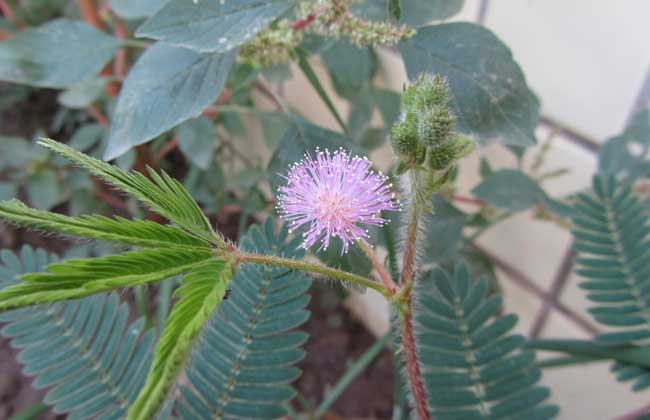
Mimosa pudica is a perennial herb or subshrub of the Fabaceae family. The plant has a loose, spreading form, with delicate and graceful pinnate leaves. Its flowers, leaves and pods all have good ornamental value. It is robust in habit, grows quickly and is relatively easy to keep alive. It is suitable as a potted flower on balconies and indoors, and can also be grown in courtyards and other places. Let's take a look together at the cultivation methods for Mimosa pudica!
Growth habits of Mimosa pudica
Mimosa pudica is native to tropical America and is distributed in Taiwan, China, Fujian, Guangdong, Guangxi, Yunnan and other places in China. It grows in open wastelands and shrub thickets. It is often cultivated for ornamental purposes in the Yangtze River basin. It prefers a warm, humid environment with plenty of sunlight and is suited to well-drained sandy loam rich in organic matter. The plant is robust, grows quickly and has strong adaptability.
Seed propagation of Mimosa pudica
Mimosa pudica is a taproot plant with very few fibrous roots, so it is suitable for propagation by sowing, and it is best to sow directly to avoid damaging the roots during transplanting. If transplanting is necessary, it should be done at the seedling stage, otherwise it is difficult to keep alive. As an annual cultivation, Mimosa pudica is generally sown indoors in early spring. It can be sown directly in a small pot, or grown in a shallow pot and then divided for transplanting. The sowing soil is prepared by mixing 2 parts leaf mold, 3 parts garden soil and 5 parts fine yellow sand after sieving. When sowing, first fill the pot with an appropriate amount of growing medium, spread it flat and press it firm, then water thoroughly with a watering can. Once the water has fully penetrated, sow immediately. For direct sowing in a small pot, sow 1-2 seeds per pot; for raising seedlings in a shallow pot, sow by spot sowing at a spacing of 2×2 cm. After sowing, cover with 3-5 cm of soil, just enough to cover the seeds. Cover the pot with glass or plastic film to retain moisture, place the pot in a spot with diffused light at around 20°C, and thereafter water by the immersion method whenever the potting soil dries out. After about 7-10 days, the seeds germinate and emerge.
Cultivation methods for Mimosa pudica
1. Seedling separation and transplanting: When Mimosa pudica seedlings grow to 3 cm tall, those sown in a shallow pot can be separated and transplanted. Seedlings should be transplanted with soil, otherwise they are difficult to keep alive. After watering thoroughly, newly potted seedlings should first be placed in a semi-shaded spot, and after they recover they can be moved to a place with plenty of sunlight. Those sown directly in a small pot can be placed directly in a sunny spot to grow. After the seedlings grow larger, they can be repotted once more, but the pot should not be too large; generally, planting them in a medium-sized flower pot of 15-20 cm is sufficient.
2. Water frequently: Mimosa pudica originally belongs to tropical plants and likes a humid environment, so the potting soil should always be kept moist. In summer, water according to the condition of the potting soil, roughly once a day. Do not let the soil dry out. You can often spray water on the plant. In winter, to prevent frost damage, reduce the amount of watering.
3. Soil selection: Mimosa pudica does not have high requirements for soil; ordinary garden soil is sufficient. However, if you want Mimosa pudica to grow better, choose relatively loose and fertile soil. You can use a mixture of leaf mold and sandy soil, or use only leaf mold. Humus soil is also a good choice.
4. Plenty of sunlight: Mimosa pudica likes sunlight. It is best to place it on a sunny balcony or by a window. Full exposure to sunlight is good for the growth of Mimosa pudica. If there is too little sunlight, it may hinder its growth.
5. Prevent frost damage: Mimosa pudica is suited to growing in a warm environment, with 20°C to 28°C being suitable. If the temperature is too low, it stops growing. In winter, because the temperature is too low, water less to avoid frost damage to the roots and stems. Watering should be done when the temperature is relatively high during the day. If the temperature is below 10°C, it is best to provide some protective measures.
6. Prevent pests and diseases: Mimosa pudica generally has very few pests and diseases. The most common pest is the slug. If found, some lime powder can be scattered to control it. If the plant is not growing well, check whether the light source is insufficient or the water is not enough.
7. Reasonable fertilization: Mimosa pudica only needs fertilizing once a month, but some people think that potted Mimosa pudica looks bad when it grows too large; those who think this way should not fertilize.