What are the propagation methods for red maple? Explained in one article
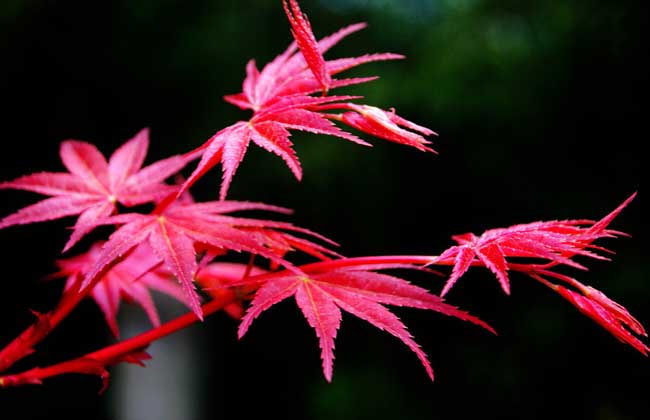
Red maple is a type of maple, also known as purple-red Japanese maple, red maple tree, red leaf, small Japanese maple, etc. It likes sunlight and is suited to warm, humid climates. It fears scorching sun exposure, is relatively cold-tolerant, slightly drought-tolerant, and not waterlogging-tolerant. It thrives in fertile, loose soil with good drainage. As a valuable foliage tree, it is often grown as a potted plant for appreciation. Let's take a look below at the propagation methods for red maple!
Red maple cutting propagation method
Red maple can be propagated by cuttings, especially when making small bonsai or potted plants, this method is best. Cuttings are generally taken in June to July during the plum rain period. Select vigorous current-year shoots about 20 cm long as cuttings, quickly dip them in 1000 ppm naphthaleneacetic acid powder, and insert them into a substrate of vermiculite or half perlite and half pond mud. Afterward, pay attention to shading and spraying water to maintain moisture. After about 1 month, they will gradually take root. If full-sun misting conditions are available, 2-year-old branches can also be used and will root, with a high survival rate. After transplanting, shading is required. After half a month, they can gradually receive sunlight, and water and fertilizer management should be strengthened.
Red maple seed propagation method
Red maple seeds have no dormancy, so they can be sown in either autumn or spring. Here we mainly introduce spring sowing. The suitable sowing time is from mid-March to mid-April. Before sowing, first mix the seeds evenly with moist sand at a ratio of 1:3, and place them under 3-5°C for one month of low-temperature sand storage treatment. During stratification, check and manage regularly. If germinating seeds are found, sow them promptly. When sowing, first irrigate the seedbed thoroughly with bottom water, and sow after the water seeps down. The sowing rate is about 200 seeds per sq m. After sowing, cover with 0.5 cm of fine soil. To preserve soil moisture, raise ground temperature, and make the seeds sprout early and evenly, cover with plastic film or a small arched shed. The arched shed should be ventilated, and if the temperature exceeds 30°C at noon, appropriate shading is needed. Generally, after sowing, the seedlings emerge completely in about 15-20 days.
Red maple grafting propagation method
Red maple can be propagated by grafting, using 2-4 year old Japanese maple (Acer palmatum) seedlings as rootstock. Cut grafting is suitable in March to April, and the rootstock height can be determined as needed. Approach grafting is carried out in May to June during the plum rain season, and separated after leaf fall in autumn. This method is only used for a few precious varieties. Bud grafting is the most commonly used. The best times each year are from late May to late June and from late August to late September after autumn. Early summer is a period of vigorous shoot growth. Use plump buds on strong current-year sun-facing short branches of red maple, with a 1 cm long leaf petiole as the bud. After grafting, the temperature gradually rises. Although plastic tape is used for binding after grafting, the bud and petiole are still exposed. In addition, the red maple bark is relatively thin and the grafted bud is small, so after grafting, regular misting should be used to maintain moisture to increase the survival rate. The bud grafting method in autumn is basically the same. One week after grafting, if the petiole falls off at a touch, it indicates that it has survived; otherwise, it needs to be re-grafted.