Why do maple leaves turn red? An analysis of the reasons
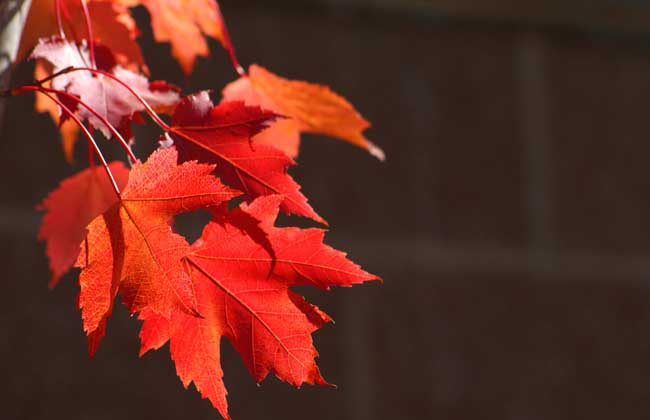
The most striking impression maple leaves leave on people is that they turn red. Writers and scholars through the ages have admired maple leaves, and poems and prose praising and describing them are common, such as the Tang dynasty poet Du Mu's "Stopping the carriage, I love the maple grove at dusk; frost-bitten leaves are redder than February flowers." Thus the beauty of maples has been recognized by people of every era, and maples are also quite commonly planted in gardens and scenic spots everywhere. Now let us take a look at why maple leaves turn red!
When do maple leaves turn red?
Maple leaves turn red in autumn. Maple leaves turn red in autumn because falling temperatures cause the green pigment in the leaves to turn red. In northern China, autumn runs from August to October, and true autumn generally does not arrive until after September, so maple leaves generally do not turn red until around September or October. In southern China, the cold comes later, so maple leaves turn red relatively later.
When do maple trees shed their leaves?
Maple leaves fall in autumn. When autumn arrives, the days shorten and the nights lengthen, the weather turns cold, the soil temperature drops, and rainfall decreases; the water-absorbing capacity of the roots is greatly weakened while the transpiration rate does not decrease, so the lack of water causes leaf drop. At the same time, after a period of physiological activity, large amounts of metabolic products such as minerals accumulate in the cells of the leaves, causing physiological functions to decline and the leaves to die (chlorophyll is destroyed).
Why do maple leaves turn red?
1. Stress response: Maple leaves turning red is in fact the result of the maple tree's response to stress from the natural world. Turning red actually acts as a sunscreen, allowing the leaves to stay on the tree longer so that the tree can absorb more nutrients. Research has found that nutritional stress, especially nitrogen deficiency stress, makes maple leaves turn red earlier and more thoroughly.
2. Internal factors: The red color of leaves depends mainly on two substances. One is carotene, an orange-red pigment commonly found in chloroplasts. The other is anthocyanin, which exists in the cell sap within the vacuole; when the cell sap is alkaline, anthocyanin appears blue-purple, and when the cell sap is acidic, anthocyanin appears red. After autumn arrives, anthocyanin increases in the leaves of the smoke tree, and the drop in temperature destroys and eliminates chlorophyll, so green leaves become red leaves.
3. External factors: When the temperature drops rapidly to a certain level, and the nighttime temperature falls much more than the daytime temperature, the leaves have not yet fallen while most of the chlorophyll has already been destroyed; at the same time, the increase in the temperature difference between day and night also helps the formation of anthocyanin, so the leaves quickly turn red. If the temperature drops very slowly and the temperature difference between day and night is not large, the chlorophyll has not yet been destroyed while the tree has already withered, and then it cannot become beautiful red leaves.