What Exactly Is Gesang Flower? The True Identity Explained Once and for All
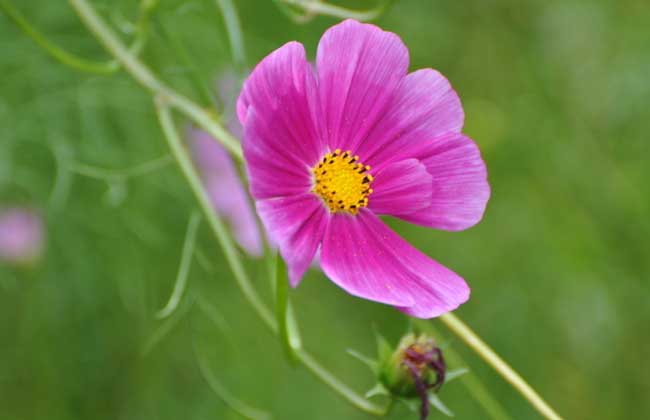
Gesang flower, also known as Gesang Meiduo, is widely debated as to which specific plant it refers to. In a broad sense, "Gesang Meiduo" is very likely a byword for the wildflower with the strongest vitality on the plateau, while botanically speaking, plants of the Aster genus in the Asteraceae family and the China aster, a commonly cultivated plant from Lhasa to Qamdo, both match the characteristics of Gesang flower. In addition, in Tibetan areas there are also claims that plants such as shrubby cinquefoil, wolf's bane, alpine rhododendron and snow lotus are called Gesang flower.
Purely from a botanical perspective, Gesang flower should refer to the resource-rich, widely distributed Aster genus plants of the Asteraceae family and the China aster in Tibetan areas. In horticulture, people usually follow convention and collectively call plants both before and after taxonomic changes "asters." The broad sense of the Aster genus also includes other closely related genera, which in Tibet include Heteropappus and Callistephus. Many plants of the Aster genus are not only traditional medicinal plants, but species such as Aster ciliosus can be used to treat diseases like plague and poisoning, and other species in this genus have similar medicinal value, which aligns with the story of the Gesang Living Buddha in folk legend.
Many people regard Cosmos as Gesang flower, but this flower has another name in Tibetan areas, called "Zhang Daren Flower." Although Cosmos is the plant representing Gesang flower in many film and television works like "Eight-Petaled Gesang Flower" and in numerous Tibetan periodicals, magazines and songs, Lhasa people call this flower "Zhang Daren Flower" because it was brought to Lhasa by the Qing Dynasty's ambans in Tibet, Zhang Yintang. At that time, very few people in Tibet understood Chinese, but many Tibetan commoners could say the term "Zhang Daren." Many elderly Tibetans who could not speak Chinese could fluently say the 3 Chinese characters "Zhang Daren" when discussing this flower. Therefore, in terms of when the species was introduced to China, Cosmos is absolutely not Gesang flower in the strict sense.
There are also some claims that shrubby cinquefoil of the Potentilla genus in the Rosaceae family is Gesang flower. Shrubby cinquefoil, also known as golden hardhack, is called Gesang flower in Tibetan and is the city flower of Lhasa. It is a deciduous shrub of the Potentilla genus in the Rosaceae family, widely distributed in subarctic to north temperate zones of the Northern Hemisphere on mountain slopes, grasslands, gravel slopes, shrublands and forest edges, at altitudes of 1000-4000 m.
Gesang flower holds a very high place in the hearts of Tibetan people. People often use Gesang flower to express and convey beautiful emotions, and it is regarded by Tibetan commoners as a sacred flower symbolizing love and auspiciousness. In the long course of Tibetan history, Gesang flower has existed in the hearts of Tibetan people as a spiritual symbol, becoming a symbol of their pursuit of happiness, auspiciousness and beautiful emotions. Beautiful yet not delicate, it often becomes a byword for describing strong women. Because it loves the plateau's sunlight and fears neither severe cold nor wind and frost, it is regarded as a wildflower with the strongest vitality on the plateau, and it is also the city flower of Lhasa, the capital of Tibet.