What is the flower language and legend of the Gesang flower?
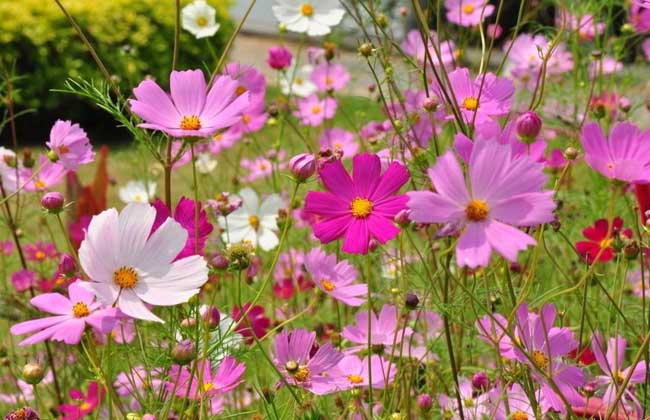
The Gesang flower, also known as Gesang Meiduo, is widely debated as to which plant it actually refers to. In Tibetan, "Gesang" means good times or happiness, and "Meiduo" means flower, so the Gesang flower is also called the happiness flower. For a long time it has carried the beautiful feelings of the Tibetan people longing for happiness and good fortune. Let us take a look below at the flower language and legends of the Gesang flower!
Gesang flower meaning
In Tibet, people often use the Gesang flower to express and give voice to beautiful feelings. It holds a very high place in the hearts of the Tibetan people and is regarded by ordinary Tibetans as a holy flower symbolizing love and good fortune. In the long river of Tibetan history, the Gesang flower has existed in the hearts of ordinary Tibetans as a kind of spirit, becoming a symbol of their pursuit of happiness, good fortune and beautiful feelings. Beautiful yet not gaudy, it is often used as a byword for a strong woman. Because it loves the sunshine of the plateau and fears neither severe cold nor wind and frost, it is regarded as a wildflower with the most tenacious vitality on the plateau. It is also the city flower of Lhasa, the capital of Tibet.
Legend of the high monk
A very, very long time ago, a severe plague broke out in the Tibetan region. People died in batch after batch, and the local tribal leaders could find no solution no matter what they tried. Until one day, a living Buddha from a distant land passed through this place and used a local plant to cure everyone. But in order to heal the people, this high monk fell ill from prolonged overwork and unfortunately passed away. Because of the language barrier, people's only impression of the living Buddha was the word "Gesang" that he often said -- the plant used to treat illness. So people called this living Buddha "Gesang Living Buddha," and thereafter all beautiful things symbolizing hope and happiness were also called "Gesang." From then on, the most beautiful flower on the grasslands was called the "Gesang flower."
Legend of the heavenly god
"Gesang" was originally the heavenly god among the various Tibetan deities who governed human suffering and happiness. Because of humanity's greed and ignorance, they recklessly slaughtered the living beings on the grasslands, which angered heaven, so heaven sent the "Gesang" god to the human world to punish humanity. After "Gesang" arrived in the human world, however, he found that long-term war had already stripped this land of vitality, with plagues raging everywhere. So the god defied the heavenly decree, helped humanity overcome the plague, and gave humanity a chance to reform. To commemorate the god who saved them, humans used the most beautiful and happiest thing in the world, namely the Gesang flower, to remember him.
Legend of the sisters
A very, very long time ago, all flowers were daughters of the same mother, and these girls all lived in one big family. The Gesang flower and the snow lotus were once twin sisters, but later they separated because of their differing personalities and goals as they grew up. The snow lotus chose the high Himalayas. After some time, the Gesang flower missed the snow lotus very much, so it traveled a long, long way to the Himalayas to see the snow lotus. When the Gesang flower arrived at the Himalayas, the snow lotus had already been covered by ice and snow into a pure white flower shape. The Gesang flower was very sad, so it turned into a fresh flower to keep the snow lotus company, and afterward they stayed together forever.
Mongolian legend
It is said that during the Yuan Dynasty, when the Mongol army entered Tibet and Tibet was incorporated into the territory of China's Yuan Dynasty, the Mongols brought China aster seeds from northern China to Tibet, and from then on they took root and bloomed in Tibet. That era was an unprecedented golden age in Tibetan history following the fall of the Tubo Dynasty. Phags-pa, who was granted the title of "State Preceptor" by Kublai Khan, then created the glorious Sakya, and successfully led the Yuan Dynasty royal family to accept Tibetan Buddhism, and Phags-pa became the Imperial Preceptor of the Yuan Dynasty. The China aster spread by the Mongols was planted and bloomed in monasteries and in many households, and the people of that era called it the "Gesang flower." The complete Tibetan word for "Gesang" is "Geba Sangbu," where "Geba" means era or generations, and "Sangbu" means prosperity; put together, it means "flower of a prosperous age."